Light decides which plants will thrive. Stand where the plant would sit and look: if you can read there at midday without a lamp, it is medium light or better. Tinted or low-E glass cuts light before it reaches the leaf, so a room that looks bright can be dim to a plant.
Tap a level, or swipe the picture, to see what changes.
Low light
Low light
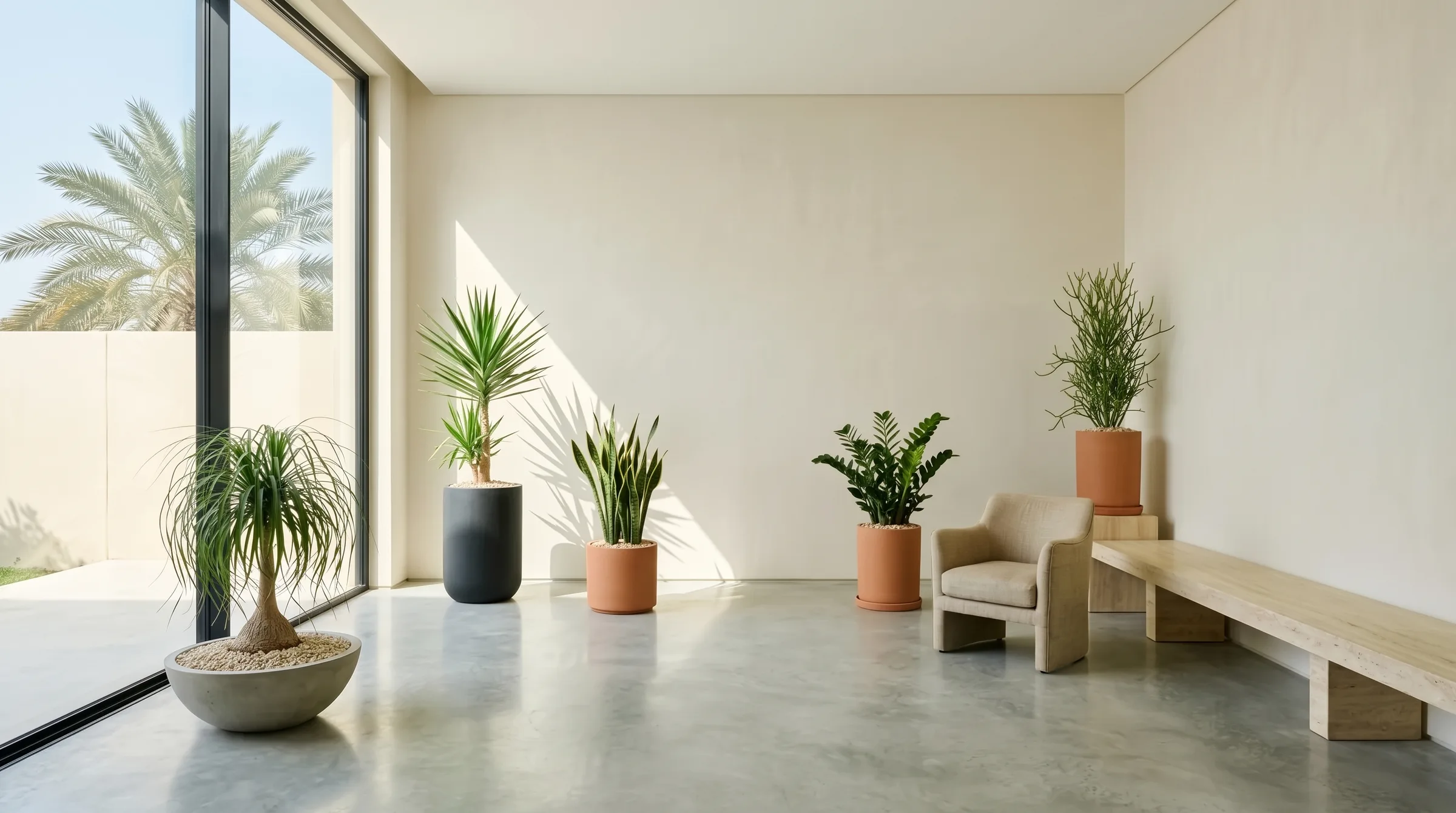
Where in a Dubai homeHallways, far corners of the living room, and rooms with small, shaded or tinted windows.
These plants keep growing slowly where others stall. Expect little growth and no flowers.
More about low lightShow less
Water less often than you think, because soil in dim rooms dries slowly and wet soil rots roots. Where a room is truly dark, a good artificial plant beats a dying real one.
Where in a Dubai homeA bright room a few metres from the window, or a desk beside a north- or east-facing window.
Bright enough to read by without a lamp. This is where most easy houseplants do best, and where many low-light plants grow properly instead of just surviving.
More about medium lightShow less
Turn the pot a quarter every week or two so growth stays even.
Where in a Dubai homeA south- or west-facing window with clear glass, a sunny sill, or a balcony door in the cool months.
Only for plants built for it, and even these want a sheer curtain from June to September, when sun through glass can scorch. Tinted glass can turn a sunny window into merely a bright one.
More about direct sunShow less
Olive trees want this much light all year and still struggle indoors: give one the sunniest window or a balcony.
Dubai's year changes what houseplants need: more light and water in winter, less in summer, and shelter from the air-conditioning all year.
By room
What suits each room.
Where a plant sits matters as much as what it is. These plants suit each room of a Dubai home, from a formal majlis to a winter balcony.
Living room
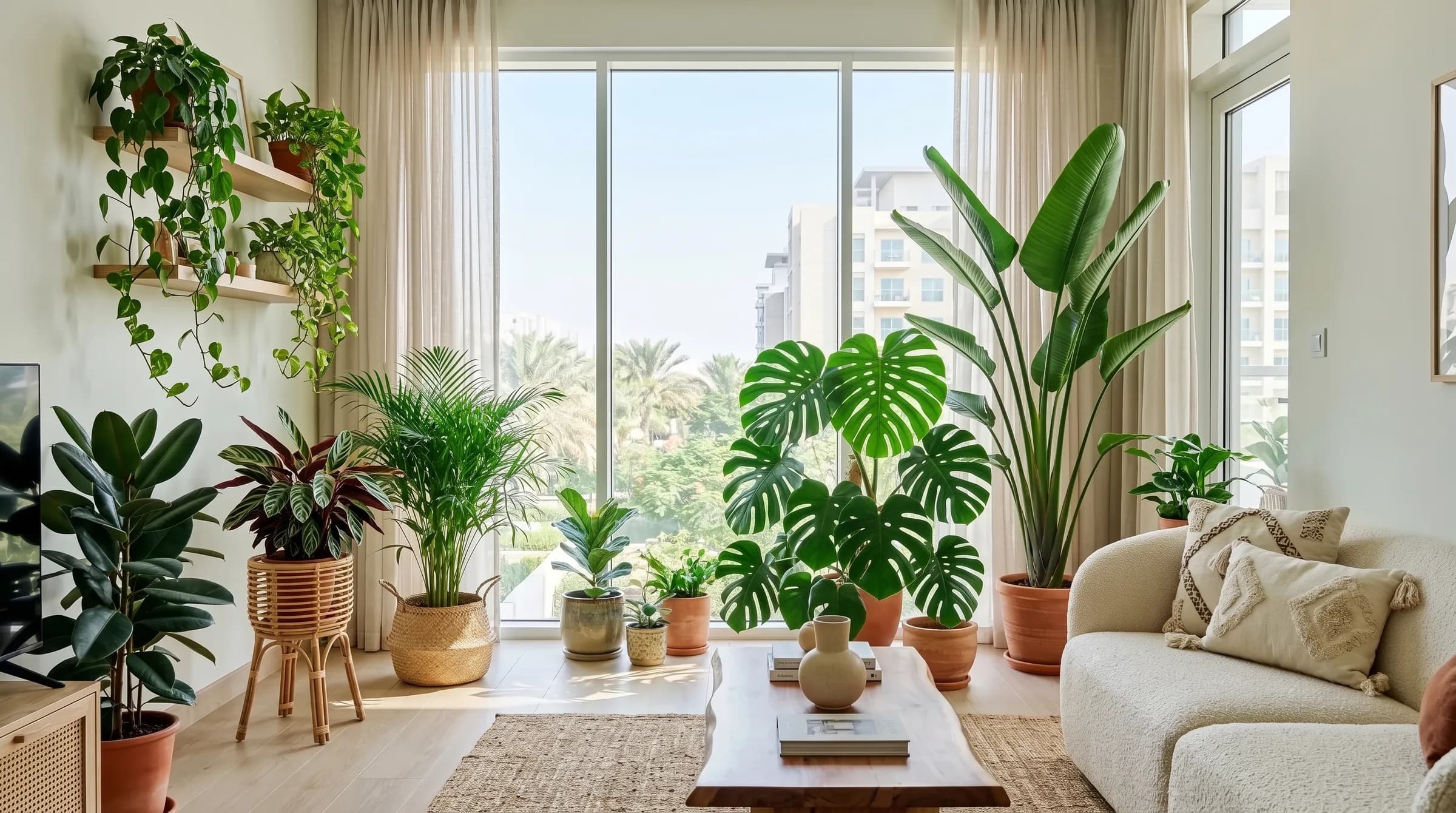
Your biggest window and the most space, so this is where statement plants go.
Monstera
Rubber plant
Fiddle-leaf fig
Areca palm
+2more
6 plants
Majlis
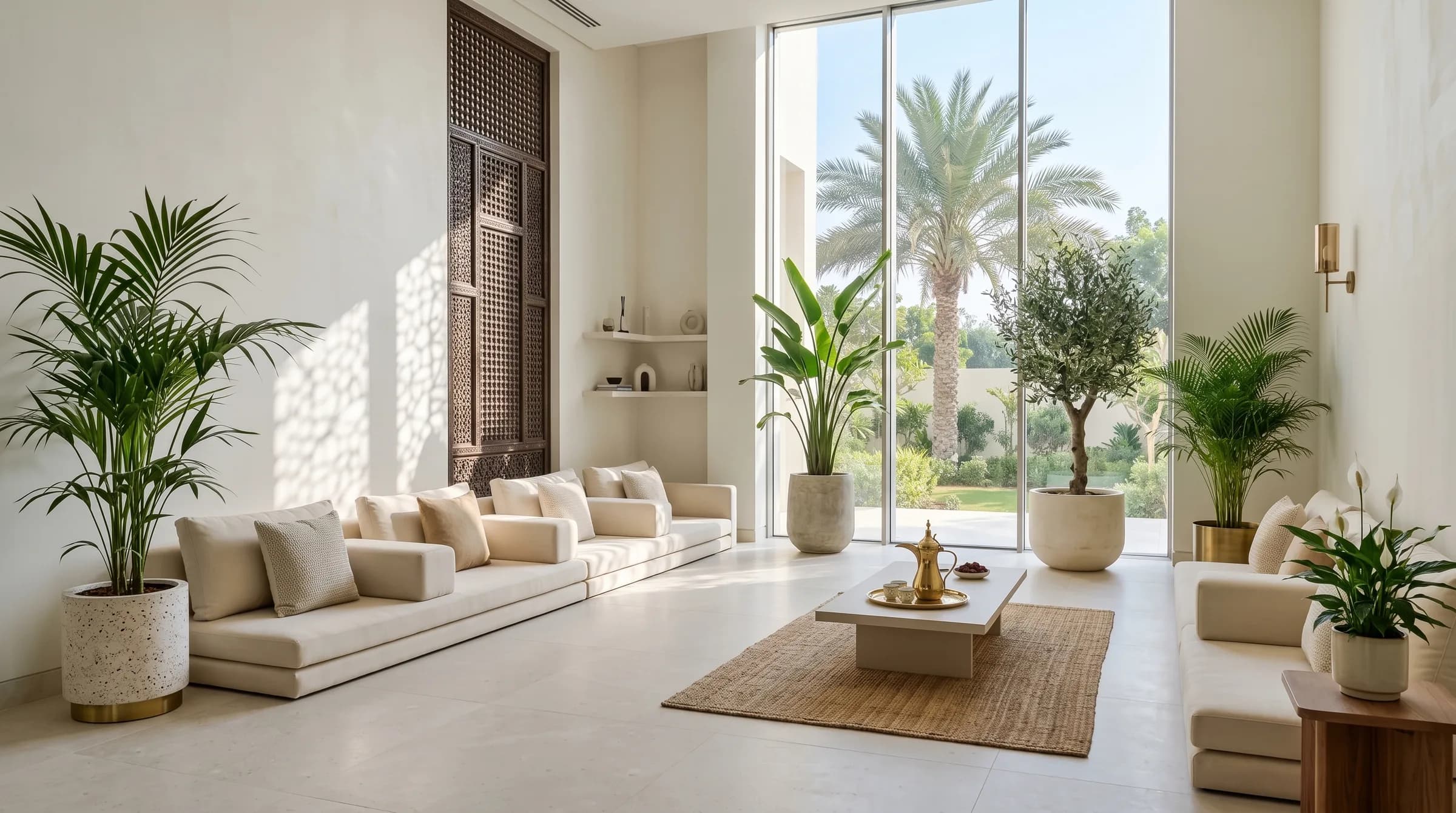
Often formal, symmetrical, dim and curtained.
Kentia palm
Lady palm
Areca palm
ZZ plant
+2more
6 plants
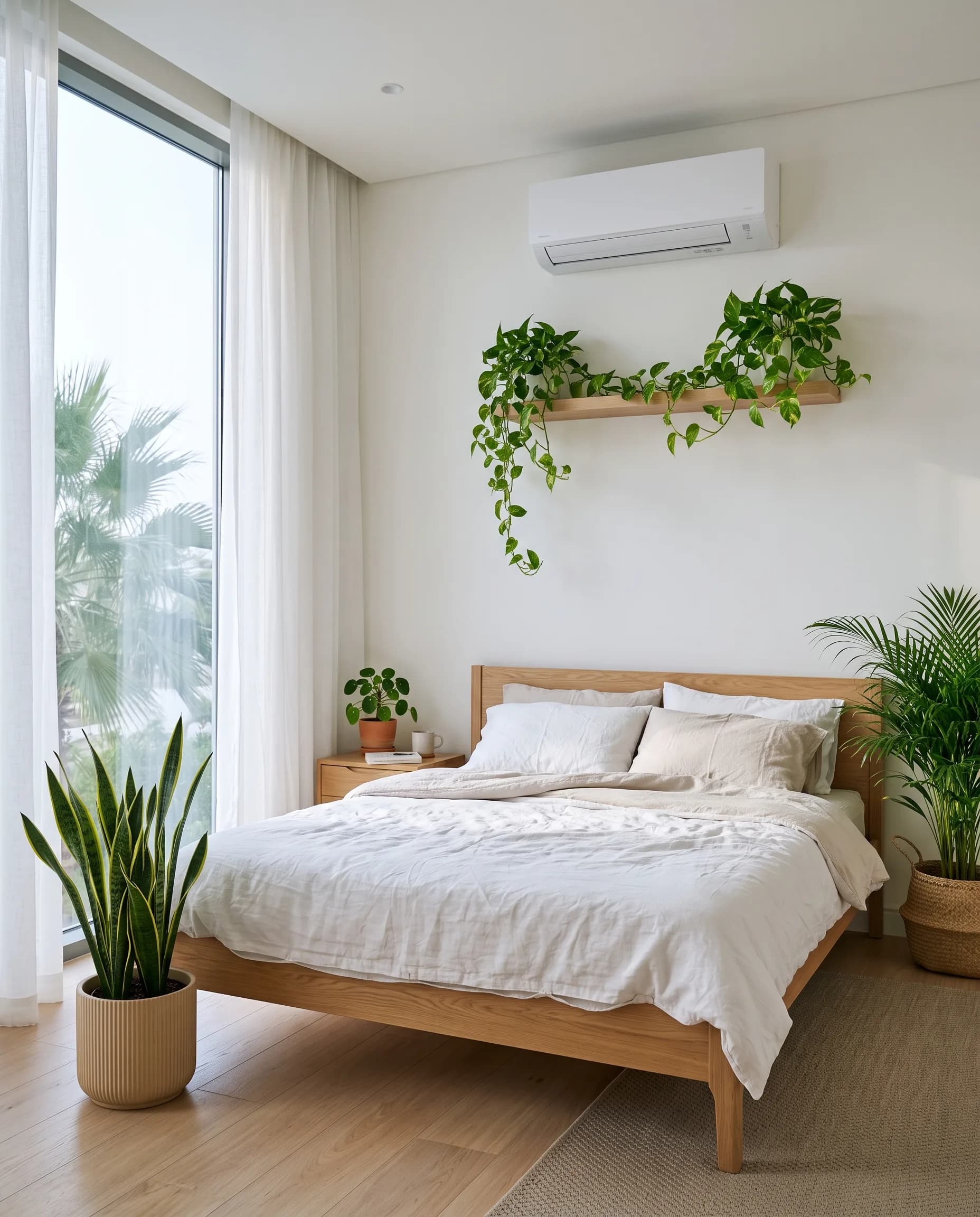
Bedroom
Calm, low-fuss plants for a room you mostly use at night.
Pothos
Snake plant
Parlour palm
Peperomia
+1more
5 plants
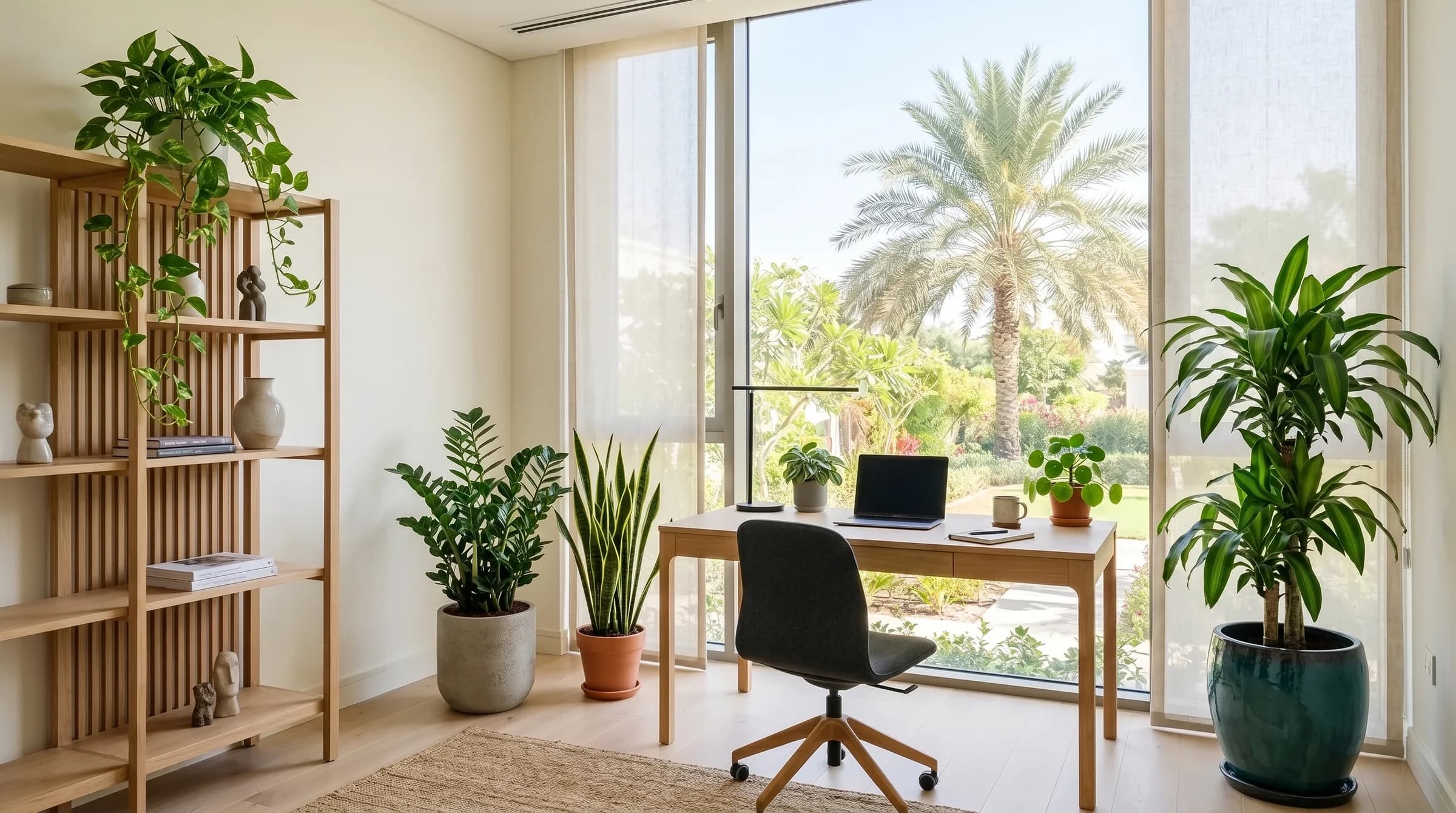
Home office
Tough, tidy plants for long days at a desk.
ZZ plant
Snake plant
Pothos
Parlour palm
+1more
5 plants
Kitchen
A bright sill suits small, forgiving plants.
Spider plant
Pothos
Aloe vera
Peperomia
+1more
5 plants
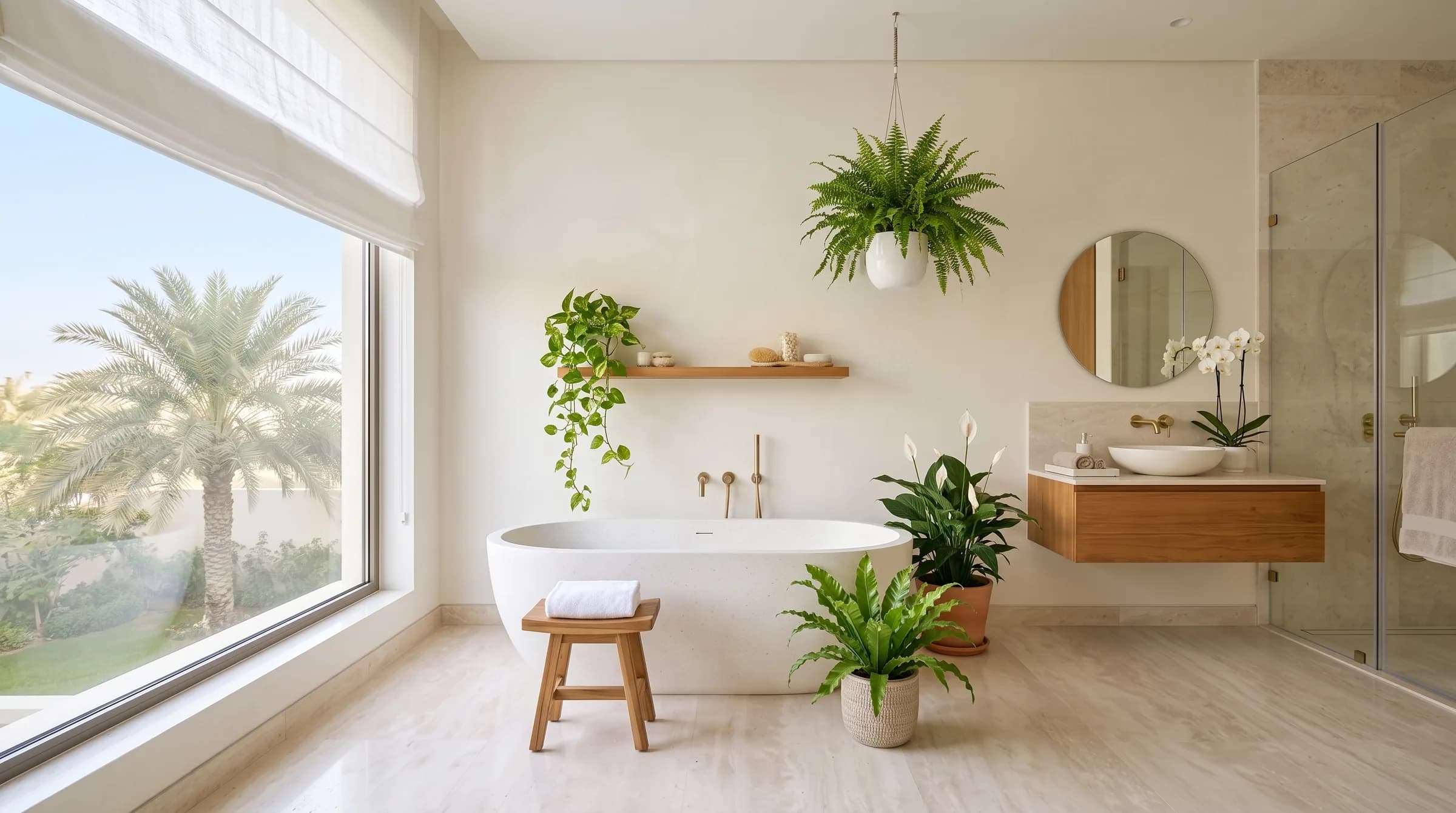
Bathroom
Only works with a window.
Boston fern
Bird's nest fern
Moth orchid
Peace lily
+1more
5 plants
Hallway
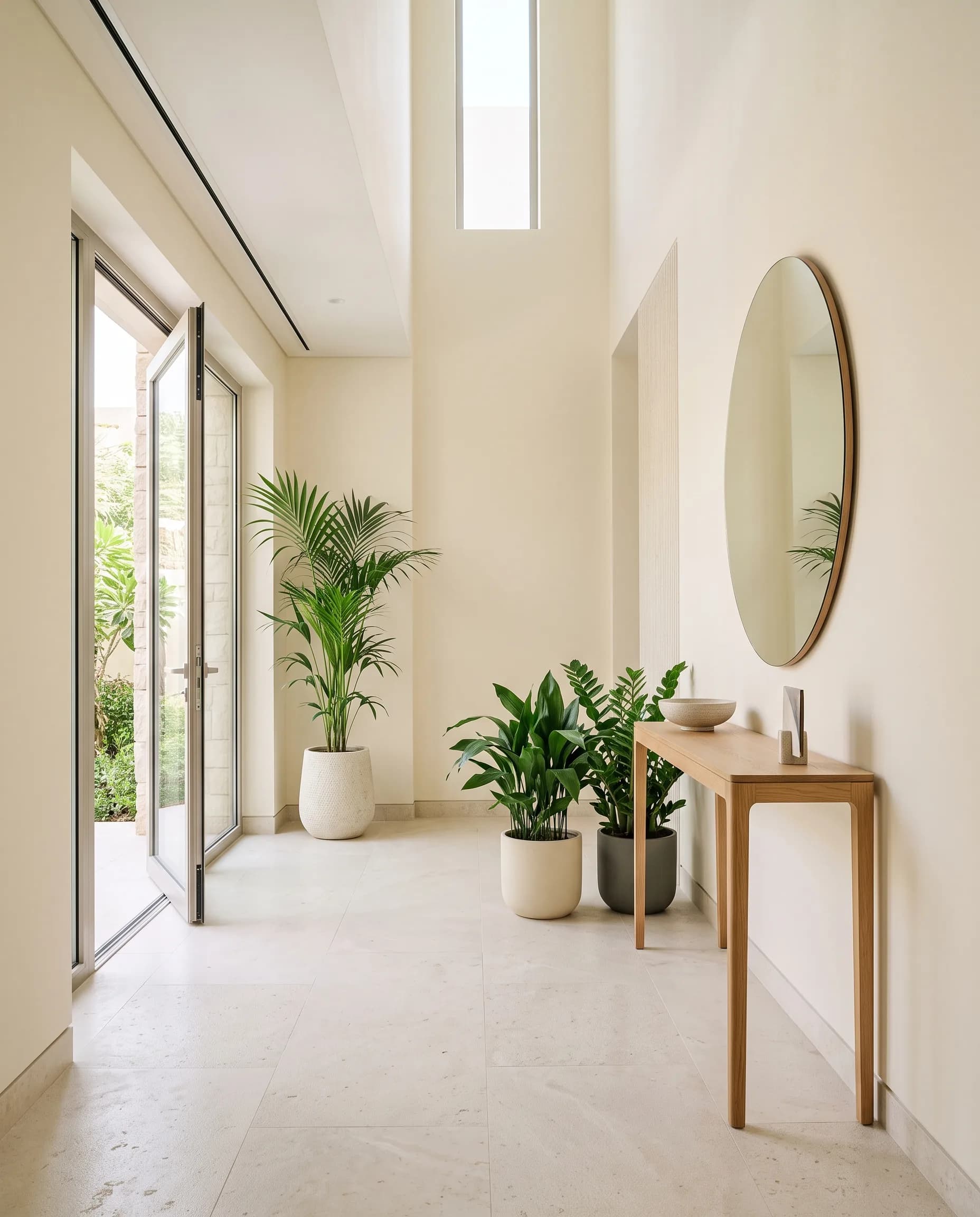
Often the dimmest spot in a home.
Cast iron plant
ZZ plant
Lady palm
Snake plant
4 plants
Balcony
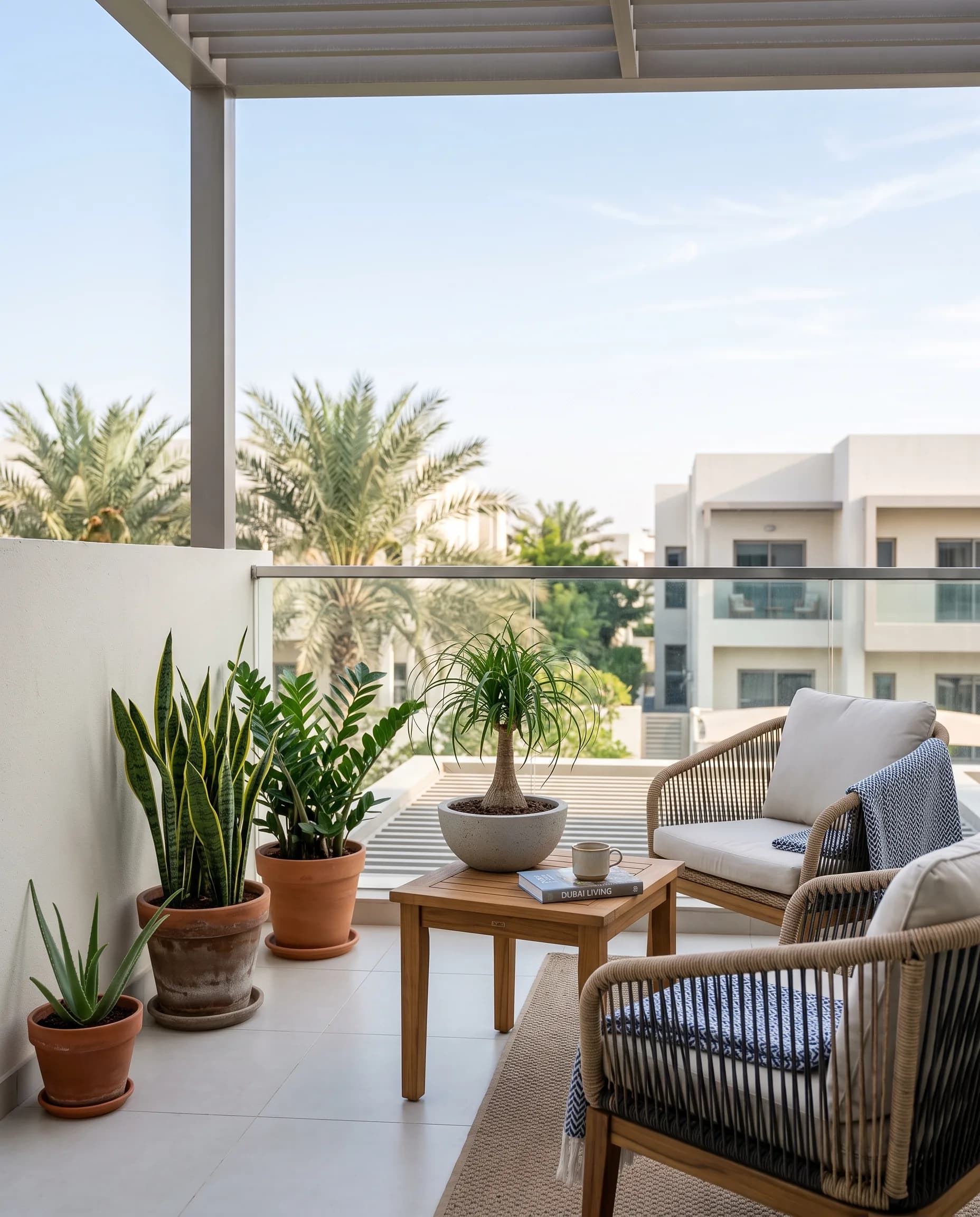
From November to March the balcony is usable and tough plants can take a break outside.
Snake plant
ZZ plant
Aloe vera
Jade Plant
+2more
6 plants
Pets
Plants listed as non-toxic to cats and dogs.
Pothos, monstera, peace lily, snake plant and ZZ plant are all on the ASPCA's toxic list, and they sit in many Dubai homes. These plants are listed there as non-toxic to cats and dogs.
We follow the ASPCA, not shop tags, because "pet-safe" on a label is not a standard. Any plant can still upset a stomach if chewed, so call your vet if a pet eats one.
Dubai
What changes in a Dubai home.
Most houseplant advice is written for cool, damp countries. Here the air is conditioned, the glass is often tinted, tap water comes from the sea and the summer is long. Six things change how you look after plants.
1
AC and dry air
Air-conditioned rooms are drier than most tropical plants like. In a 2022 study, many Dubai households ran AC day and night from May or June to October. Brown leaf tips and spider mites are the usual result. Keep plants out of the airflow. Misting does not help; a humidifier does. A cheap hygrometer shows your real figure, and the EPA suggests 30 to 50 per cent for a home.
2
Tinted glass
Low-E coatings cut visible light by a further 5 to 10 per cent, and tint cuts more. Behind it plants stretch, pale and drop lower leaves. Move them closer to the window, but not into vent air, wipe the leaves, or pick a lower-light plant. Clear west-facing glass has the opposite problem: afternoon sun scorches leaves in summer.
3
Desalinated tap water
Most UAE drinking water is desalinated seawater, and it still carries dissolved minerals that build up as a white crust on soil and pots. Flush each pot with at least twice its volume of water every four to six months, and avoid softened water. Spider plant, Calathea and Prayer plant may do better on filtered water.
4
Summer travel
Many residents are away for weeks in July and August. Water the day before you go, move plants out of direct light, and set up a wick, a capillary mat or self-watering pots. Test the set-up first. Leave the AC on at a higher setting rather than off: a closed flat in summer gets far hotter than plants like.
5
Dust and sand
Dust coats leaves and blocks light, and summer shamal winds lift sand across the city. Wipe smooth leaves with a damp cloth, rinse small plants in the shower, and brush fuzzy leaves such as African violet with a soft brush instead of wetting them.
6
Bringing plants home in the heat
A plant left in a hot car or hallway can scorch before it reaches your flat. Buy from October to April when you can. Otherwise run the car AC first, go straight home and take deliveries at the door. Then pick a spot and leave the plant there: Weeping fig and Fiddle-leaf fig drop leaves when moved.
The year
A Dubai houseplant year, in six phases.
Dubai's year runs on air-conditioning and light, not frost. Each month on What to plant has an indoor section with the detail.
Jan
Feb
Mar
Apr
May
Jun
Jul
Aug
Sep
Oct
Nov
Dec
1Low light, cool nights
1
2Buy, repot, wake up
3AC season begins
4Peak heat and holidays
5Post-holiday reset
6Buy, pot up, step outside
Colour is the average daily high:coolhot
1
Dec–Jan· about 25°C
Low light, cool nights
The shortest days and coolest nights. Light is lowest, so water and feed less and move plants closer to the window. Moth orchids get the cooler spell that sets flower spikes. Keep tender plants such as alocasia off cold glass at night, and watch for fungus gnats in soil that stays wet.
2
Feb–Apr· about 30°C
Buy, repot, wake up
Light and growth return. Mild weather makes this a good window to bring plants home and repot before the heat. Start feeding in March, wipe off the spring dust, and keep plants out of vent airflow when the AC restarts. Bring balcony plants back in by April.
3
May–Jun· about 39°C
AC season begins
Air-conditioning runs day and night in many homes. Flush the salts from every pot, check under the leaves for spider mites each week, and pull plants back from hot west-facing glass. Choose plants that put up with dry air.
4
Jul–Aug· about 42°C
Peak heat and holidays
The hottest weeks, and when many people travel. Water the day before you leave, set up a wick or self-watering pots, and leave the AC on. Bring any new plant home cool, and take deliveries the moment they arrive.
5
Sep· about 40°C
Post-holiday reset
Check every plant after a summer away: remove dead leaves, look for pests and rot, flush the pot and water gradually. Resume feeding when new growth shows. Plants that look sulky usually recover.
6
Oct–Nov· about 33°C
Buy, pot up, step outside
Highs fall from 36°C to 31°C. Repot, buy new plants, and from November let tough plants outside in bright shade, adding sun gradually. Keep fussy, humidity-loving plants indoors.
Dry AC air is the usual cause, then too much fertiliser, salt build-up or a draught from a vent. Spider plants can also burn from chlorine in tap water.
What to do
Move it out of the vent's airflow, flush the pot, feed lightly and use filtered water for spider plants. Add a humidifier if the room is very dry. Trim the brown tip with clean scissors.
!Yellow lower leaves, soft stem
Likely cause
Overwatering. The roots sit in wet soil, especially in a cool, dim, air-conditioned room where the pot dries slowly.
What to do
Test 5 cm down before you water and empty the saucer. If the stem is mushy or roots are soft and brown, repot into fresh mix in a pot with drainage and cut off the rotten roots.
!Fine speckles or webbing under leaves
Likely cause
Spider mites, which thrive in hot, dry air. Palms, ferns and crotons are hit first.
What to do
Isolate the plant, then rinse it with lukewarm water once a week for several weeks, undersides included. Raise the humidity around it and keep it out of the vent's airflow.
!Sticky leaves, white cottony patches
Likely cause
Mealybugs: soft insects that hide in leaf joints and spread to nearby plants.
What to do
Dab each one with a cotton bud dipped in diluted alcohol, after testing a single leaf. Repeat weekly and check the plants around it.
!Tall, stretched, pale growth
Likely cause
Too little light, often behind tinted glass or in a far corner. Low light also fades leaf patterns and stops flowering.
What to do
Move it closer to a window, but not into the vent's airflow. Wipe the leaves, trim leggy stems, or switch to a low-light plant such as a cast iron plant or ZZ plant.
!White crust on soil or pot rim
Likely cause
Mineral and fertiliser salts left behind as water evaporates.
What to do
Flush with plain water, at least twice the pot's volume, and let it drain fully. Scrape off the crust, repot if it is heavy, and repeat every four to six months. Avoid softened water.
!Leaves drop after buying or moving
Likely cause
A change of light or position. Weeping figs, rubber plants and fiddle-leaf figs are the worst for it.
What to do
Pick a spot with the right light, away from vents, and leave the plant there. Expect some leaf drop as it settles, and water only when the soil is dry.
!Sulking after a summer away
Likely cause
A dry pot, a hot closed room and pests that built up while nobody was looking.
What to do
Water gradually, stand a very dry pot in a basin to soak, trim dead growth, flush the salts and check for mites. Resume feeding when new growth shows, usually from September.
Buying
Buying plants in Dubai.
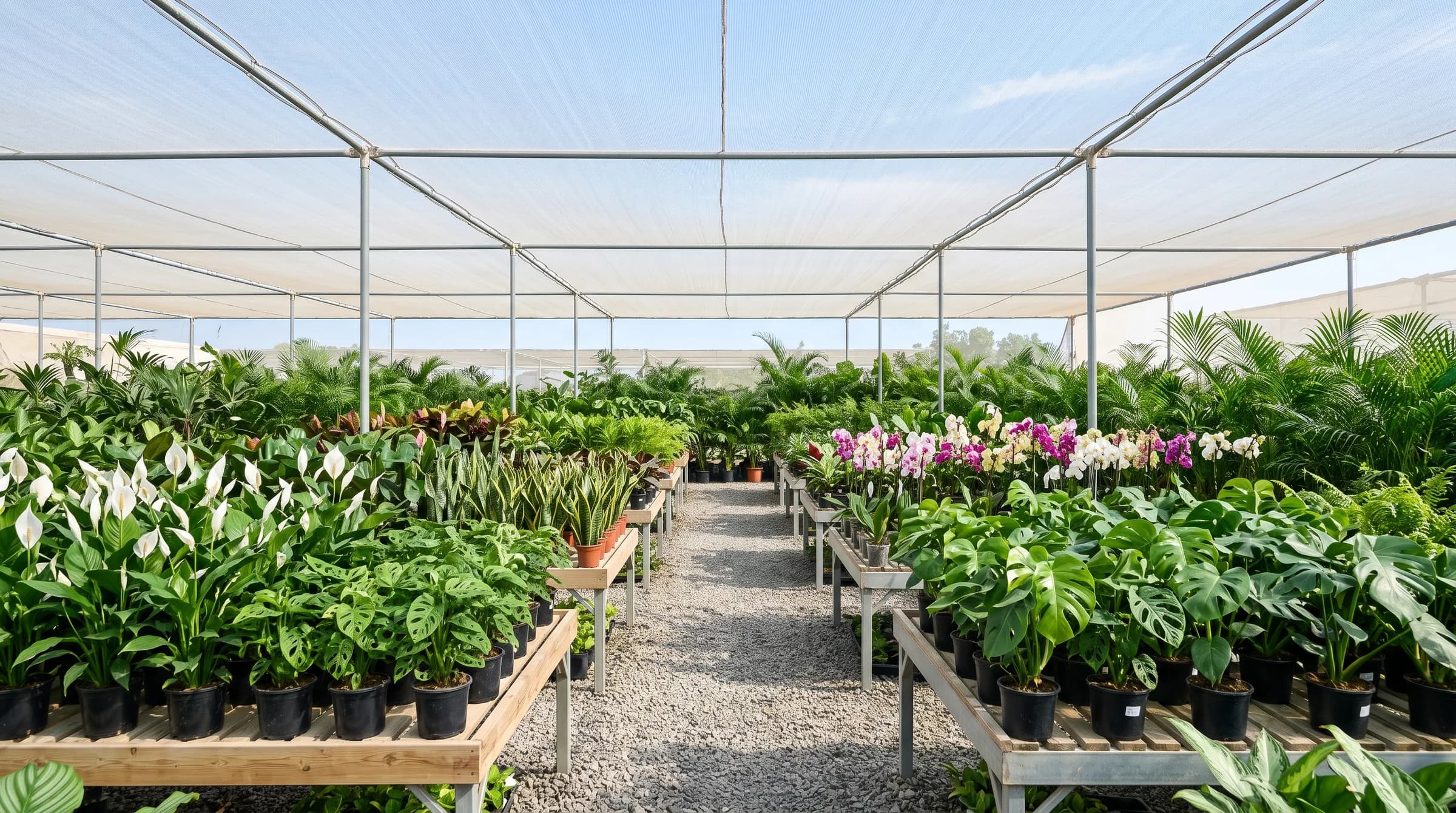
Garden centres, a government nursery and online shops all sell indoor plants in Dubai. The guide below lists them, with what each is known for and AED ranges by size. These habits save plants and money wherever you buy.
1
Buy from October to April
Nursery stock does best when it is not carried home through summer heat. October to November and February to April are the sweet spots. If you must buy in summer, take a small plant, run the car AC first and go straight home.
2
Match the plant to your light
Check the light where the plant will sit before you buy, not after. A Fiddle-leaf fig in a dim corner will sulk; a Cast iron plant will not. If pets live at home, check the plant against the ASPCA list first.
3
Compare sizes, not just prices
Shops quote different sizes, and the price of the same plant can differ several times over. Compare pot diameter and plant height, and note the date, because prices change.
4
Inspect, then quarantine
Check leaf undersides and stem joints for webbing, white cottony patches and sticky residue, and the drainage holes for soggy soil. Keep a new plant apart from your others for at least three weeks, because pests usually arrive on recently bought plants.
Choose plants that tolerate dry, air-conditioned rooms and modest light. Snake plant, ZZ plant, Pothos, Parlour palm, Cast iron plant and Ponytail palm are the easiest. Leafy tropicals such as Calathea and ferns need more work under AC. Use the filters on this page to match a plant to your light, room and pets.
Which indoor plants grow in low light in Dubai?
Cast iron plant, ZZ plant, Snake plant, Parlour palm, Lady palm and Pothos keep growing in dim rooms, slowly. Tinted glass can make a bright-looking room dim for a plant. No plant grows in true darkness, so if a room gets no daylight, use a good artificial plant.
Yes, if you choose them well. Keep them out of the direct airflow, check leaf undersides weekly for spider mites, which like warm, dry air, and flush the salts from the pot every four to six months. Snake plant, ZZ plant and Ponytail palm ignore dry air. Humidity lovers such as Boston fern and Calathea need a humidifier or a bright bathroom.
How often should I water indoor plants in Dubai?
There is no fixed number of days. Push a finger about 5 cm (two inches) into the soil, or lift the pot, and water when it feels dry there. Cool AC rooms and dim corners dry slowly, a sunny sill dries faster, and winter needs less than summer. Always empty the saucer, and use a pot with drainage holes.
Do indoor plants clean the air?
Not in a way you would notice. A Drexel University review of earlier studies found that ventilation removes pollutants far faster than potted plants can, and that matching it would take roughly 10 to 1,000 plants per square metre of floor. Grow plants for how they look, not for the air.
When is the best time to buy indoor plants in Dubai?
October to November and February to April. Nursery stock is not carried home through summer heat, and plants get mild months to settle in before AC season. If you must buy from June to September, pick a small plant, run the car AC first and go straight home.
Can I put indoor plants on my balcony?
From November to March, tough ones can: Snake plant, ZZ plant, Aloe vera, Jade Plant and Ponytail palm. Start in bright shade, add sun gradually and bring them in by April. Keep fussy plants such as Alocasia indoors: NC State says it should not go below about 15.6°C. In summer, keep every houseplant off the balcony.