Indoor style
Sculptural minimal
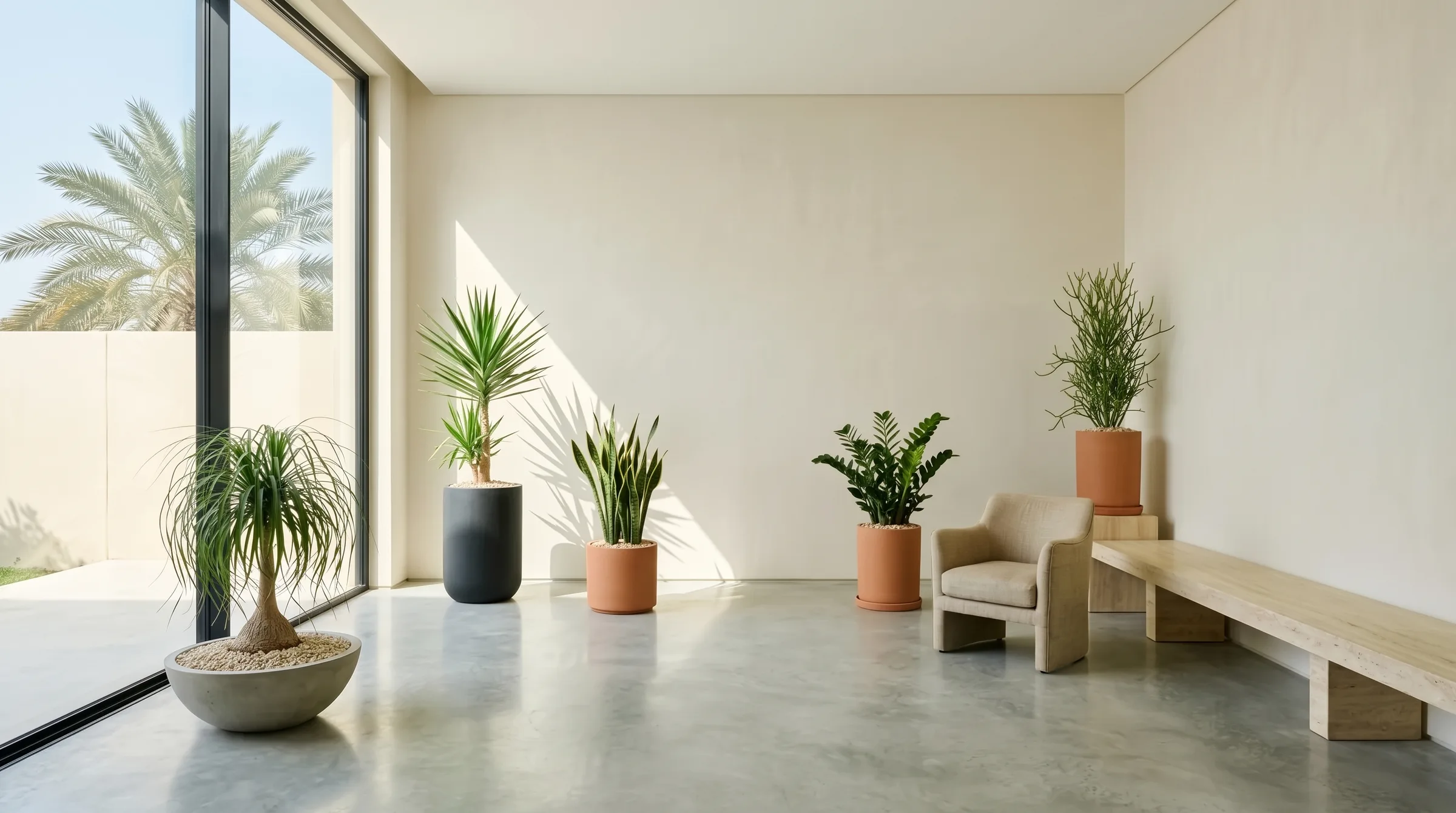
One bold, architectural plant per corner, in concrete and terracotta against pale plaster.
- Living room · Hallway · Home office
- Bright–Sun
- Effort: 1 of 5
A few sculptural plants, each with room to show its shape: ponytail palm, yucca and snake plant in concrete or terracotta. It copes with dry AC air and missed waterings, but wants a bright room.
The mood
What the sculptural minimal look feels like
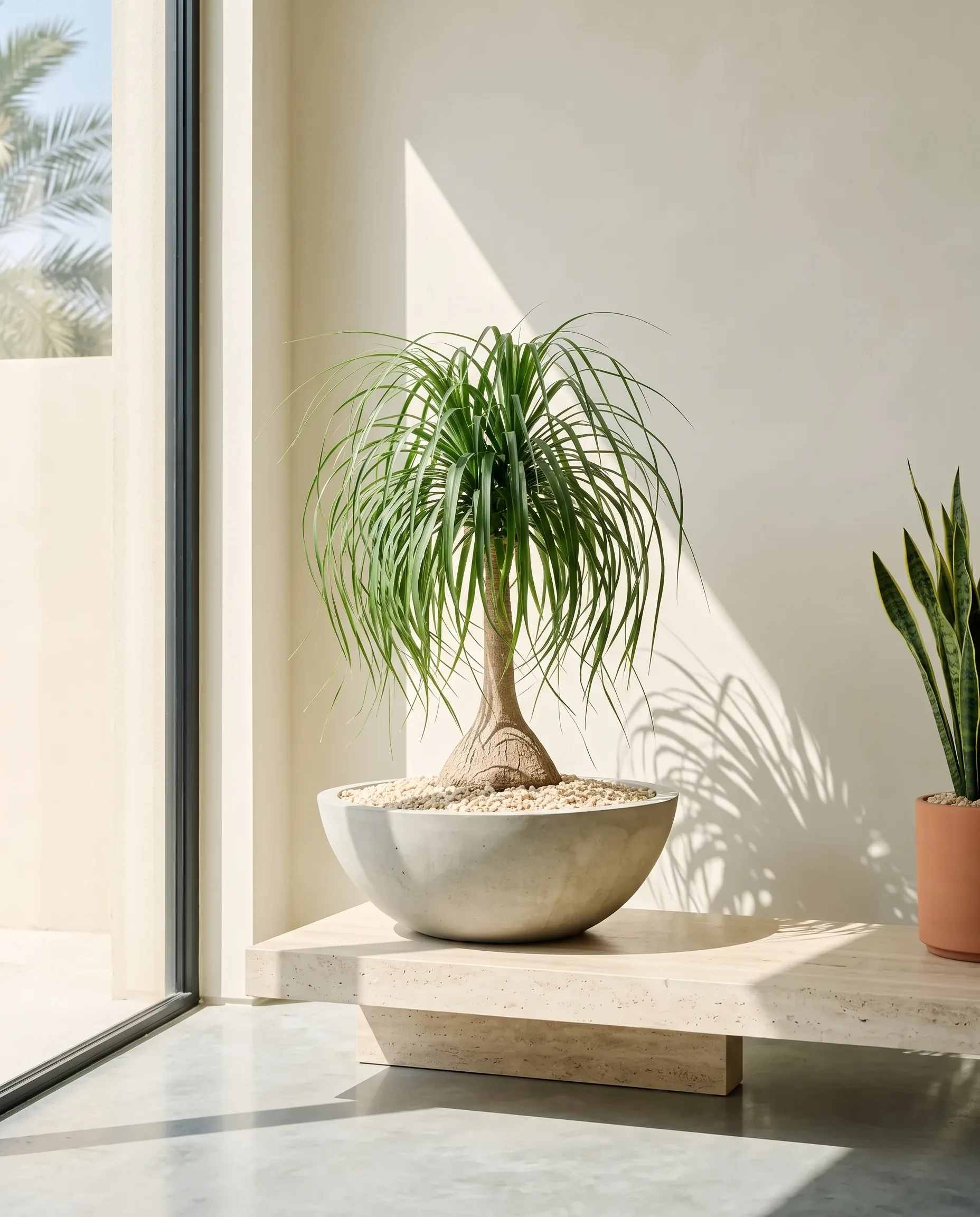
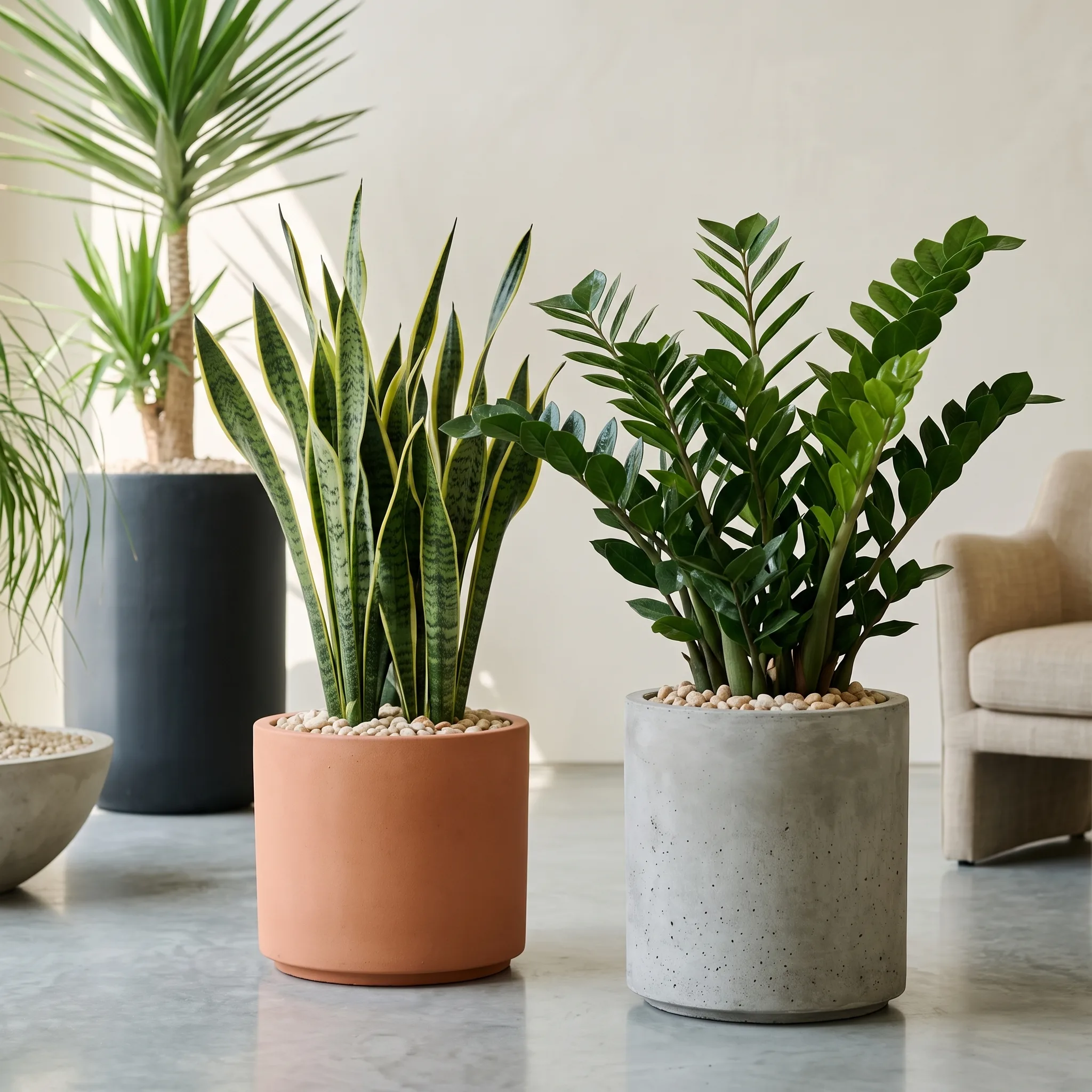
Sculptural minimal treats plants as objects. Each has a strong shape: the swollen base of a ponytail palm, the upright blades of a snake plant, the stacked leaf heads of a spineless yucca. Each gets its own spot and its own plain pot, in concrete, terracotta or charcoal matte, against pale plaster, with a gravel top-dressing to finish.
These are the plants here that cope best with dry air and forgotten waterings. NC State says ponytail palm does well even in the dry indoor air that makes many houseplants suffer, and it calls snake plant and yucca drought tolerant. The catch is light: ponytail palm wants six or more hours of direct sun, and yucca does best in full sun but tolerates two to six hours. They suit your brightest room.
In a dimmer room, build the look from snake plant and ZZ plant, which NC State says tolerate very low light, and keep the sun-lovers for the window. Overwatering is how these plants die: let the soil dry between waterings, and for an indoor yucca NC State suggests one part potting mix to three parts perlite or sand.
Check pets before you buy. The ASPCA lists ponytail palm as non-toxic to cats and dogs, but yucca, snake plant, ZZ plant and jade plant as toxic.
- Architectural
- Bold shapes
- Pale and plain
- Gallery-quiet
- Low fuss
Palette
- Pale plaster #E8E3D9
- Concrete #A9A8A2
- Terracotta #B5694B
- Charcoal #34353A
- Gravel #CFC8B8
- Blade green #4B7A4D
Key plants
What grows into the sculptural minimal look

Ponytail palm
Beaucarnea recurvata

Snake plant
Dracaena trifasciata

Spineless yucca
Yucca gigantea

ZZ plant
Zamioculcas zamiifolia

Dracaena
Dracaena marginata

Jade Plant
Crassula ovata

Zebra haworthia
Haworthiopsis attenuata
Starter set
Start the sculptural minimal look
Ponytail palm
Beaucarnea recurvata
Snake plant
Dracaena trifasciata
ZZ plant
Zamioculcas zamiifolia
Spineless yucca
Yucca gigantea
A rough budget
AED 900–1,750
Plants AED 670–940: ponytail palm 250–375, yucca from 344, snake plant, ZZ (Greensouq, Plantsworld, Heavenly Plants, 2026-10-07). Pots: IKEA ceramic AED 65–95; concrete cylinders are our estimate.
How to get the look
Step by step
Step 1: Find the brightest spot
Ponytail palm and yucca want strong sun (NC State), so give them the brightest wall or window. Snake plant and ZZ can stand further back.
Step 2: One shape per corner
Give each plant its own spot and its own plain pot: a tall yucca in one corner, a ponytail palm on a low plinth, a snake plant by the sofa. Do not group them.
Step 3: Pot it gritty
Use a pot with a drainage hole and a gritty mix: for indoor yucca NC State suggests one part potting mix to three parts perlite or sand. Finish the surface with gravel.
Step 4: Water rarely
Let the soil dry between waterings, and water far less in winter (NC State on ponytail palm and snake plant). Push a finger two inches down before each watering (University of Maryland Extension).
Step 5: Keep it clean
Wipe leaves with a damp cloth when you can feel dust (Ohio State Extension). NC State lists mealybugs and spider mites for these plants, so check the leaf bases and undersides weekly.
Pots and planters
- Concrete or microcement-look cylinders, 25–45 cm, with a drainage hole
- Plain unglazed terracotta cylinders
- Matte black or charcoal pots for contrast against pale walls
- A low plinth or stone block to lift one plant into view
Furniture and finishes
- Pale plaster or limewash walls
- Gravel or pebble top-dressing in a warm grey
- A plain limestone or pale concrete-look floor
- One spotlight or window that casts the plant's shadow on the wall
In a Dubai home
What is different here
- Dry AC air suits this look: NC State says ponytail palm does well even in dry indoor air that makes many houseplants suffer, and snake plant and yucca are drought tolerant. Keep them out of a vent's direct airflow.
- Tinted glass: ponytail palm and yucca want strong sun, and tint cuts it. Low-E coating alone takes a further 5–10% of the light plants use (Melinda Myers). Behind heavily tinted glass, lean on snake plant and ZZ, which cope with less.
- Villa or apartment: a villa's tall windows and double-height rooms have space for a tall yucca. In an apartment, a tabletop ponytail palm or snake plant on a balcony-door sill gives the same look at a smaller scale.
- Summer travel is easy with these plants: water well before you go, move them out of the hottest direct sun and leave the AC on. ZZ and snake plant tolerate long gaps between waterings (NC State).
Pros
- Suits dry AC air and missed waterings better than any other style here
- Few plants, so it is quick to dust and tidy
- Looks finished with just one plant per corner
- Ponytail palm is non-toxic to cats and dogs (ASPCA)
Cons
- Ponytail palm and yucca want strong light, which a dim room or tinted glass cannot give
- One big yucca or ponytail palm costs AED 250–350 or more
- Yucca, snake plant, ZZ and jade plant are toxic to pets (ASPCA)
- Overwatering rots the roots: all of these plants need to dry out between waterings
FAQ
Common questions
Can I do sculptural minimal in a dim apartment?
Partly. NC State says ZZ plant grows in very low light and snake plant tolerates very low light, so they work in dim rooms. Ponytail palm needs six or more hours of direct sun and yucca does best in full sun, so keep those for your brightest window. Behind heavily tinted glass, build the look from snake plant and ZZ.
How often should I water a ponytail palm in an air-conditioned room?
Go by the soil, not the calendar. NC State says to water deeply in summer but let the plant dry out between waterings, and to cut back sharply in winter. Push a finger about two inches into the soil before watering (University of Maryland Extension). Check weekly at first to learn how fast your pot dries.
Is a yucca safe with cats and dogs?
No. The ASPCA lists yucca as toxic to dogs and cats (saponins). NC State says spineless yucca lacks spine-tipped leaves, which makes it easier to place, but that does not change the toxicity. The ASPCA lists ponytail palm as non-toxic to dogs, cats and horses.
How much does a statement ponytail palm or yucca cost in Dubai?
On 2026-10-07 Greensouq listed a 50–60 cm ponytail palm at AED 250 in a plastic pot and AED 350–375 in a ceramic pot (on sale from AED 450). Plantsworld listed yucca from AED 344 for 120–150 cm. Prices, sizes and stock change often, so compare plants of the same height.
Keep exploring
Other indoor styles
Japandi calm
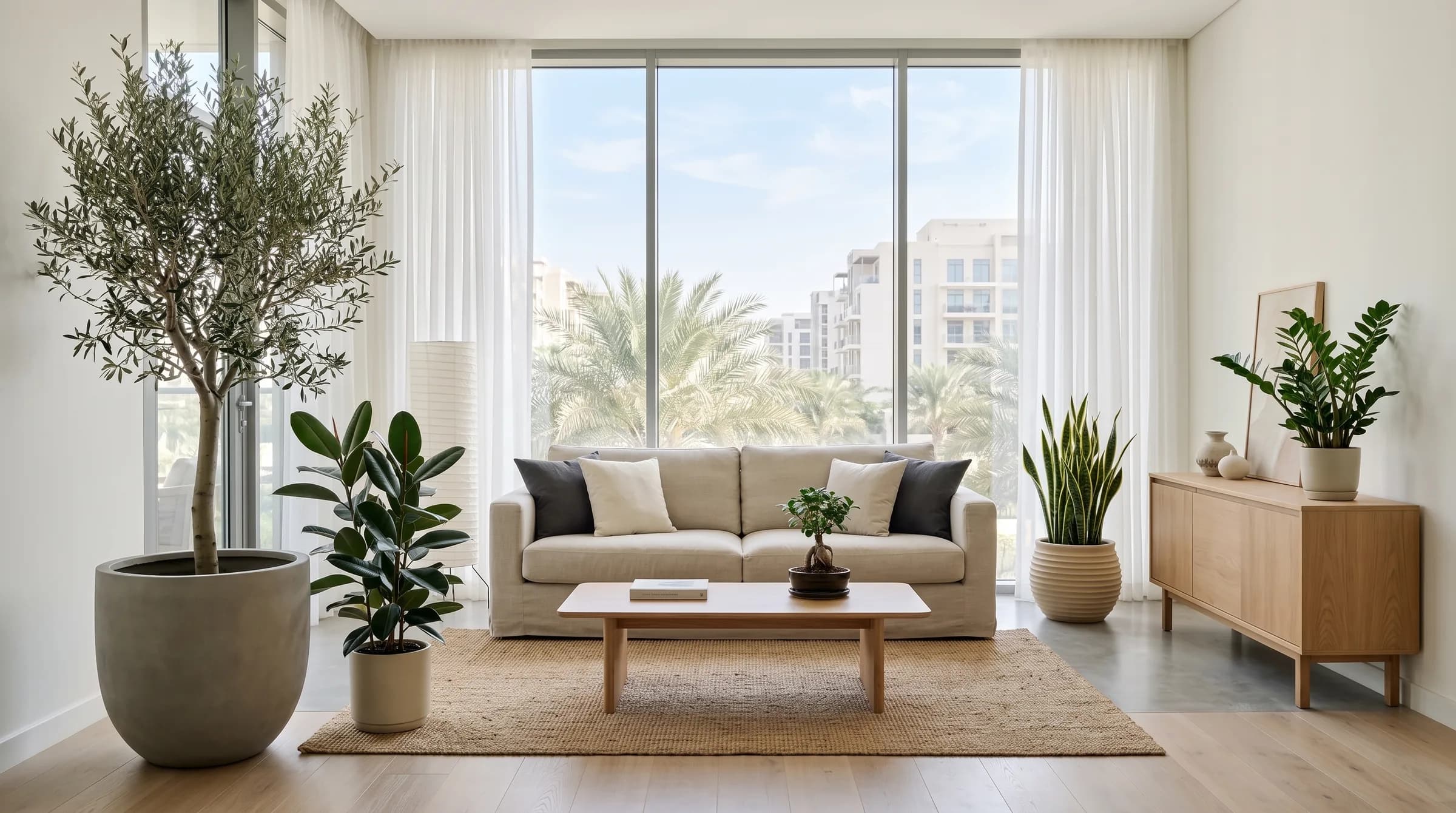
One characterful plant per room, in matte stone and sand pots, with space left around it.
Living room · Bedroom
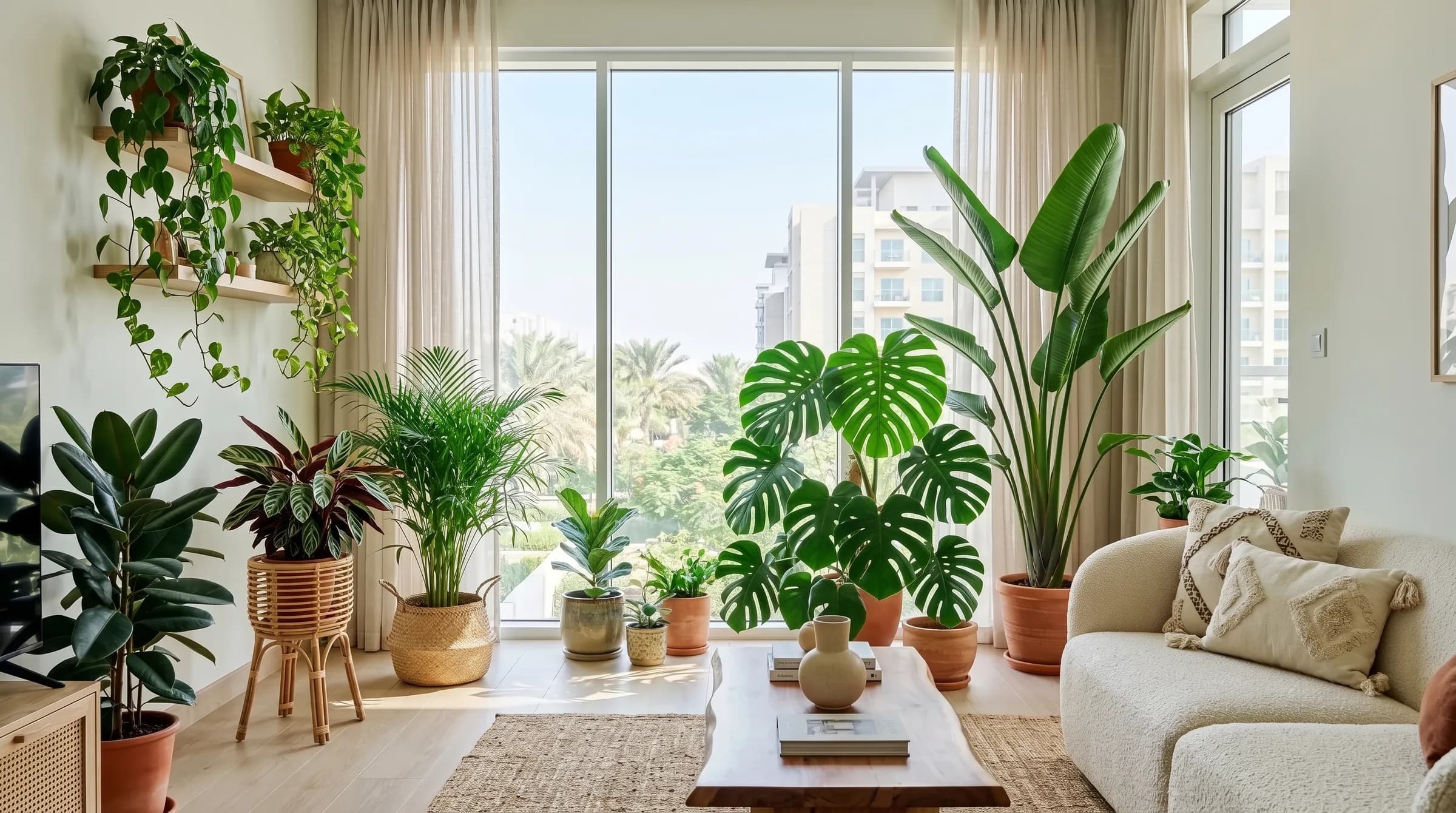
Urban jungle
Big leaves, trailing vines and plants at every height, in terracotta, rattan and baskets.
Living room
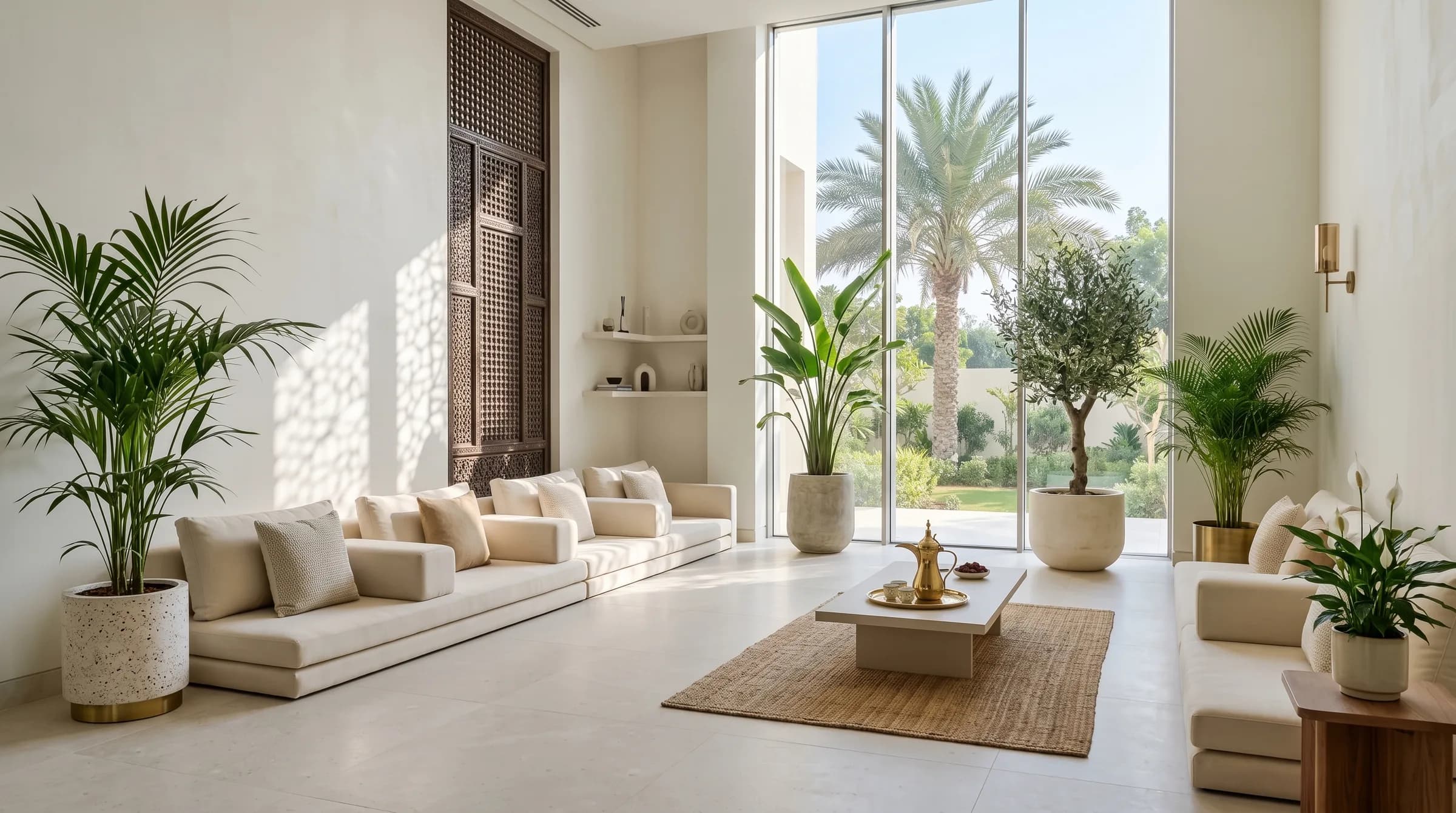
Modern majlis
Matching palms, brass and limestone: a formal, symmetrical look for a villa majlis.
Majlis · Living room
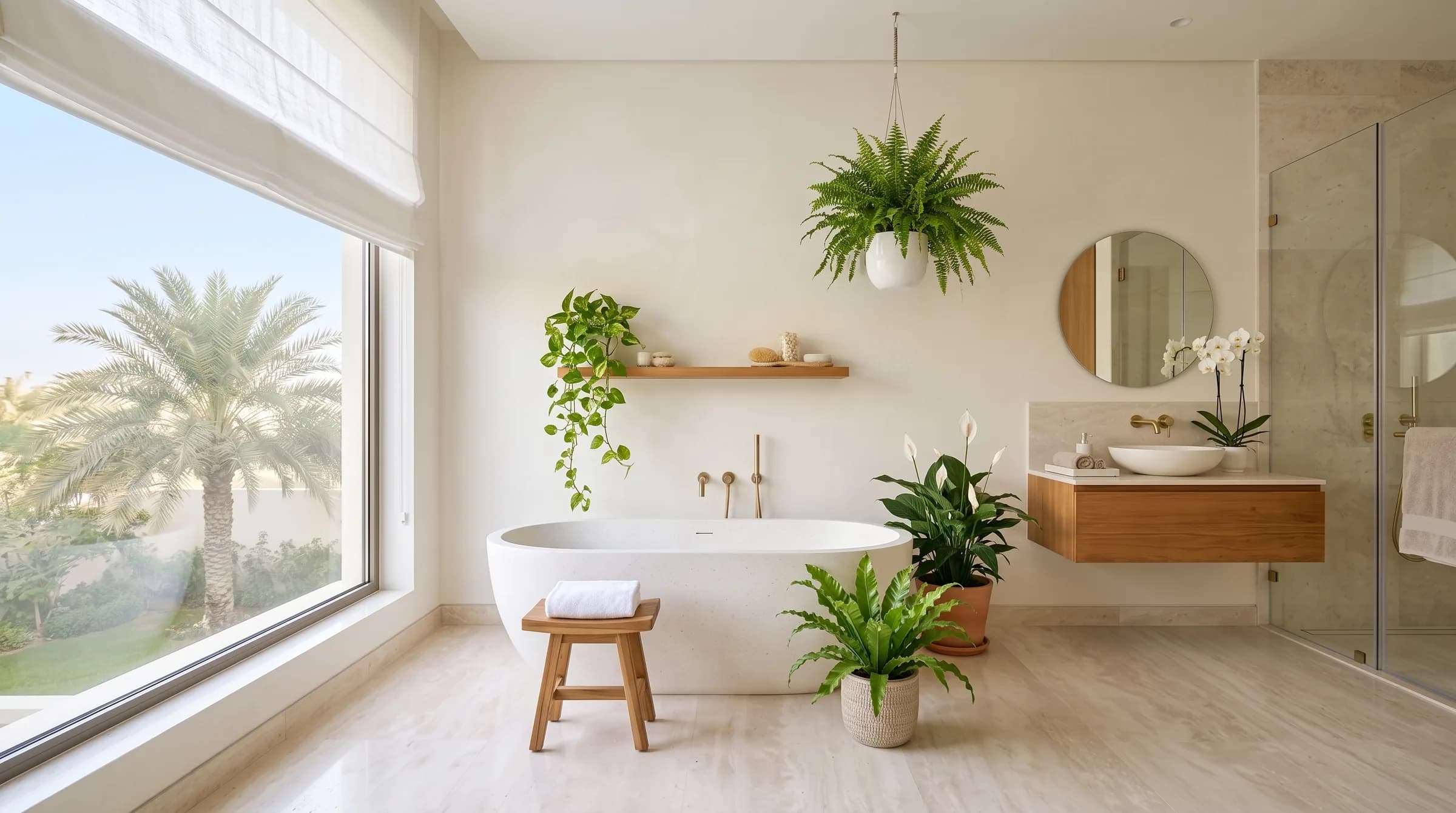
Spa bathroom
Ferns, a white orchid and a trailing vine in white ceramic and teak. It needs a window.
Bathroom
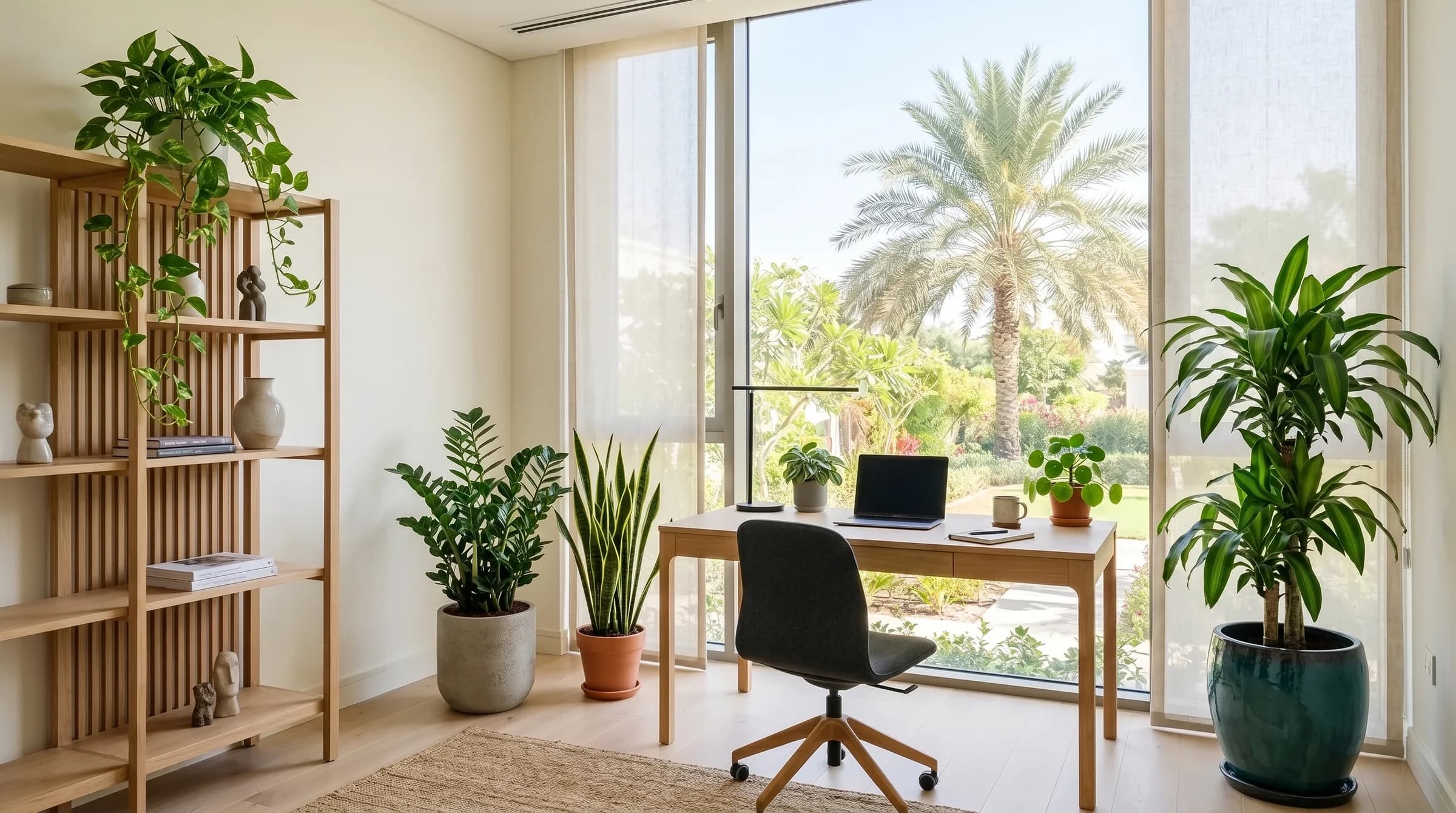
Green home office
Tough, tidy plants for the desk and shelf, chosen to survive weekends and summer trips.
Home office · Bedroom
Sources
- NC State Extension Plant Toolbox: Beaucarnea recurvata (ponytail palm)
- NC State Extension Plant Toolbox: Yucca gigantea (spineless yucca)
- NC State Extension Plant Toolbox: Dracaena trifasciata (snake plant)
- NC State Extension Plant Toolbox: Zamioculcas zamiifolia (ZZ plant)
- ASPCA: ponytail palm
- ASPCA: yucca
- ASPCA: snake plant
- ASPCA: these houseplants can cause trouble for your pets
- University of Maryland Extension: watering indoor plants
- Melinda Myers: low-E glass and houseplants
- Ohio State Extension: cleaning houseplant leaves
- Greensouq: ponytail palm (prices checked 2026-10-07)
- Plantsworld: yucca (prices checked 2026-10-07)
Pool + garden care
From AED 500/month
Price depends on your garden's size, pool and complexity. Prices in AED, excluding 5% VAT.