
Cherry tomato
Solanum lycopersicum var. cerasiforme
Full sunSalt: 1 of 5
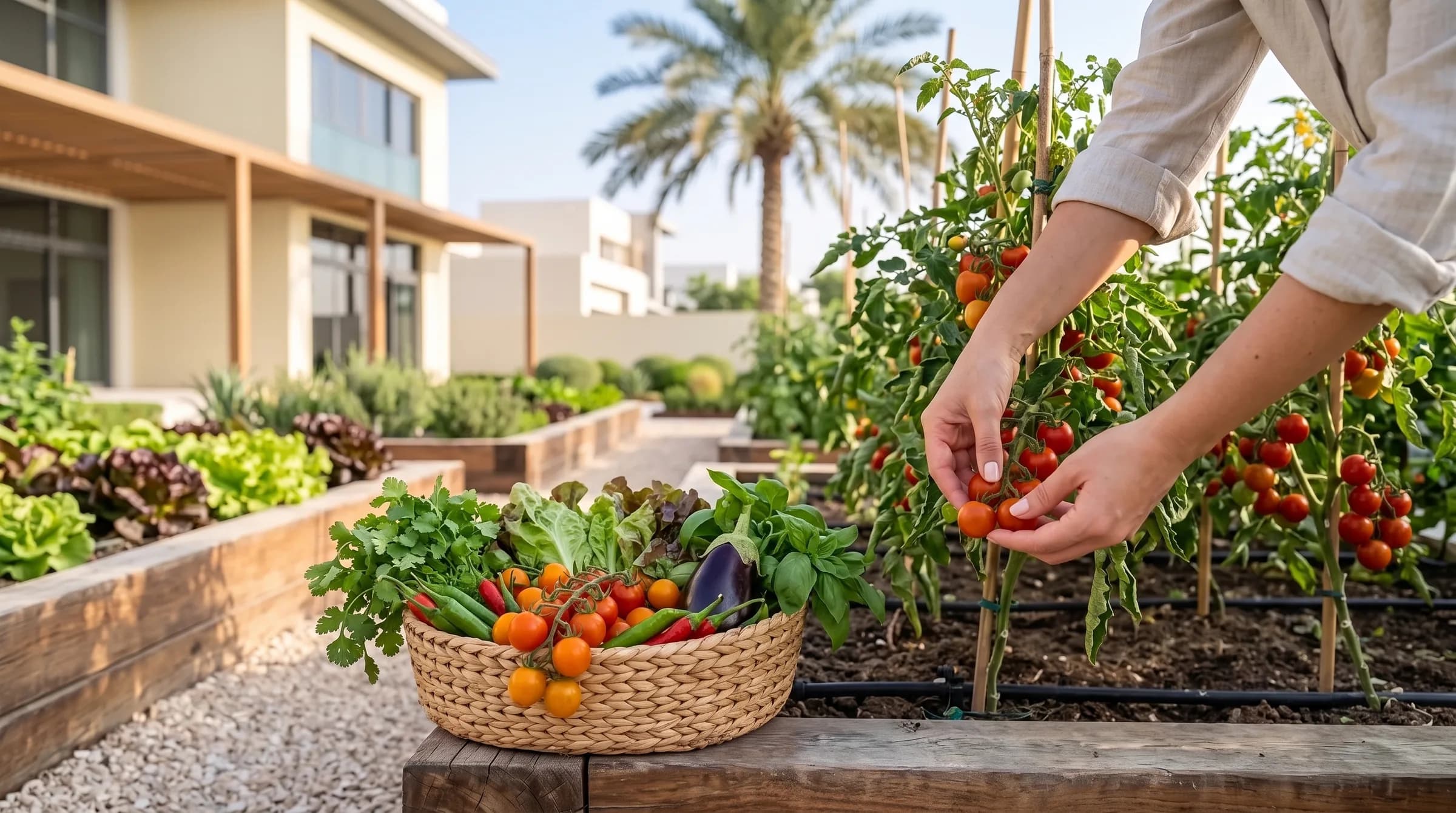
Kitchen garden
Sow in October, pick tomatoes by January, and know what to do when the heat comes back.
Why now
In October 2024 the UAE launched Plant the Emirates, a national programme that encourages residents to grow food at home. The ministry's own shortlist for home gardens includes lemon, Mango, Guava, Fig, Okra, Lettuce, Basil, Mint and Coriander, all of which have a page here, plus radish, rocket, beans, green onion, parsley and thyme.
Dubai's gardening year is back to front compared with Europe's. The cool months, roughly October to March, are for growing. June to September is for survival. Plan a kitchen garden around that rhythm and it works.
Month by month
Timings are for Dubai. The Ministry of Climate Change and Environment publishes its own planting calendar, and ours follows the same shape: nursery sowing from August to November, planting out from September, harvest through spring. Okra, sown in spring, is the big exception.
Pick your setup
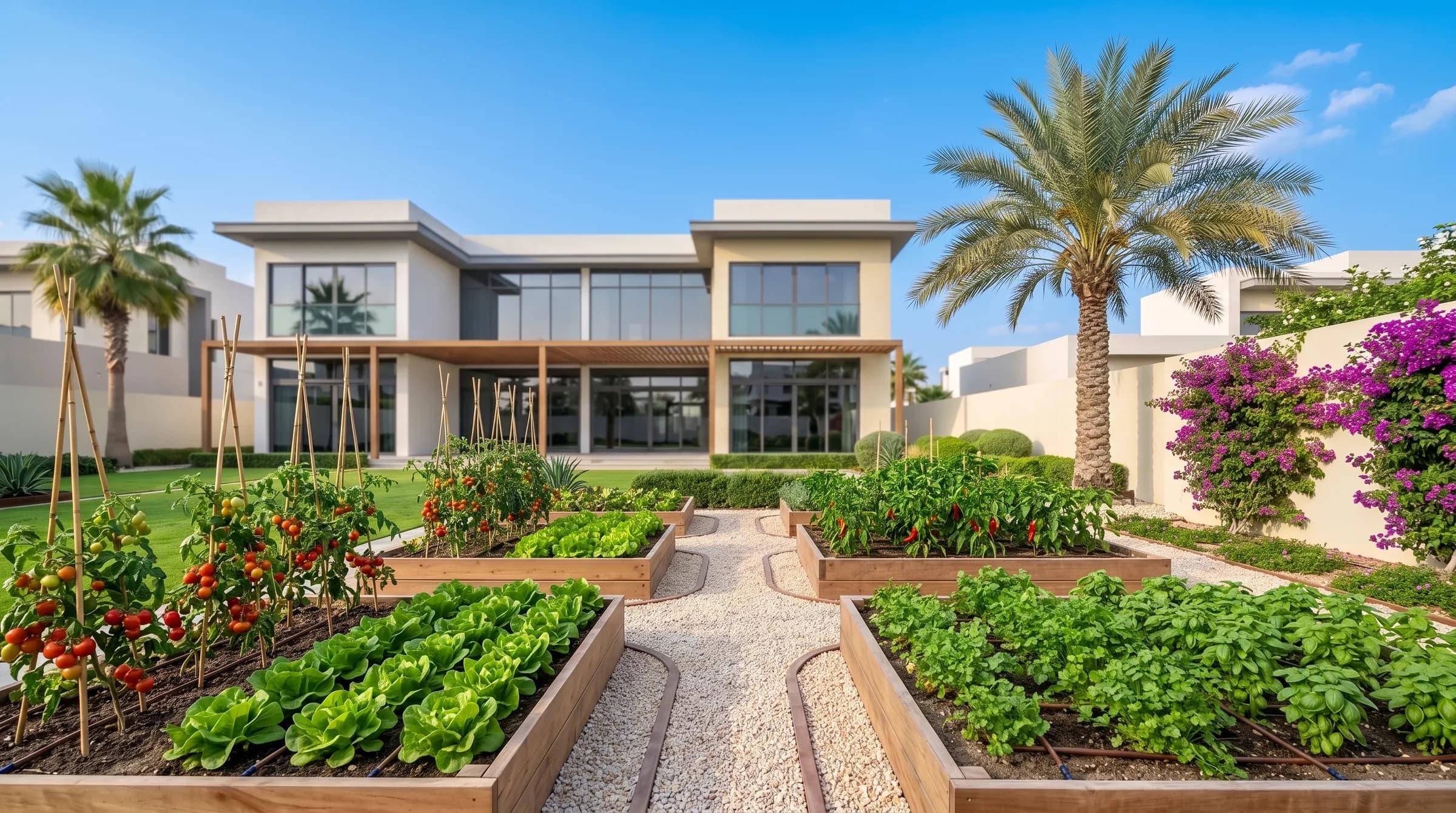
The classic: a pair of beds beside the terrace or along a sunny wall.
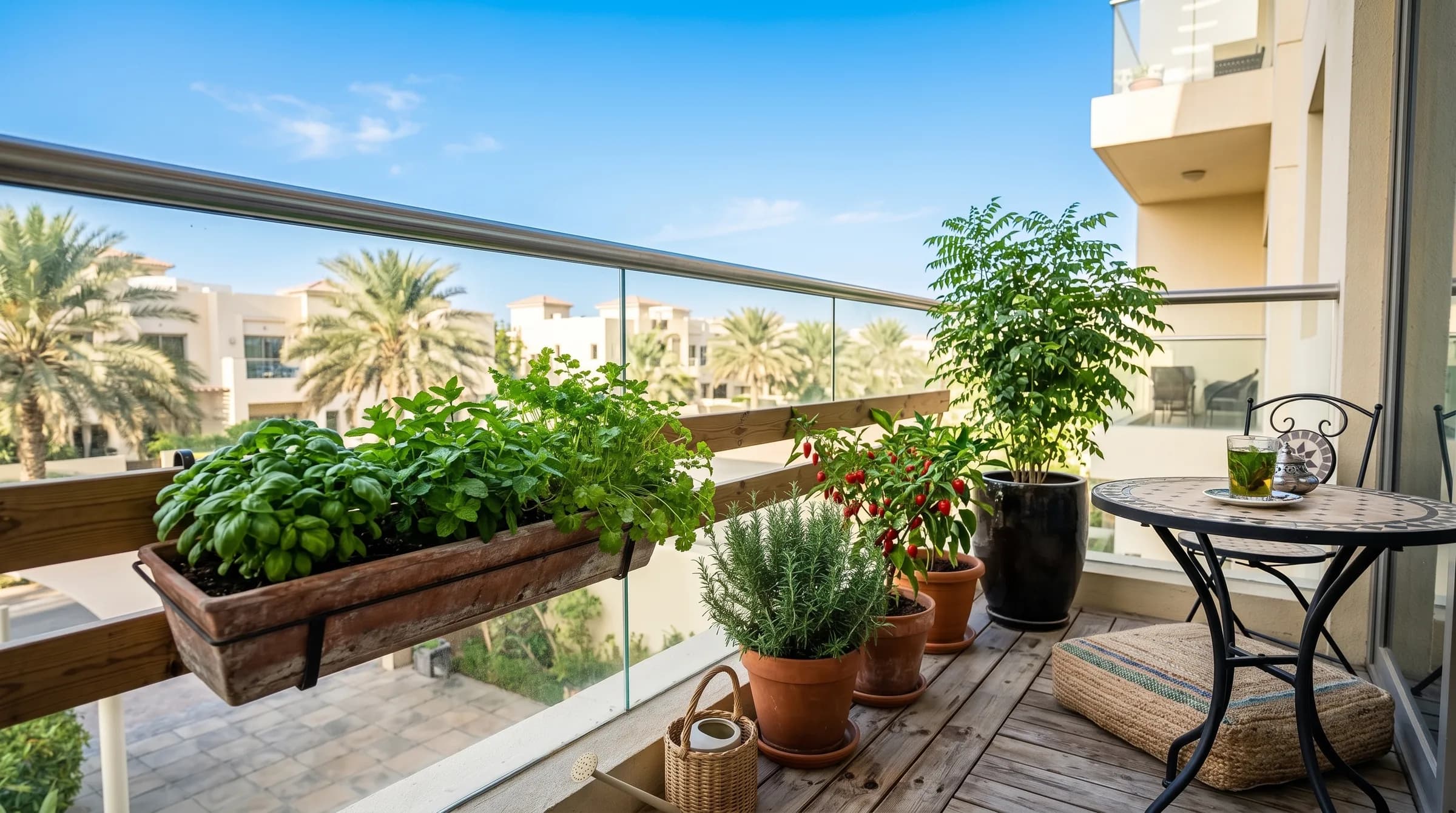
Herbs, chillies and a tomato or two, in pots you can move with the sun.
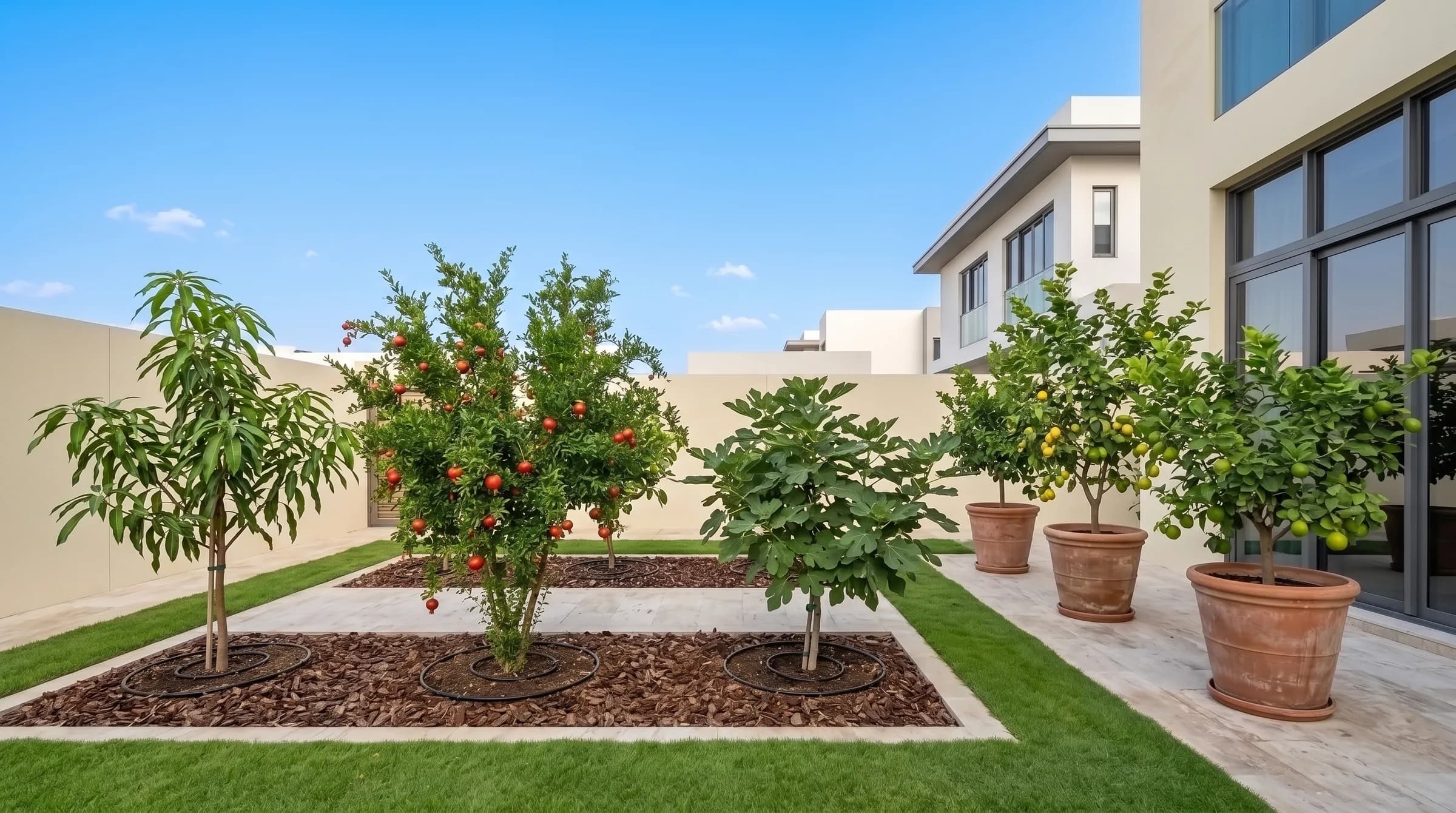
A sunny corner for lemon, fig or pomegranate. Plant early: young trees take a few years to crop fully.
Step by step
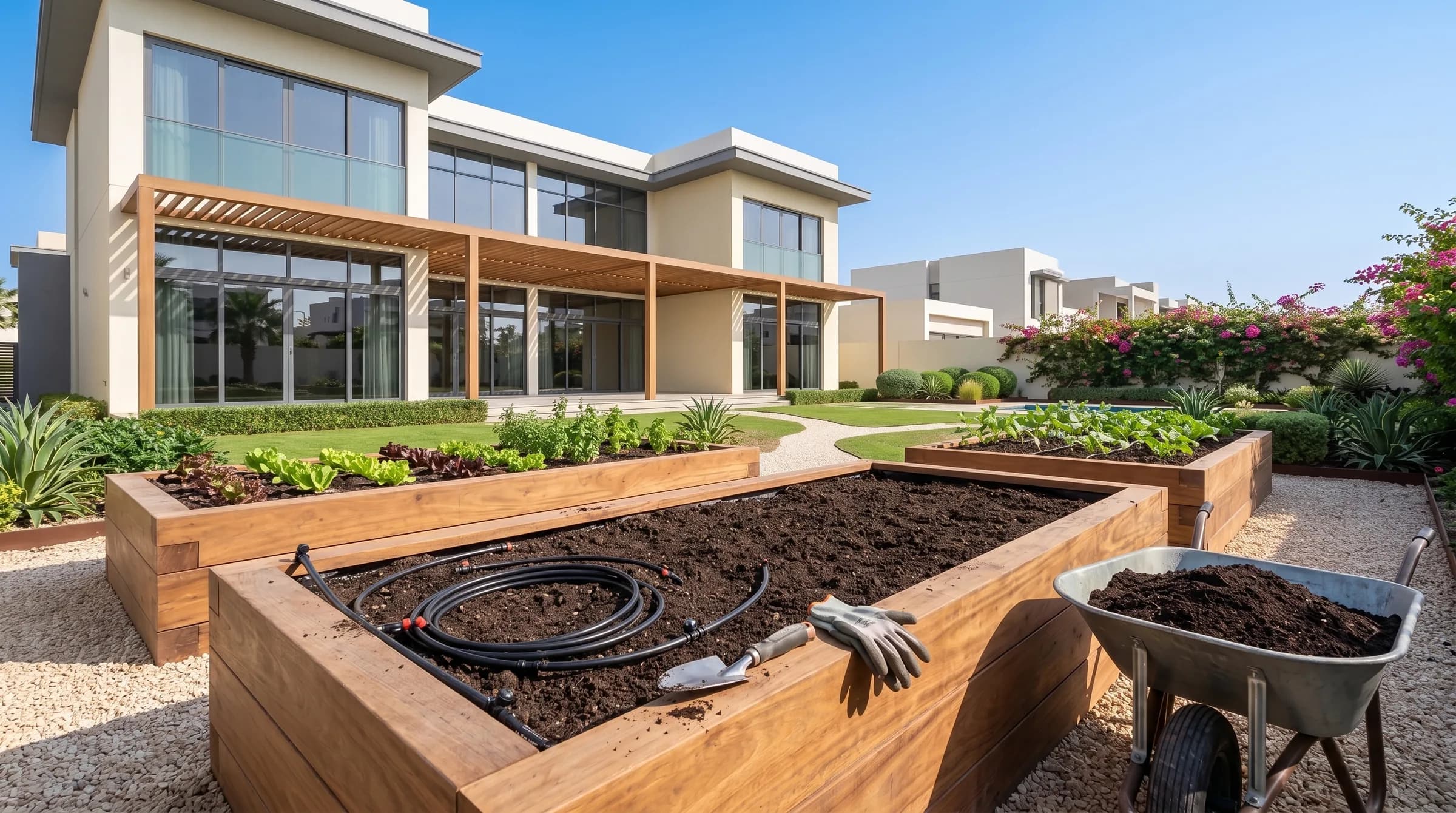
Pick a spot with full sun through winter, out of the wind, near a tap and somewhere you walk past every day. Run long beds north to south so tall crops do not shade short ones.
N–Slong side
Make it 1.2 m wide, so you can reach the middle from both sides without stepping in and compacting the soil. Any length works; 2.4 m suits standard timber. Thirty centimetres of soil is enough for salad and herbs. Go to 45 cm for the rest.
1.2 mwide
Timber, either hardwood or pressure-treated softwood, is the easy choice and lasts for years. Blockwork or engineering brick is permanent. Steel, corten included, heats up in full summer sun and warms the soil at its edges, so line the inside face or plan to shade it. Avoid creosoted sleepers.
Timbereasiest start
Dubai's native ground is sand, which holds little water and few nutrients. Fill the bed with screened, low-salinity sweet soil and blend in compost or well-rotted manure from the soil improvement range. As a starting mix, aim for about a quarter compost by volume. Water it in and let it settle before you plant.
¼compost
Run a drip line across the bed and put it on a timer set to finish before 8 am. Drip puts the water at the roots and wastes little; a smart controller trims the run times as the season changes. Use mains water: treated sewage effluent (TSE) is not allowed on vegetables and fruit that people eat.
8 amwater by
Fix a frame over the bed while you build, even though you will not need it until April. Shade cloth of 30 to 50 percent suits most vegetables. Put it on in April, when the average high reaches about 34°C, and leave it up until the heat breaks.
30–50%shade cloth
Plant seedlings from October, or sow direct. Mulch with organic matter to hold moisture and keep the soil cool; skip black plastic. Sow lettuce and coriander a short row at a time, every two weeks, so the harvest never arrives all at once. Move tomato, aubergine and chilli, which are all nightshades, to a different bed each year.
2 weeksbetween sowings
What to grow
Cherry tomato
Solanum lycopersicum var. cerasiforme

Lettuce
Lactuca sativa

Chilli
Capsicum annuum

Aubergine
Solanum melongena

Cucumber
Cucumis sativus

Okra
Abelmoschus esculentus

Basil
Ocimum basilicum

Coriander
Coriandrum sativum

Mint
Mentha spicata

Rosemary
Salvia rosmarinus

Curry leaf
Murraya koenigii

Lemongrass
Cymbopogon citratus

Lemon tree
Citrus × limon

Fig
Ficus carica

Pomegranate
Punica granatum

Guava
Psidium guajava

Mulberry
Morus alba

Mango
Mangifera indica

Papaya
Carica papaya

Moringa
Moringa oleifera
June to September
Average daytime high, °C
Best for most gardens. A rested, solarised bed is the best start for October.
For the plants that like it hot.
Water in the early morning, when there is less evaporation and the plants can use the water all day. DEWA's cut-off is 8 am; finish earlier where you can. Water deeply and less often, then let the surface dry before you water again.
Common mistakes
September can feel like autumn, but the average high is still 39.5°C. Seedlings put out in it scorch and stall.
InsteadStart seed in shaded trays in September and plant out from October, when the average high drops below 36°C.
Native ground holds little water and few nutrients, so plants thirst and starve at the same time.
InsteadFill beds with sweet soil and compost, and top up with compost every season.
Afternoon water evaporates before the roots can use it, and a splash every day keeps roots shallow.
InsteadWater before 8 am, deeply and less often, through a drip line on a timer.
Treated sewage effluent is widely used for landscape irrigation, but UAE rules prohibit treated wastewater on vegetables and fruit that people eat.
InsteadAsk which supply feeds your garden lines, and give edible beds mains water.
Soil pests and diseases attack the same plant family over and over. Tomato, aubergine and chilli all belong to one.
InsteadRotate families between beds, or rest and solarise the bed over summer.
By May the average high is 38°C. Lettuce bolts, coriander runs to seed and fruit scalds.
InsteadFit 30 to 50 percent shade cloth in March or April, before the heat arrives.
Questions
Prepare the bed in September, start seedlings in shaded trays, and sow or plant out from October, when the average daytime high drops below 36°C. Lettuce and coriander can be sown until February. Tomatoes are best started by December, and the main crops of aubergine and chilli by October. Okra is the exception: it is sown in spring.
A few, yes; most, no. From June to September the average high sits close to 40°C or above and nights stay at 28°C or more, so tomatoes, lettuce and cucumbers stop. Okra, curry leaf and lemongrass keep going, and some hot chillies survive, though flowers drop. Shade cloth, mulch and early-morning watering help. Most gardeners rest the bed and solarise it instead.
Not the ground's sand on its own, which holds little water and few nutrients. Fill the bed with screened, low-salinity sweet soil and blend in compost or well-rotted manure, roughly a quarter by volume to start with. Ask your supplier for the soil's salinity (EC) reading, and top up with compost each season.
There is no single number: it depends on the crop, the month and the soil. As a planning figure, our designer assumes about 2 litres per square metre per day in winter and 4 in summer for drip-fed beds. Push a finger into the soil and water when the top few centimetres are dry. Water in the early morning, deeply and less often, from a drip line on a timer, and use mains water rather than treated effluent.
Start with herbs and lettuce, which can be picked within two months of sowing in cool weather. Cherry tomatoes are the classic first crop and give picking from January. Okra, mint and rosemary have the highest ease-of-care rating among our vegetables and herbs, 4 out of 5.
In Dubai a raised bed is the easier route: you control the soil from day one, drainage is good and nobody walks on the planting area. Planting in the ground works too, but you have to dig out the sand and blend sweet soil and compost in deep enough for the roots.
Done for you
We build the beds, bring the sweet soil, lay the drip line and plant it for you.