Indoor style
Spa bathroom
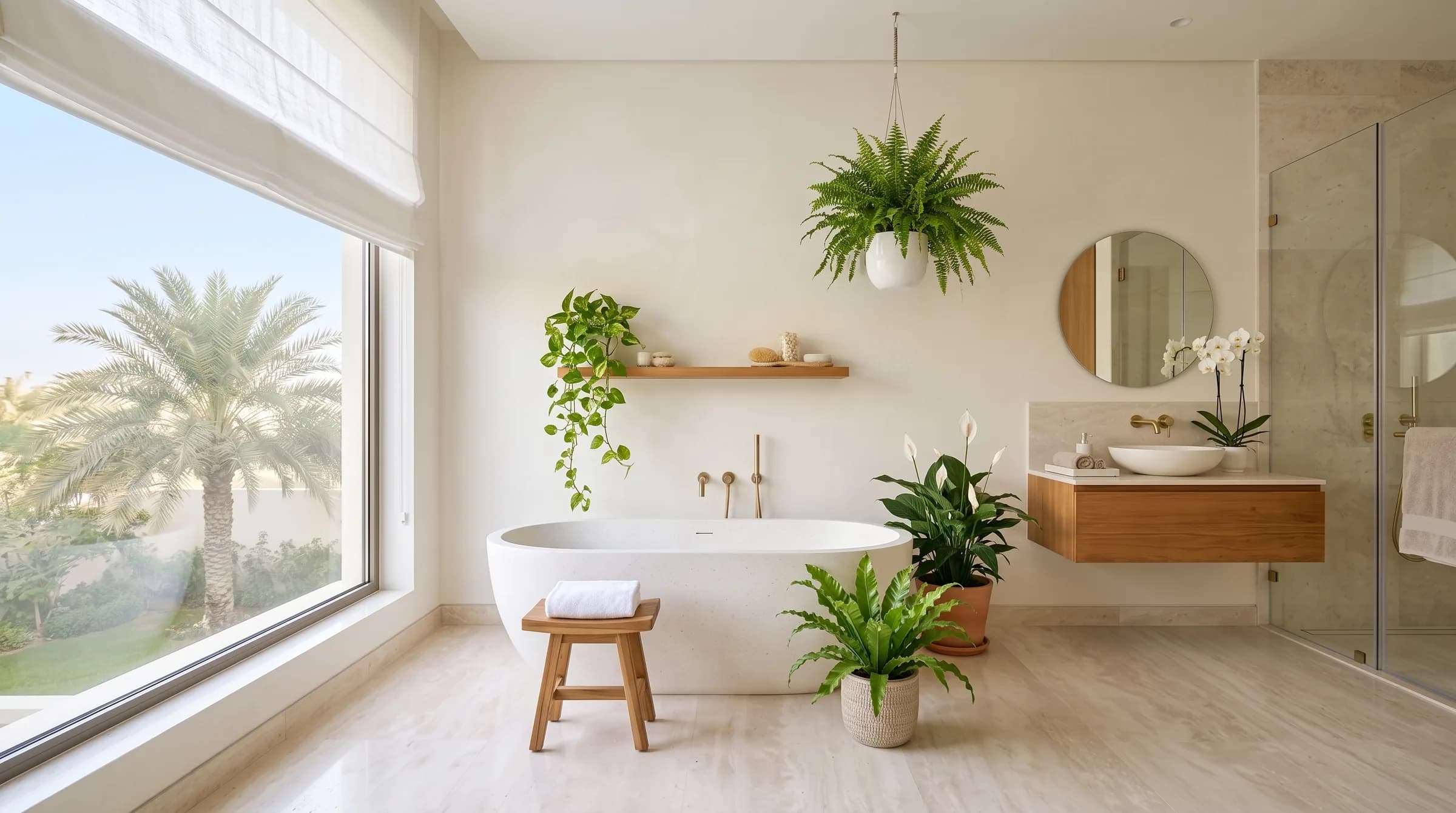
Ferns, a white orchid and a trailing vine in white ceramic and teak. It needs a window.
- Bathroom
- Medium–Bright
- Effort: 3 of 5
A soft, spa-like look for a bathroom with a window: ferns, a white orchid and trailing pothos in white ceramic, teak and travertine. No window, no live plants: every plant here still needs daylight.
The mood
What the spa bathroom look feels like
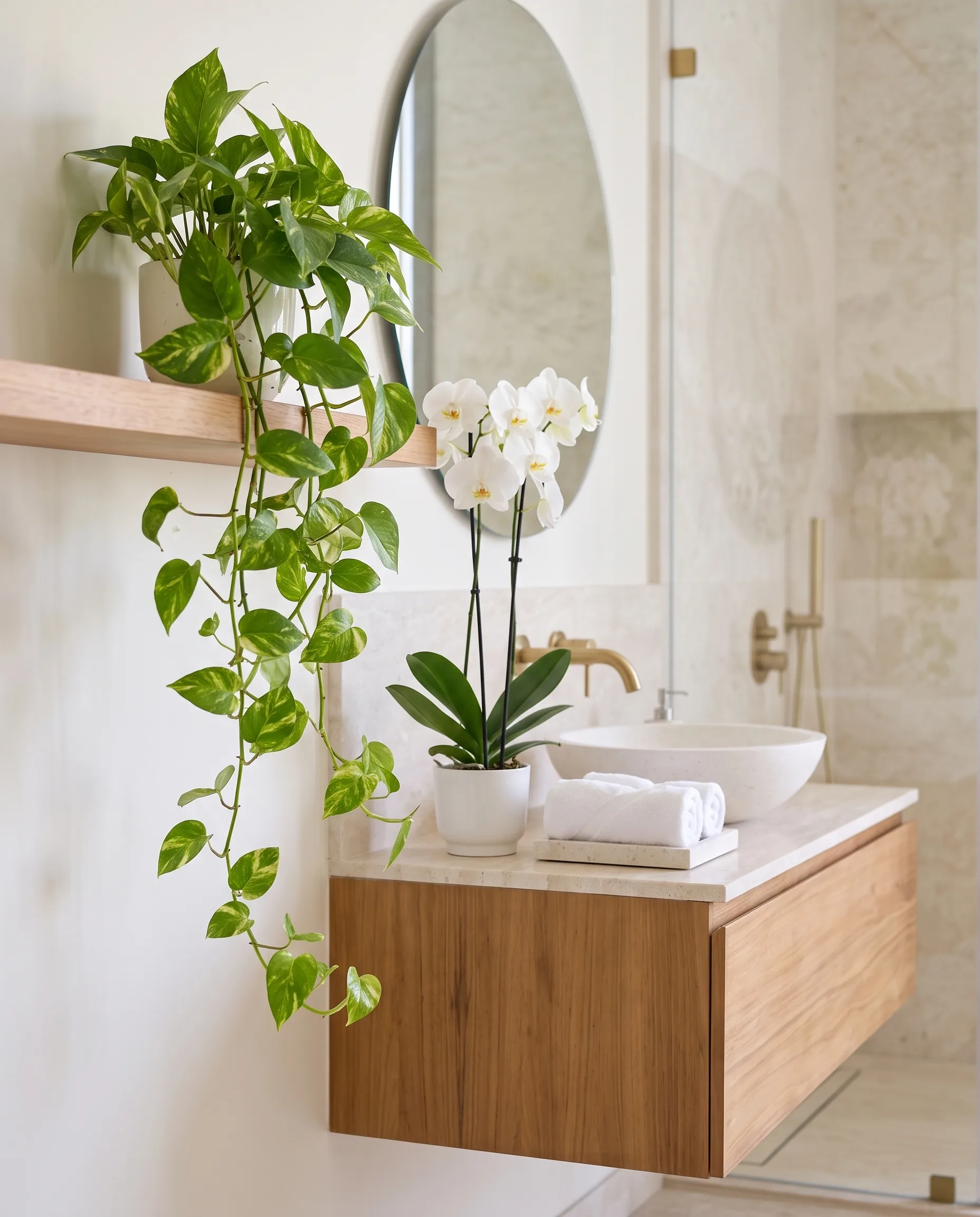
A spa bathroom pairs travertine, teak and white ceramic with soft, feathery foliage: a Boston fern or bird's nest fern on a stool, a white moth orchid on the vanity and pothos trailing from a shelf. NC State says Boston fern suits kitchens and bathrooms, where the air is more humid.
The one rule is a window. Steam helps ferns, but no plant in this set grows without daylight, and some flats put the bathroom in the middle of the home with no glass at all. If yours has no window, skip live plants and use cut stems or good artificial ones. A clear or frosted window with soft, indirect light is ideal.
Showers add steam only for a short time, so ferns still need soil that never dries out (NC State). Run the extractor fan or open the window after a shower: the EPA advises keeping indoor humidity below 60% to limit mould.
Check pets before you buy. The ASPCA lists Boston fern and moth orchid as non-toxic to cats and dogs, and peace lily and pothos as toxic. Bird's nest fern is not on the ASPCA list; treat with caution.
- Soft
- Spa-calm
- Fresh
- Feathery
- Quiet
Palette
- Travertine #DACBB0
- White ceramic #F7F5F0
- Warm teak #A16F45
- Soft sage #A3B99F
- Fern green #4E8C4F
- Pebble grey #BEBBB3
Key plants
What grows into the spa bathroom look

Boston fern
Nephrolepis exaltata

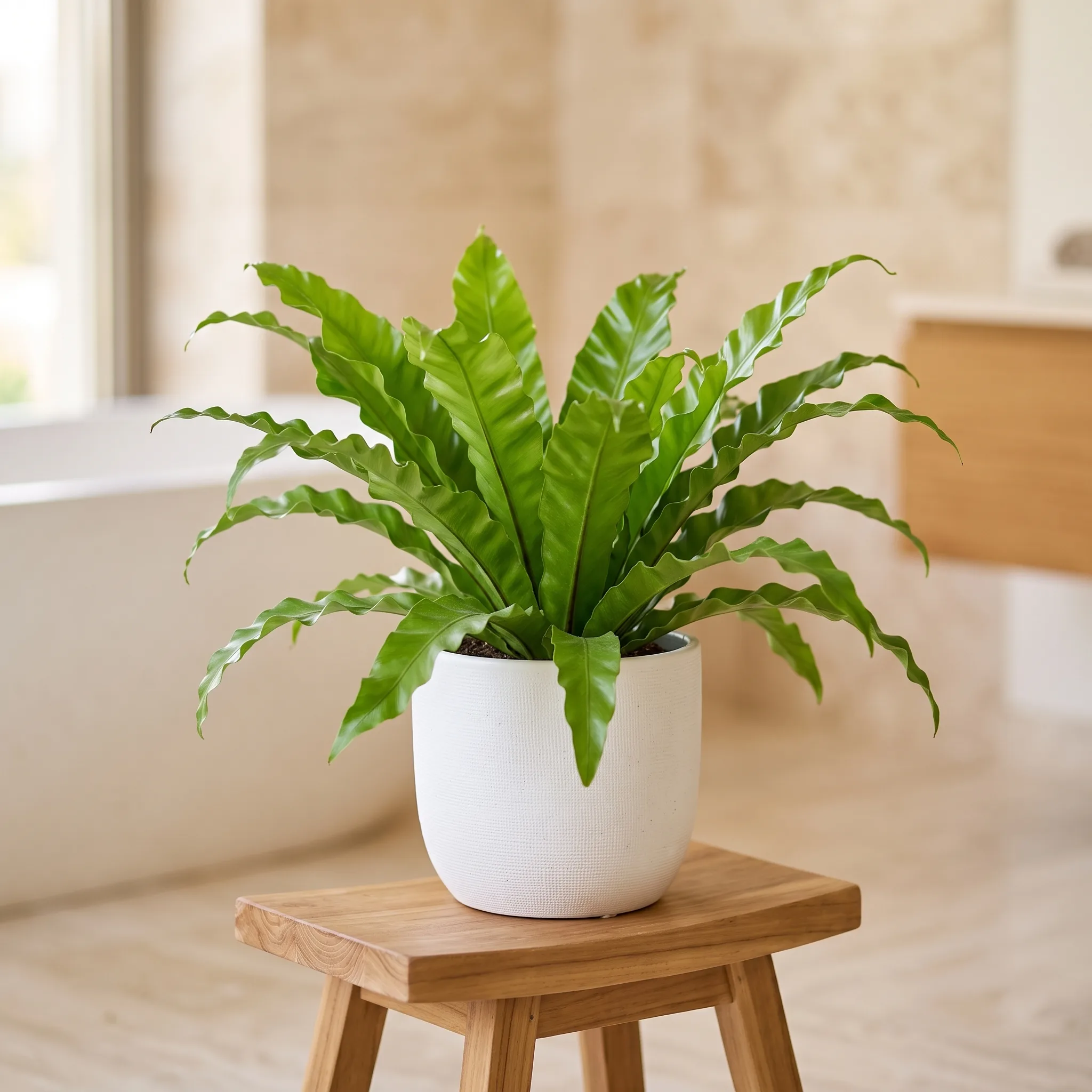
Bird's nest fern
Asplenium nidus

Moth orchid
Phalaenopsis hybrids

Pothos
Epipremnum aureum

Peace lily
Spathiphyllum wallisii

ZZ plant
Zamioculcas zamiifolia
Starter set
Start the spa bathroom look
Moth orchid
Phalaenopsis hybrids
Boston fern
Nephrolepis exaltata
Pothos
Epipremnum aureum
A rough budget
AED 300–750
Plants AED 180–290: moth orchid 100–180, Boston fern 41–51, pothos 38–55 (Adplants, Plantsworld, Heavenly, Plantshop.me; 2026-10-07). Pots: IKEA UAE ceramic AED 25–95; cover pots are our estimate.
How to get the look
Step by step
Step 1: Check for a window
Look at the light first. You need a window, clear or frosted, that lets daylight in. With no window, stop here: no live plant in this set will last.
Step 2: Place each plant by light
Ferns on a stool or shelf, out of direct sun on the glass. Moth orchid on the vanity in bright, indirect light, out of direct summer sun (RHS). Pothos trailing from a high shelf.
Step 3: Pot in white and stone
Use white ceramic, travertine and teak. Put each plant in a cover pot so you can lift it out to drain, and empty any saucer after watering (University of Maryland Extension).
Step 4: Keep the ferns moist
Boston fern and bird's nest fern need soil that never dries out (NC State), but must not sit in water. Check with a finger every few days. Water the orchid weekly in the growing season and let it drain (RHS).
Step 5: Ventilate after showers
Run the extractor fan or open the window after a shower. The EPA advises keeping indoor humidity below 60%, ideally 30–50%, to limit mould.
Step 6: Help the orchid rebloom
RHS advises moving a moth orchid to a spot about 5°C cooler for a month or so to trigger new flower stems, then cutting the old stalk back to just above the second node.
Pots and planters
- White glazed ceramic with a cover pot, so the plant lifts out to drain
- Pebble trays under ferns: they raise humidity only around the leaves, not the room
- A hanging or wall-mounted pot for trailing pothos
- A slotted orchid pot inside a white cover pot; roots must never sit in water
Furniture and finishes
- Travertine or limestone vanity top and tiles
- A teak stool or slatted teak shelf
- A clear or frosted window, ideally with a palm or garden outside
- White cotton towels and a linen blind
In a Dubai home
What is different here
- Some Dubai flats have internal bathrooms with no window. Without daylight a live plant declines, so skip them or use good artificial stems. Where there is a window, frosted glass gives soft, even light.
- Steam lasts minutes; an AC home is dry the rest of the day. Brown fern tips usually mean low humidity or over-feeding (Iowa State Extension). Only a humidifier changes room humidity, not misting (University of Nebraska-Lincoln).
- Tinted glass cuts light: low-E coating alone takes a further 5–10% (Melinda Myers). If growth turns spindly, light is usually the problem, so give the plant a brighter window rather than more water (Iowa State Extension).
- An AC setting of 24–26°C sits inside a moth orchid's 19–30°C daytime range (RHS). Keep it out of direct summer sun on the glass and out of the vent's direct airflow.
Pros
- Ferns suit a bathroom's steam; Boston fern and moth orchid are non-toxic to pets (ASPCA)
- A soft, spa-like look in the smallest room of the home
- Cheap to start: Boston fern from AED 41, moth orchid from about AED 100
Cons
- No window, no look: every plant here needs daylight
- Ferns brown quickly if the soil dries out or the air is dry
- Steam needs ventilation: the EPA advises keeping humidity below 60% to limit mould
- Peace lily and pothos are toxic to pets; bird's nest fern is not on the ASPCA list
FAQ
Common questions
Can I put plants in a bathroom with no window?
Not live ones, for long. Every plant in this set needs daylight, and steam does not replace it. Use cut stems or good artificial plants, or keep the plants in a bright room instead.
Do plants like the steam from a shower?
Ferns like the extra humidity: NC State suggests Boston fern near kitchens and bathrooms. But steam lasts minutes, so ferns still need moist soil and good light. A pebble tray raises humidity around the leaves and a humidifier changes the whole room; misting does not (University of Nebraska-Lincoln).
Which bathroom plants are safe for cats and dogs?
The ASPCA lists Boston fern and moth orchid as non-toxic to cats and dogs. It lists peace lily and pothos as toxic. Bird's nest fern is not on the ASPCA list; treat with caution.
How do I stop mould in a bathroom with plants?
Ventilate. The EPA advises running a fan or opening a window when showering, and keeping indoor humidity below 60%, ideally 30–50%. Do not leave water standing in saucers, and lift pots out to drain.
Why won't my moth orchid flower again?
Rooms that stay evenly warm often stop an orchid reblooming. RHS says to move it to a spot about 5°C cooler for a month or so, then cut the old stalk back to just above the second node. Keep it in bright, indirect light and out of direct summer sun, and never let the roots sit in water.
Keep exploring
Other indoor styles
Japandi calm
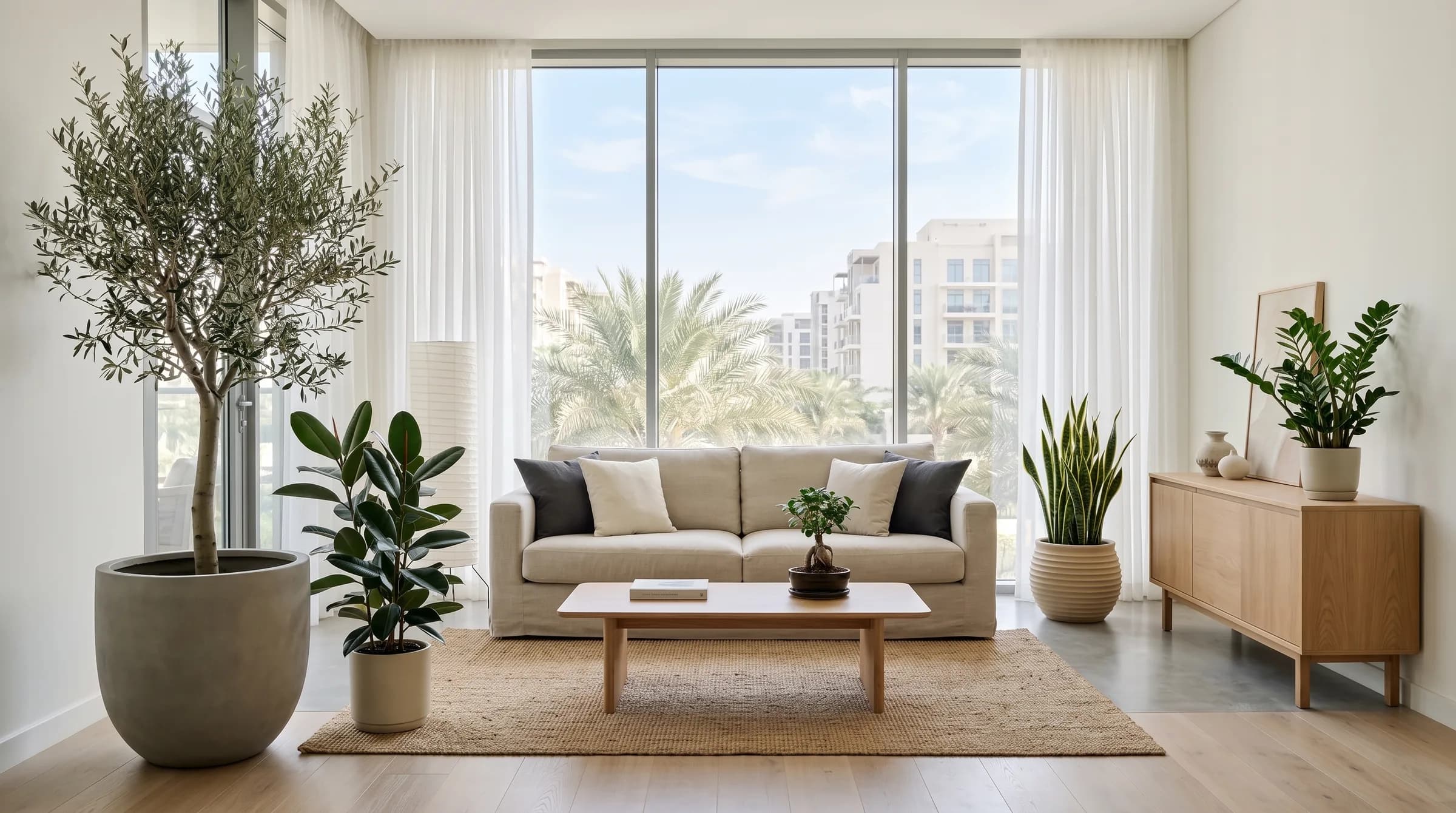
One characterful plant per room, in matte stone and sand pots, with space left around it.
Living room · Bedroom
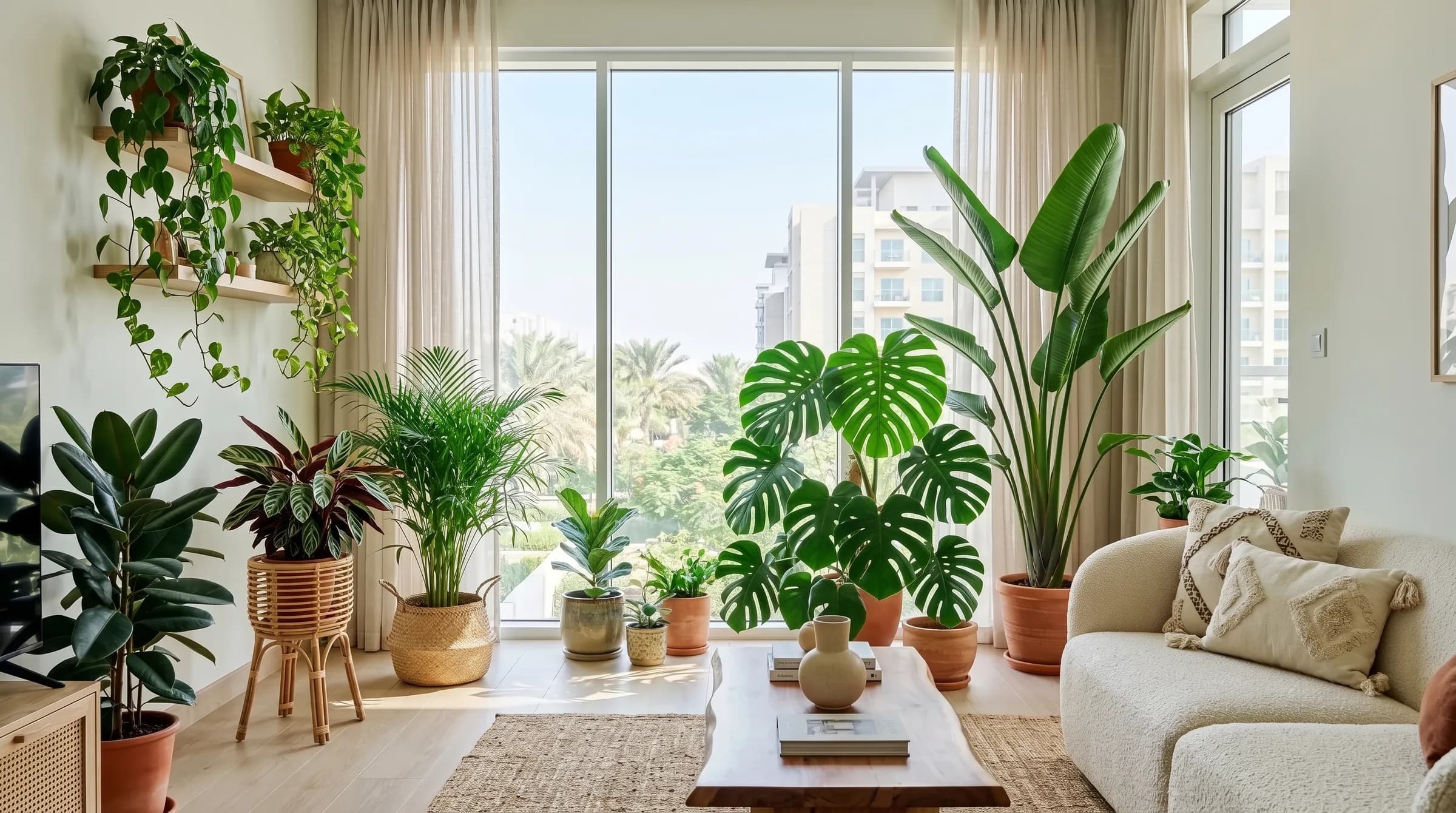
Urban jungle
Big leaves, trailing vines and plants at every height, in terracotta, rattan and baskets.
Living room
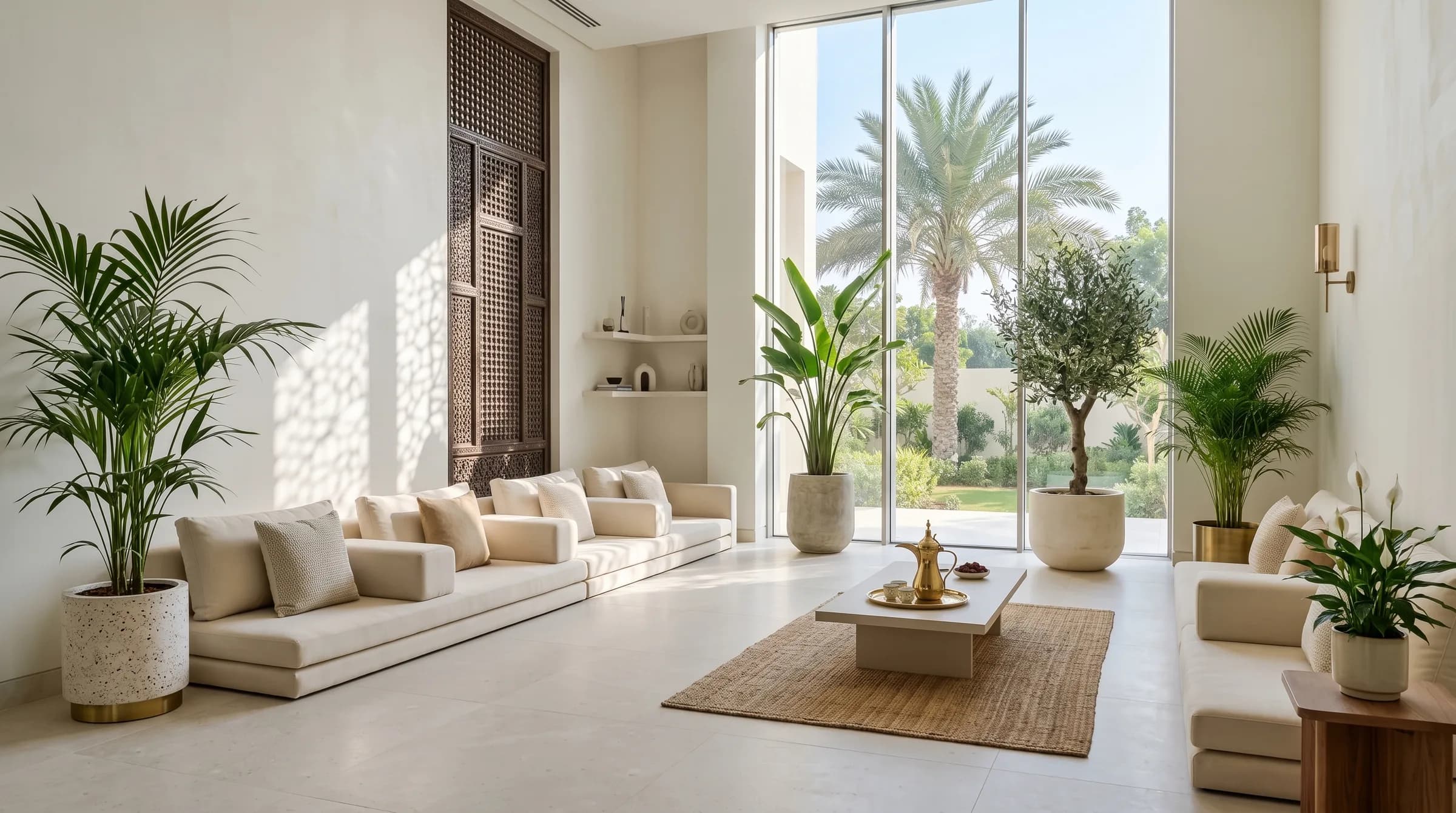
Modern majlis
Matching palms, brass and limestone: a formal, symmetrical look for a villa majlis.
Majlis · Living room
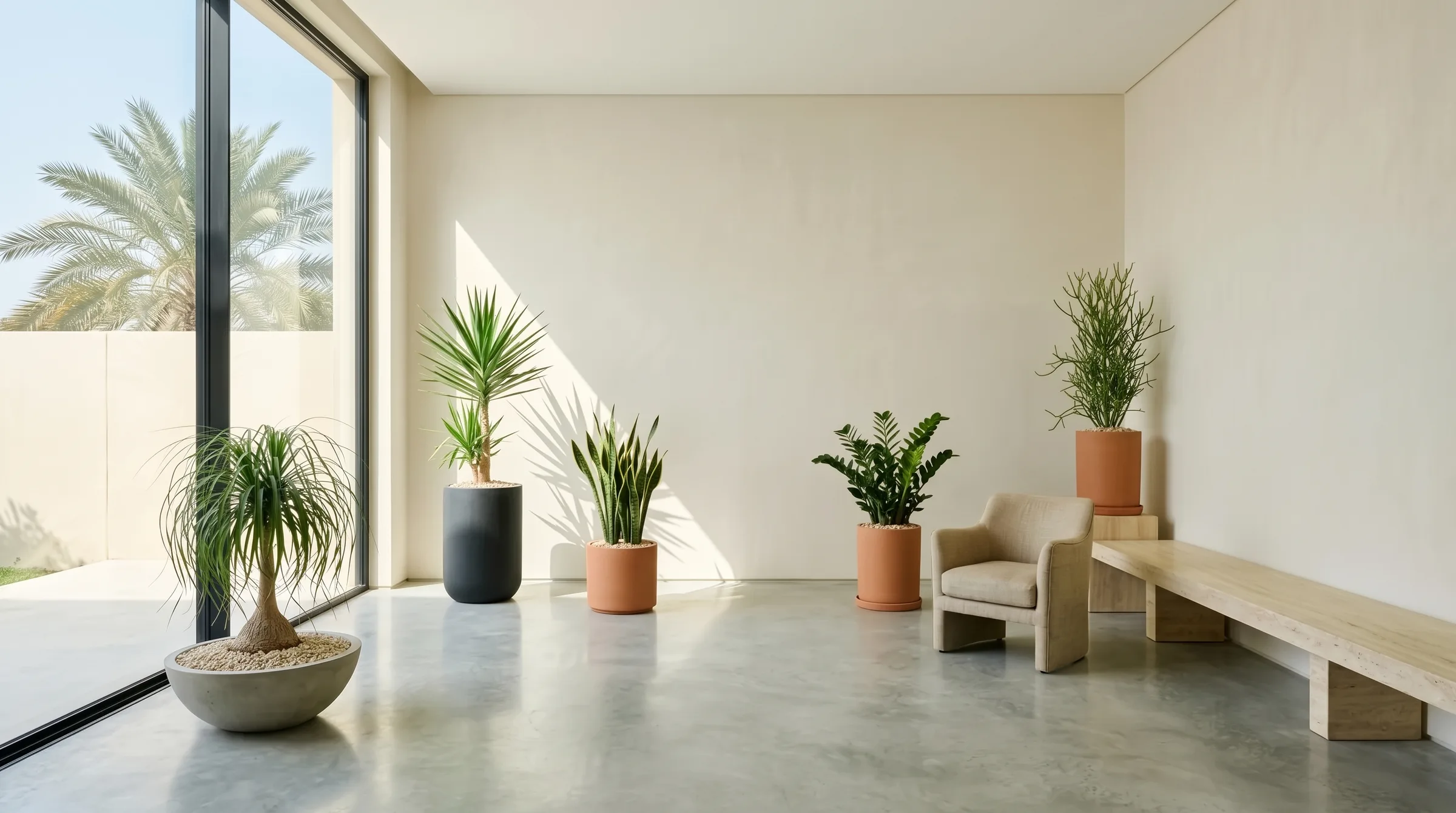
Sculptural minimal
One bold, architectural plant per corner, in concrete and terracotta against pale plaster.
Living room · Hallway · Home office
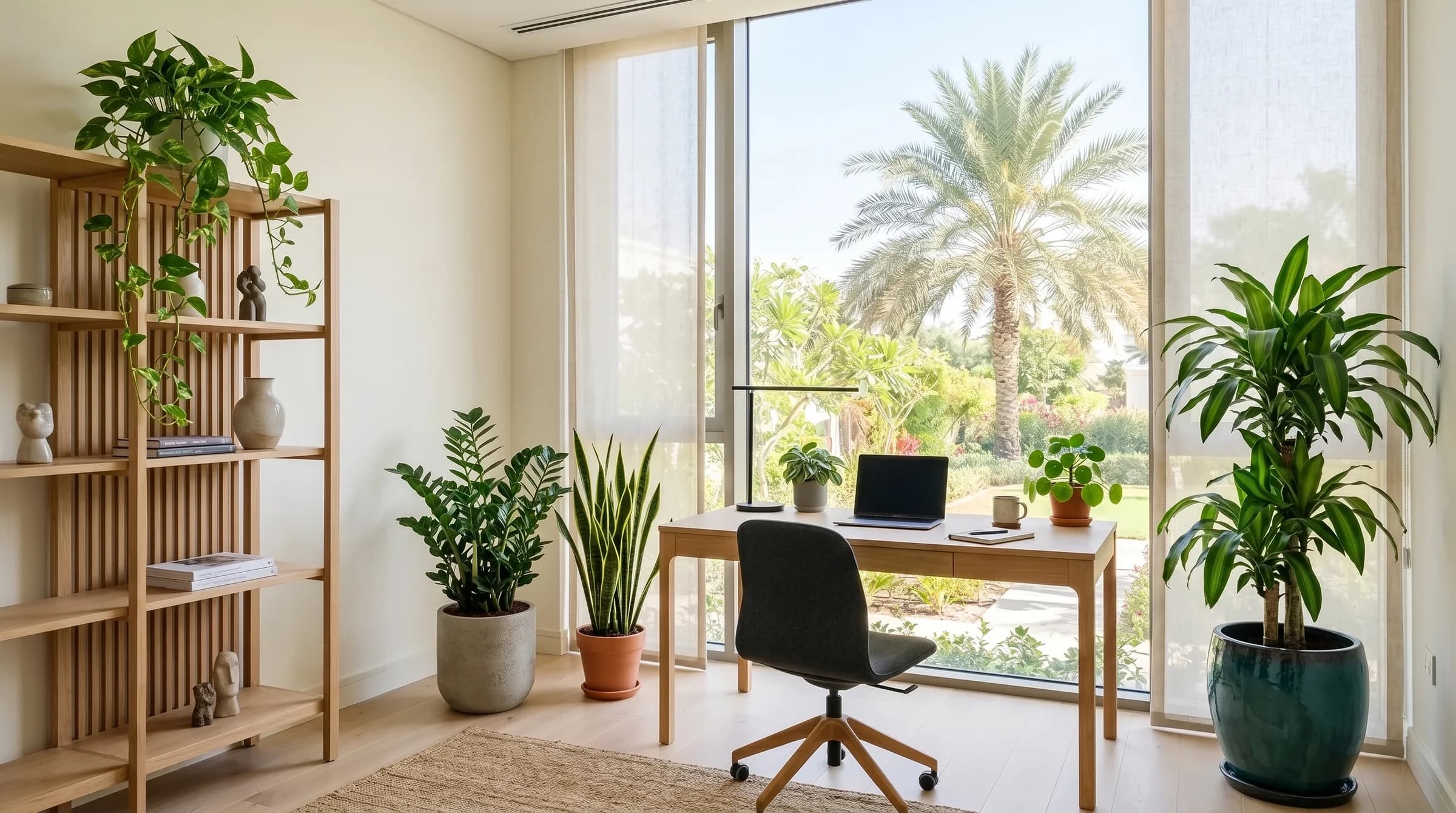
Green home office
Tough, tidy plants for the desk and shelf, chosen to survive weekends and summer trips.
Home office · Bedroom
Sources
- NC State Extension Plant Toolbox: Nephrolepis exaltata (Boston fern)
- NC State Extension Plant Toolbox: Asplenium nidus (bird's nest fern)
- RHS: Phalaenopsis growing guide
- US EPA: a brief guide to mold, moisture and your home
- ASPCA: Boston fern
- ASPCA: Phalaenopsis orchid
- ASPCA: peace lily
- ASPCA: golden pothos
- University of Nebraska-Lincoln Extension: houseplant humidity
- Iowa State Extension: diagnosing houseplant problems
- Melinda Myers: low-E glass and houseplants
- Adplants: orchids (prices checked 2026-10-07)
- Plantsworld: indoor plants (prices checked 2026-10-07)
- Heavenly Plants: indoor plants (prices checked 2026-10-07)
- Plantshop.me: Boston fern (prices checked 2026-10-07)
Pool + garden care
From AED 500/month
Price depends on your garden's size, pool and complexity. Prices in AED, excluding 5% VAT.