Indoor style
Urban jungle
Big leaves, trailing vines and plants at every height, in terracotta, rattan and baskets.
- Living room
- Medium–Bright
- Effort: 4 of 5
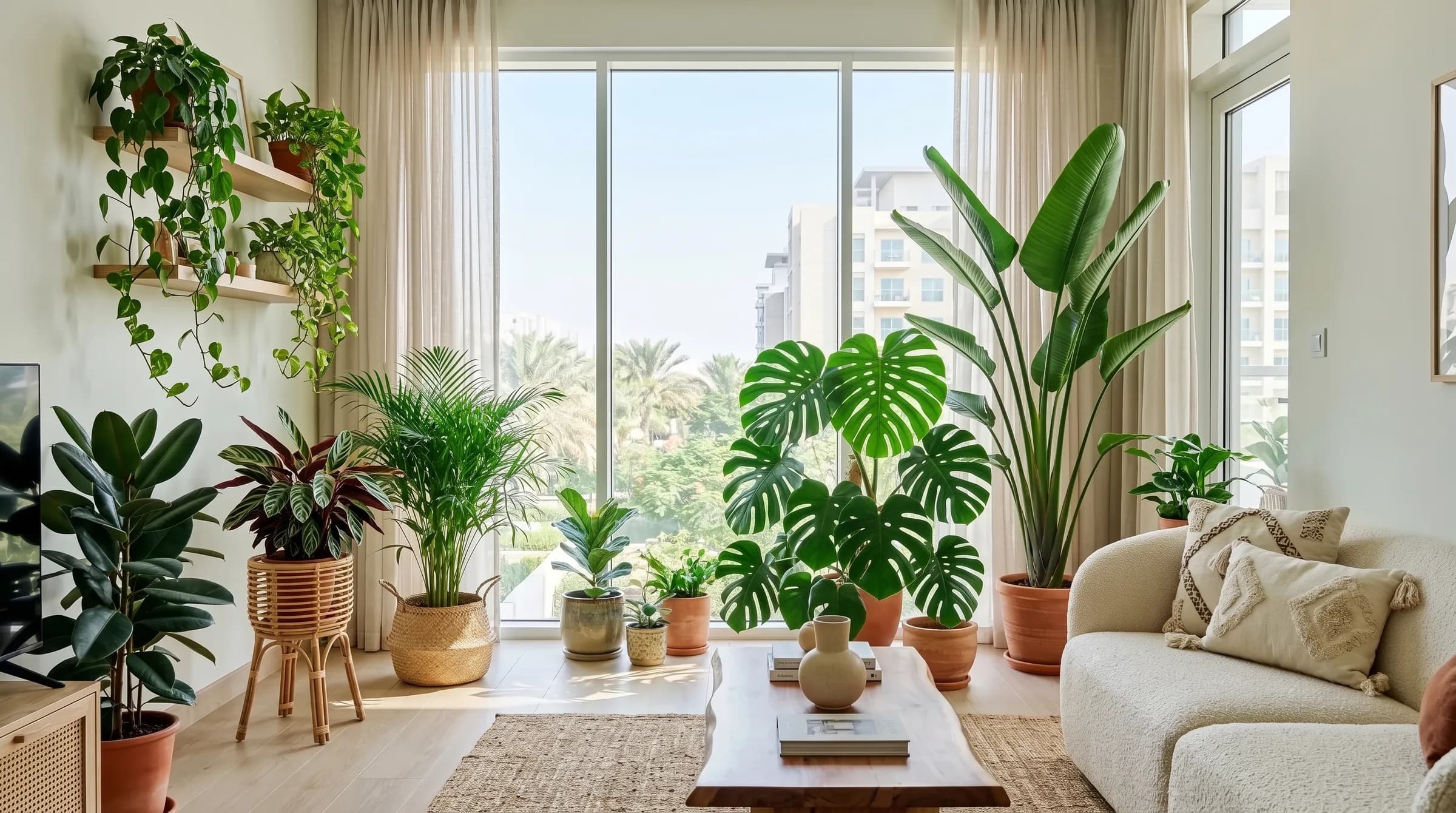
A lush, layered living-room look: a big-leaf hero, a palm, trailing vines and plants at different heights. The most rewarding style to build, and the one that asks most of you in dry AC air.
The mood
What the urban jungle look feels like
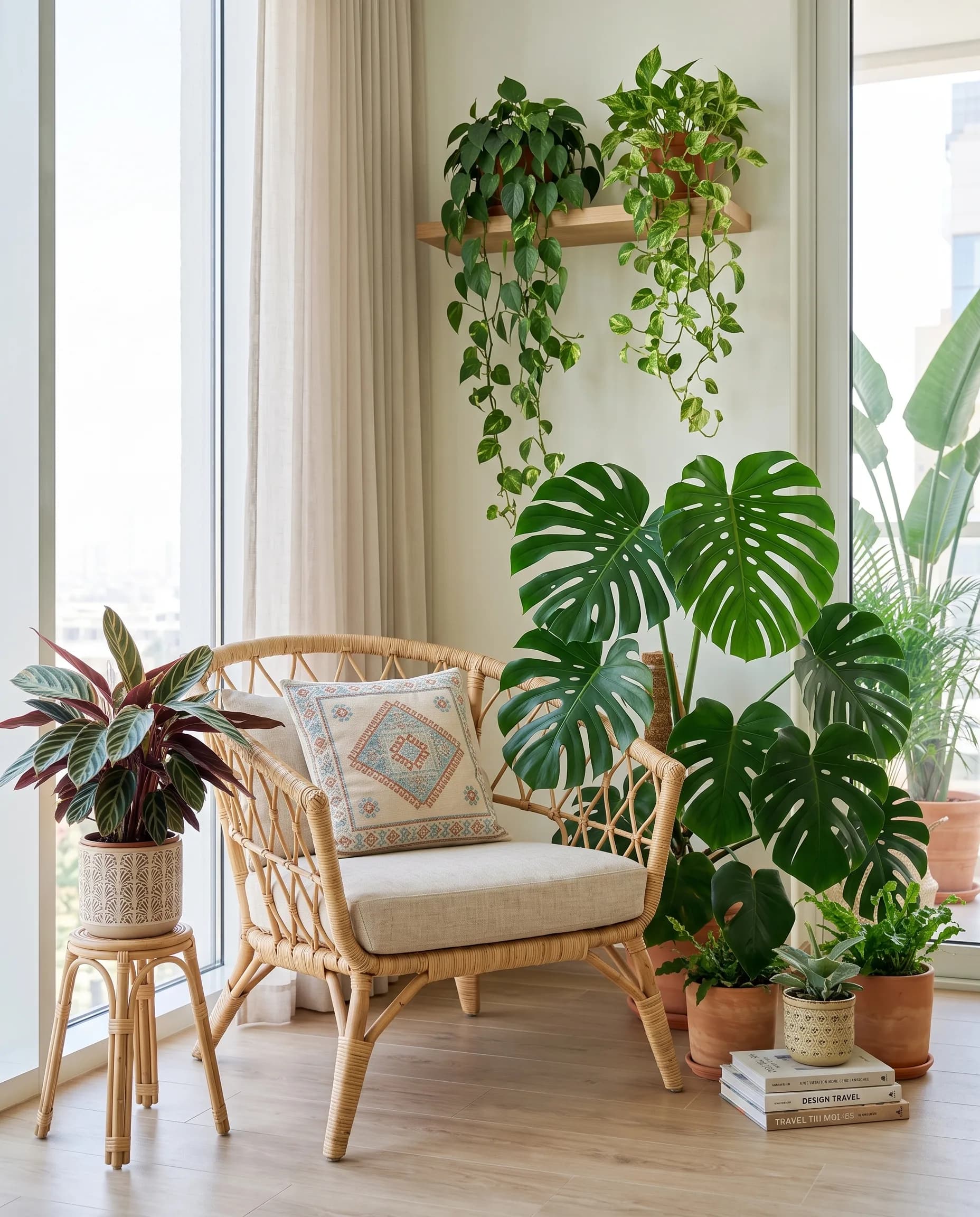
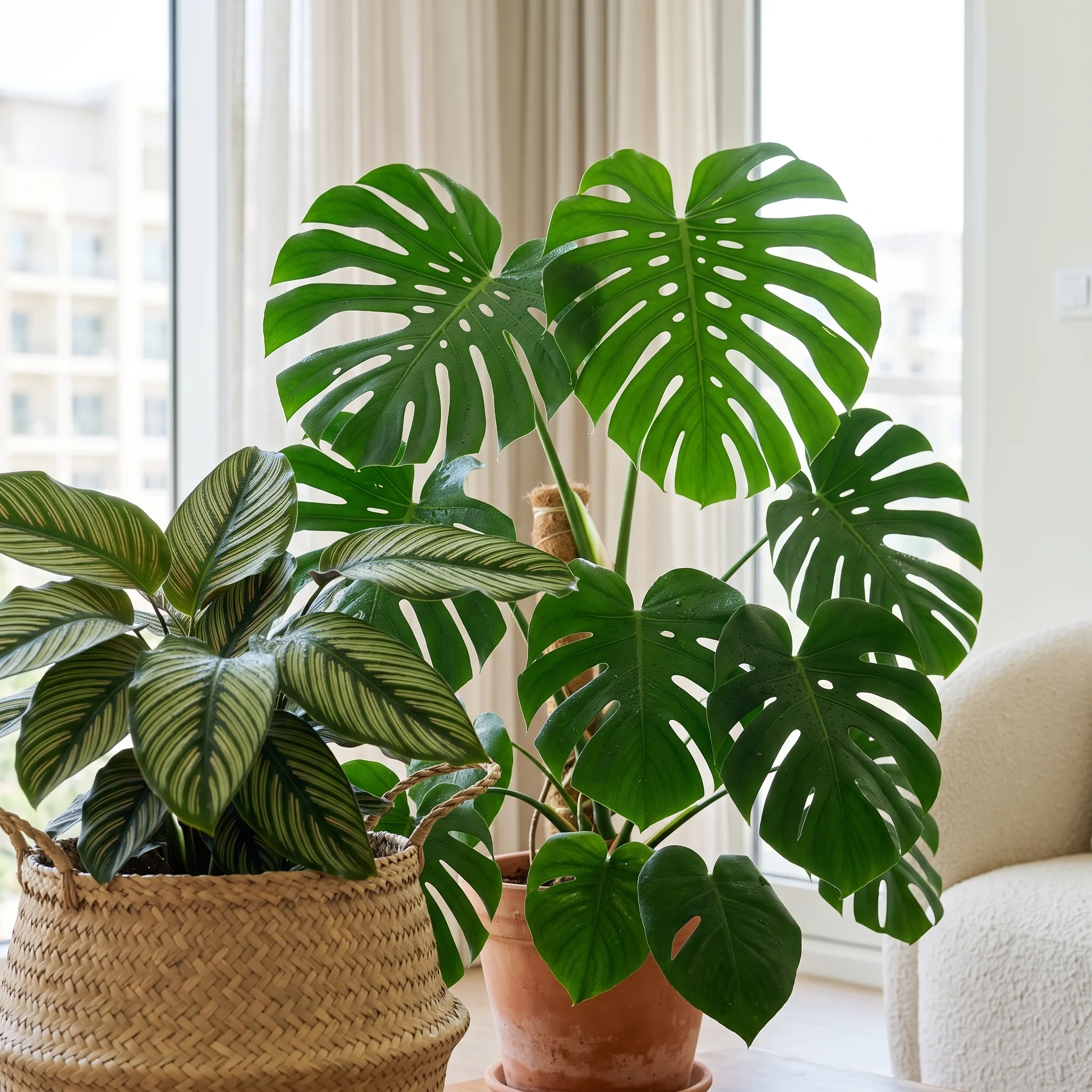
This is the look most people picture when they say houseplants: a monstera or bird of paradise as the big shape, an areca palm for height, pothos trailing from a shelf and a philodendron climbing a stand. Pots are mixed on purpose: terracotta, rattan and woven baskets over plain nursery pots, at different heights on stands, stools and timber shelves.
Light is the first limit. Most of these plants want medium to bright indirect light. Low-E glass takes a further 5–10% of the light plants use (Melinda Myers) and tint takes more, so put the big leaves nearest the clearest glass and the shade-tolerant plants, such as pothos, further back. NC State says bird of paradise wants a bright, sunny spot, so give it your best window or leave it out.
Dry AC air is the second limit. Grouping plants makes a small pocket of slightly higher humidity, but misting does not help, and only a humidifier changes the room (University of Nebraska-Lincoln). NC State says areca palm prefers high humidity, and calathea and ferns want humid air too, so add them only if you will run a humidifier. Pothos, philodendron and rubber plant are the more forgiving choices.
Check pets before you copy the look. The ASPCA lists monstera, pothos and philodendron as toxic to cats and dogs, and the rubber plant should be treated as toxic. Areca palm and calathea are listed as non-toxic, so a pet household can build the same layers from those plus spider plant.
- Lush
- Layered
- Leafy
- High impact
- Collected
Palette
- Monstera green #2F6B3C
- Fresh fern #7DB36A
- Terracotta #C0694A
- Rattan #CDAA70
- Timber shelf #A47B54
- Cream wall #F4EFE3
Key plants
What grows into the urban jungle look

Monstera
Monstera deliciosa

Philodendron
Philodendron hederaceum

Pothos
Epipremnum aureum

Bird of paradise
Strelitzia reginae

Areca palm
Dypsis lutescens

Calathea
Goeppertia spp. (syn. Calathea)

Rubber plant
Ficus elastica

Peperomia
Peperomia obtusifolia
Starter set
Start the urban jungle look
Monstera
Monstera deliciosa
Areca palm
Dypsis lutescens
Pothos
Epipremnum aureum
Rubber plant
Ficus elastica
A rough budget
AED 550–1,500
Plants AED 400–1,150: monstera 60 cm to 1.4 m, areca palm, pothos, rubber plant (Heavenly Plants, Acacia, Plantsworld, 2026-10-07). Baskets and pots: IKEA UAE AED 45–95 each; stands extra.
How to get the look
Step by step
Step 1: Map your light
Stand where the plants will go and look at the glass. The spots nearest the clearest glass get the bright-light plants (monstera, bird of paradise); the back of the room gets pothos, philodendron or calathea. Tinted glass makes every spot dimmer than it looks.
Step 2: Buy the big shape first
Start with one large-leaf plant and one palm, such as a monstera and an areca palm. Buy between October and April if you can, so plants do not sit in a hot car or hallway on the way home.
Step 3: Build the layers
Add height with stands and shelves: tall plants on the floor, mid-size on stools, pothos trailing from a shelf. Mix terracotta, rattan and baskets, hiding plain nursery pots inside the baskets.
Step 4: Fix the air before adding ferns
Add calathea, ferns or other humidity lovers only with a humidifier in the room, and use a cheap hygrometer to see what you actually have. Misting does not raise room humidity.
Step 5: Keep the leaves clean
Wipe large leaves with a damp cloth when you can feel dust (Ohio State Extension): dust blocks light. Dry AC air favours spider mites, so look under the leaves weekly.
Pots and planters
- Terracotta pots in mixed sizes, 15–35 cm
- Rattan or woven seagrass baskets over plain nursery pots
- Plant stands and stools at three or more heights
- A shelf-top or hanging pot so the pothos can trail
Furniture and finishes
- Open timber shelves and a pale rattan chair or side table
- Cream walls and sheer linen curtains to keep the room light
- A moss pole or trellis for monstera and philodendron to climb
- A tray or mat under each pot to protect the floor
In a Dubai home
What is different here
- AC makes rooms drier than tropical plants like; exact figures vary by flat, so a cheap hygrometer helps. Keep leaves out of direct vent airflow. Only a humidifier changes room humidity: misting does not (University of Nebraska-Lincoln).
- Tinted glass: low-E coating alone takes a further 5–10% of the light plants use (Melinda Myers), and tint takes more. If a big-leaf plant turns spindly, move it nearer the glass (Iowa State Extension).
- Apartment or villa: an apartment often has one glass wall or a balcony door, so light fades quickly into the room. A villa's taller windows carry it deeper, so tall plants can stand further back.
- Summer travel: a big jungle dries out in a shut-up flat. Water thoroughly before you go, move plants out of direct light and use self-watering pots, wicks or a capillary mat (University of Saskatchewan). Leave the AC on.
Pros
- The most visual look: leaves at every height fill a plain apartment room
- Easy to start small: pothos from AED 38, rubber plant from AED 49 (Plantsworld)
- Works with any pot mix: terracotta, rattan and baskets all fit
Cons
- The highest effort of the six: more plants, more checks, more dust to wipe
- Calathea, ferns and areca palm want humid air that a dry AC room does not give
- Monstera, pothos and philodendron are toxic to pets (ASPCA); treat rubber plant as toxic
- Needs real light: a dim or heavily tinted room gives thin, stretched plants
FAQ
Common questions
Can I build an urban jungle behind tinted windows?
Yes, with shade-tolerant plants and realistic expectations. Low-E glass alone takes 5–10% more of the light (Melinda Myers), and tint takes more. NC State says pothos survives long periods in low light, though low light costs it its variegation, and rubber plant tolerates partial shade. Bird of paradise wants a sunny spot, so use it only at the clearest glass.
Do grouped plants raise the humidity?
A little. As leaves release water they make a small pocket of slightly higher humidity, so grouped plants help each other (University of Nebraska-Lincoln). It will not fix a dry AC room. Misting does not work either: you would have to mist every few minutes. A humidifier is the tool that changes the room.
Which jungle plants are safe for cats and dogs?
The ASPCA lists areca palm and calathea as non-toxic to cats and dogs, and spider plant too. It lists monstera, pothos and philodendron as toxic. We found no ASPCA page for the rubber plant (Ficus elastica), but its entries for the related weeping fig and Indian rubber plant (Ficus benjamina) are toxic, so treat rubber plant as toxic.
How many plants make a jungle corner?
Five to seven in one corner reads as a jungle: one large plant, one palm, two or three mid-size plants and one or two trailing vines. Start with four and add more once you know what your light and AC allow.
How much does an urban jungle starter cost in Dubai?
About AED 550–1,500 for four plants and their pots. On 2026-10-07 a 60–80 cm monstera was AED 145 and a 1.2–1.4 m one from AED 615, areca palm AED 165–350 depending on height, pothos from AED 38 and rubber plant from AED 49 (Heavenly Plants, Acacia, Plantsworld). Stock and sizes change, so compare plants of the same height.
Keep exploring
Other indoor styles
Japandi calm
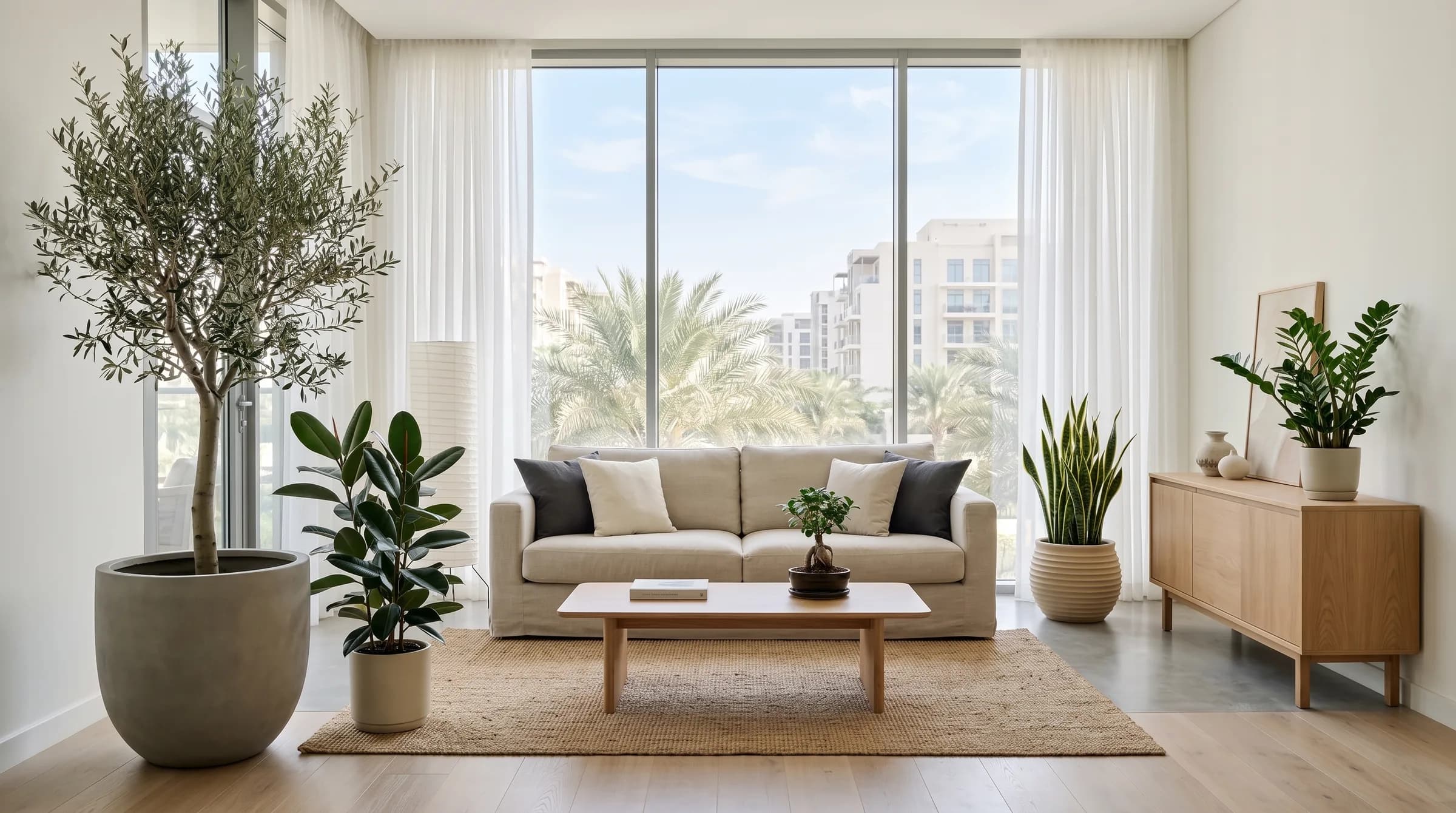
One characterful plant per room, in matte stone and sand pots, with space left around it.
Living room · Bedroom
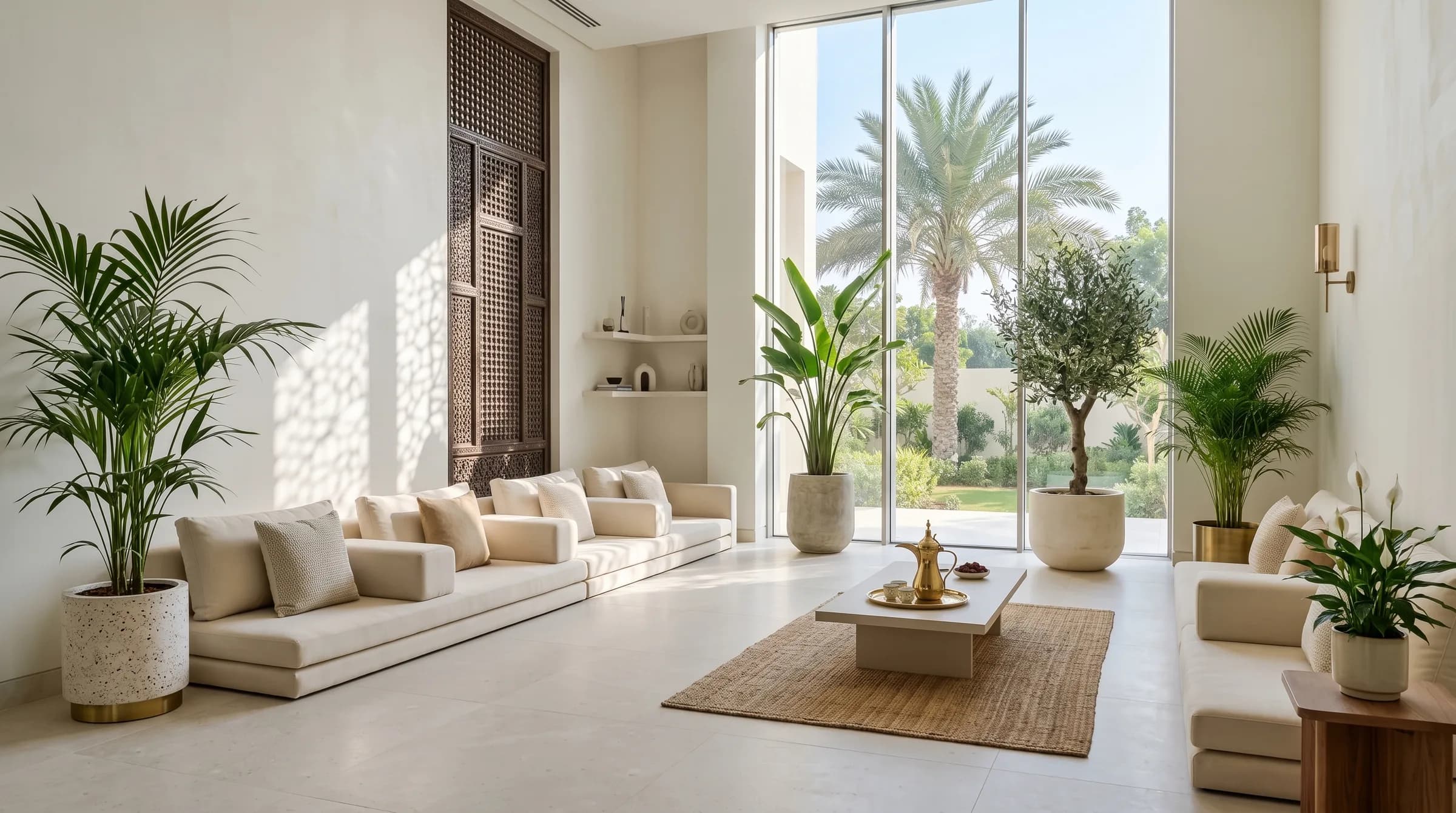
Modern majlis
Matching palms, brass and limestone: a formal, symmetrical look for a villa majlis.
Majlis · Living room
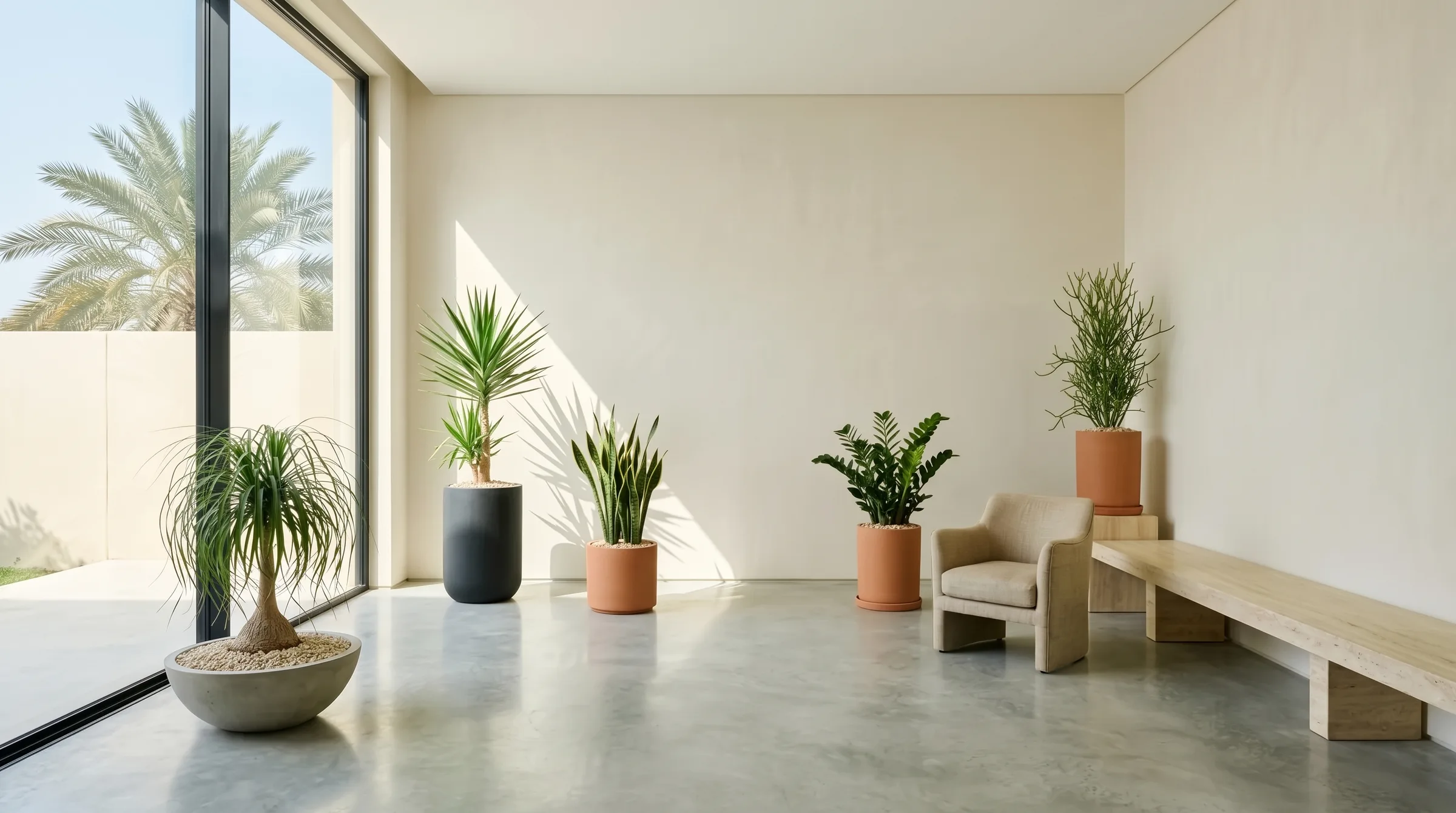
Sculptural minimal
One bold, architectural plant per corner, in concrete and terracotta against pale plaster.
Living room · Hallway · Home office
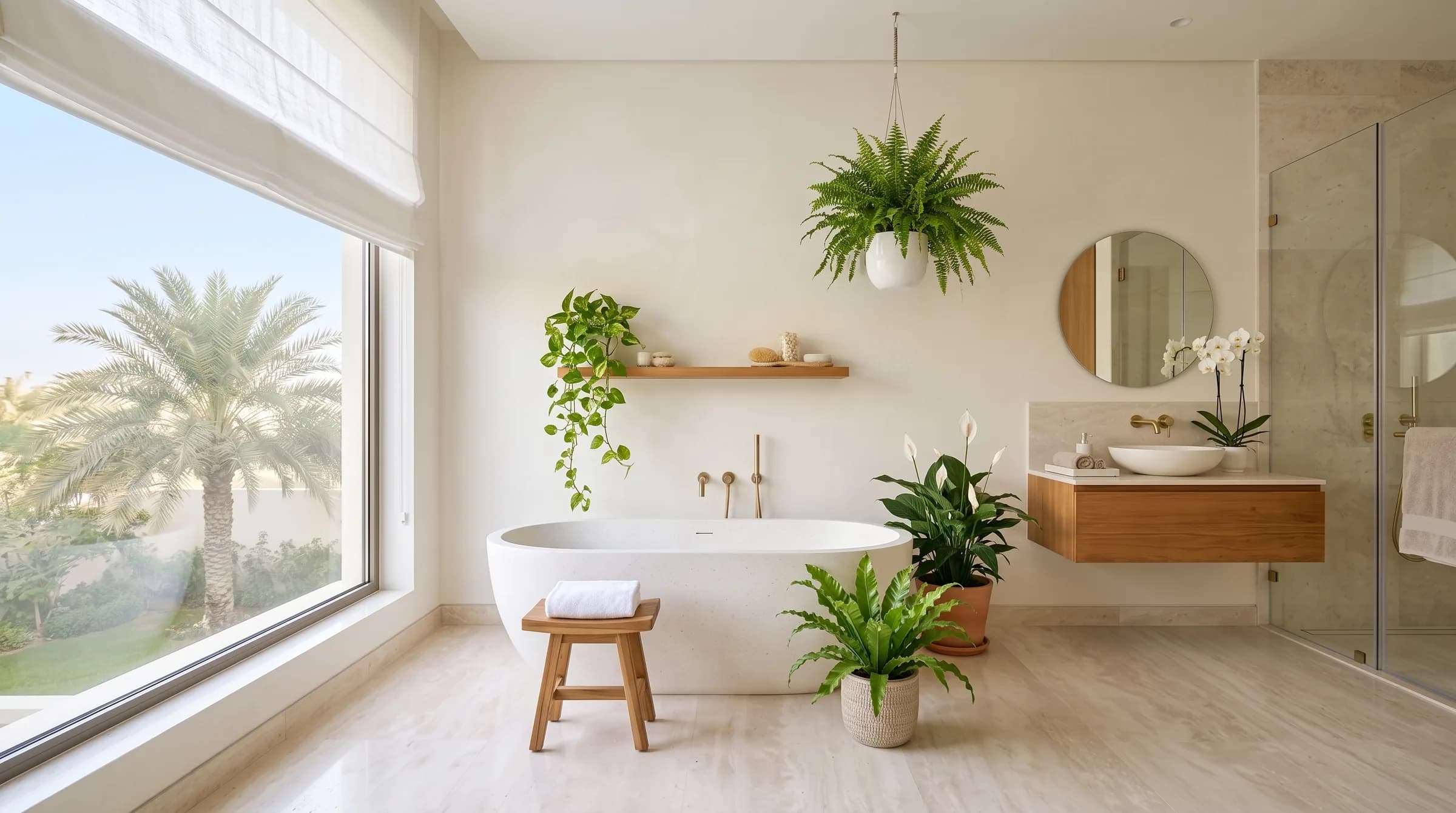
Spa bathroom
Ferns, a white orchid and a trailing vine in white ceramic and teak. It needs a window.
Bathroom
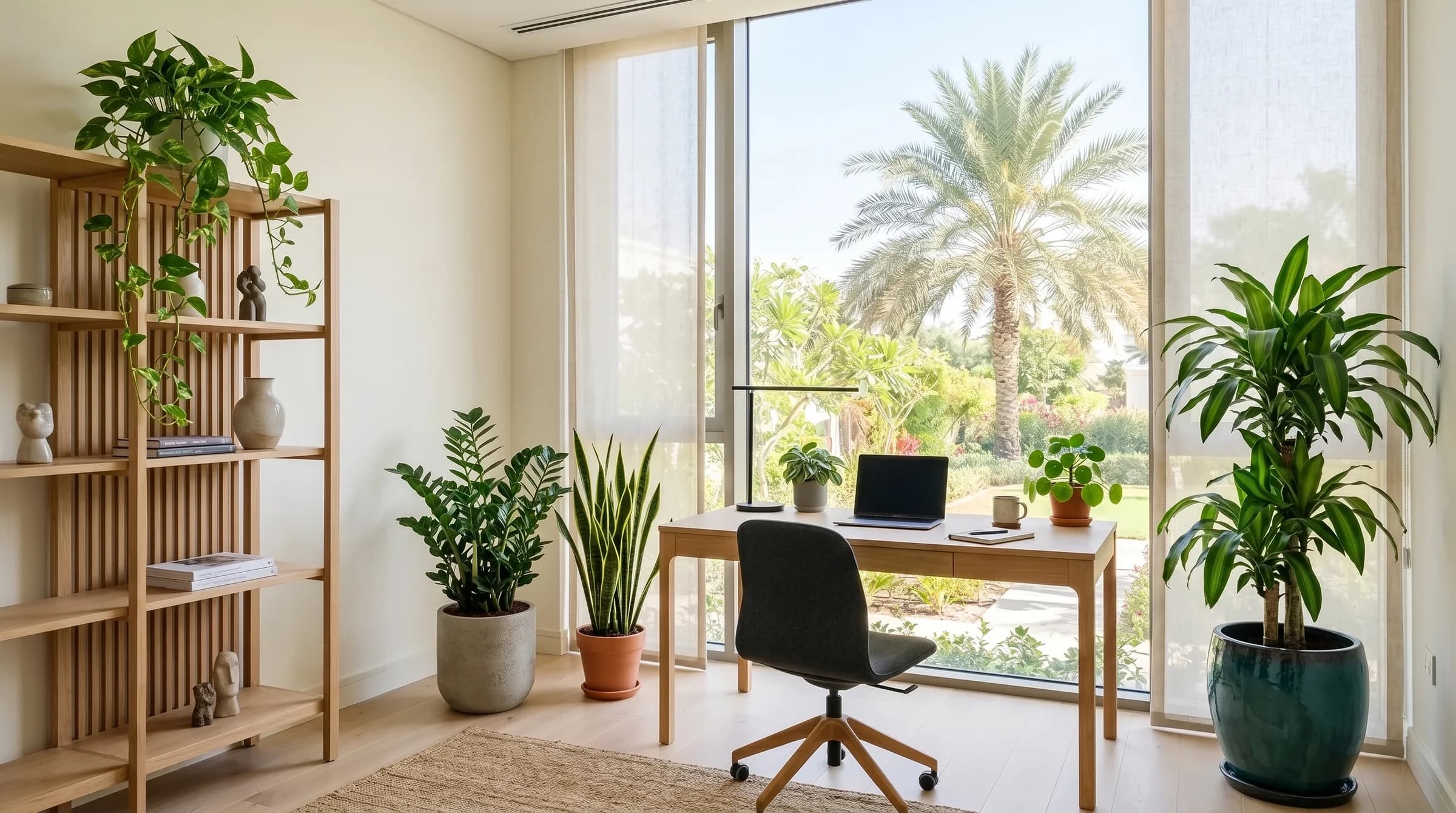
Green home office
Tough, tidy plants for the desk and shelf, chosen to survive weekends and summer trips.
Home office · Bedroom
Sources
- Melinda Myers: low-E glass and houseplants
- University of Nebraska-Lincoln Extension: houseplant humidity
- NC State Extension Plant Toolbox: Strelitzia reginae (bird of paradise)
- NC State Extension Plant Toolbox: Dypsis lutescens (areca palm)
- NC State Extension Plant Toolbox: Epipremnum aureum (pothos)
- NC State Extension Plant Toolbox: Ficus elastica (rubber plant)
- ASPCA: these houseplants can cause trouble for your pets
- ASPCA: areca palm
- ASPCA: calathea
- Ohio State Extension: cleaning houseplant leaves
- University of Saskatchewan: watering houseplants on vacation
- Heavenly Plants: indoor plants (prices checked 2026-10-07)
- Acacia Garden Center: indoor plants (prices checked 2026-10-07)
Pool + garden care
From AED 500/month
Price depends on your garden's size, pool and complexity. Prices in AED, excluding 5% VAT.