Hibiscus
Hibiscus rosa-sinensis
Full sunSalt: 2 of 5
Soil & ground prep
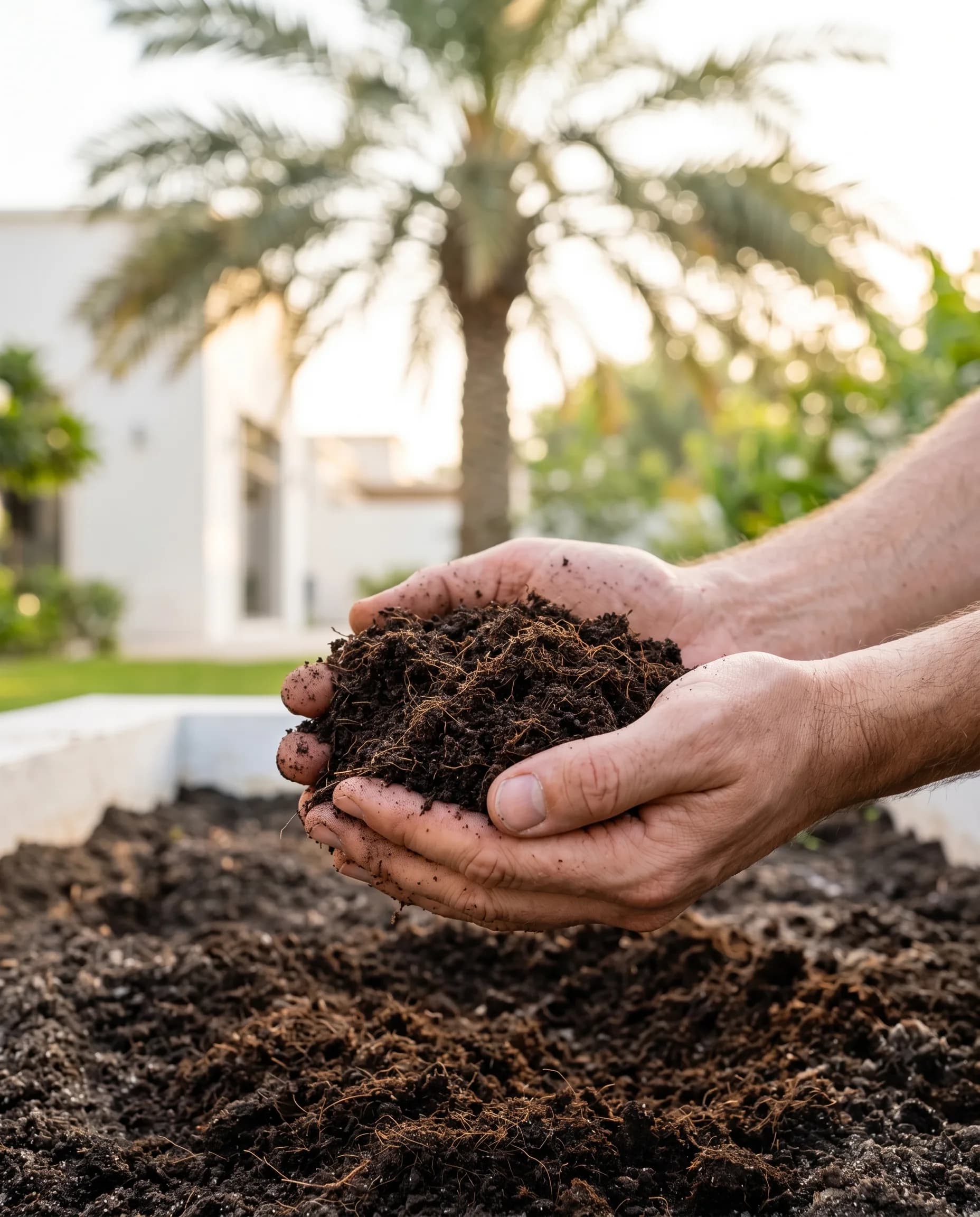
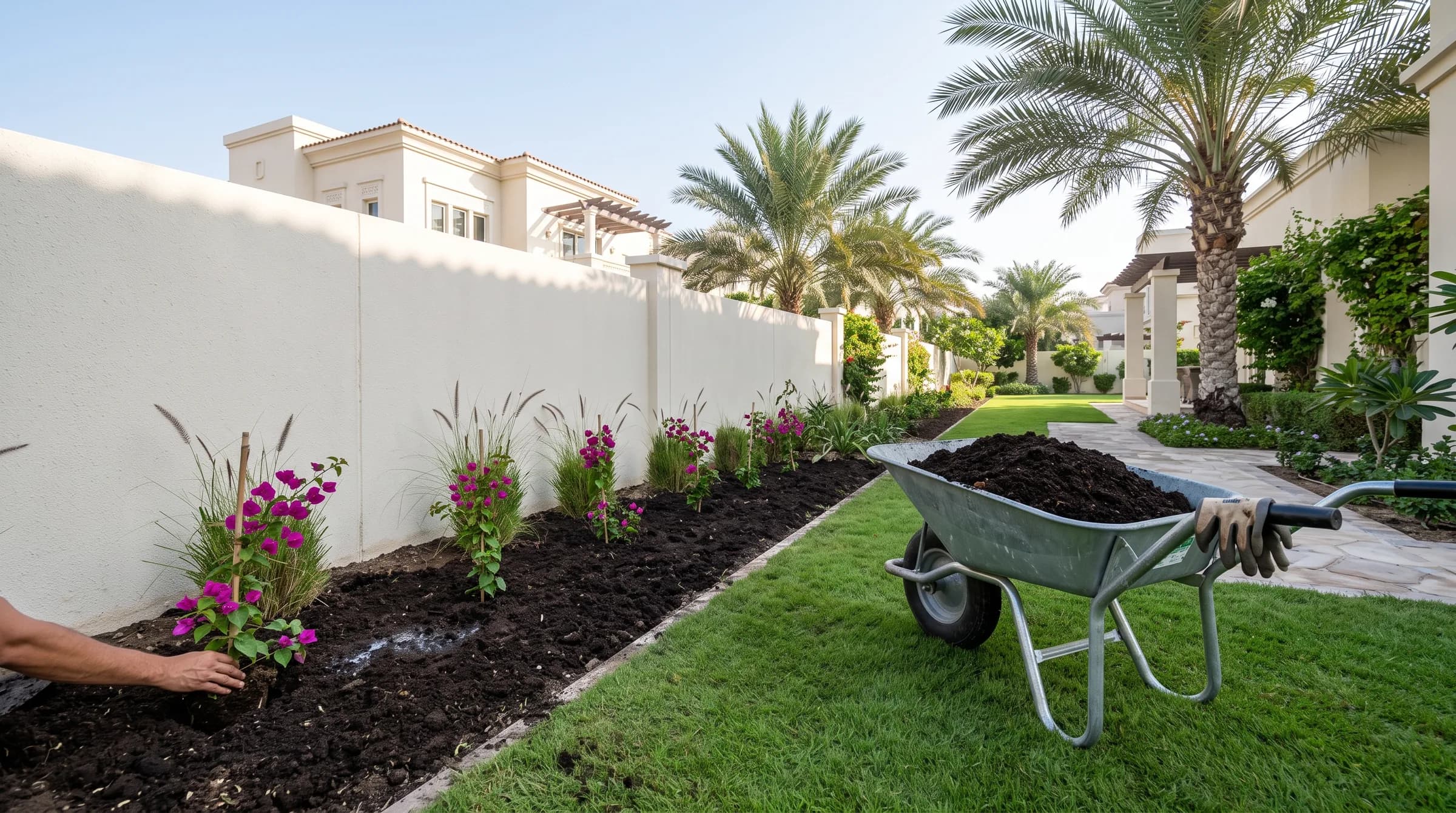
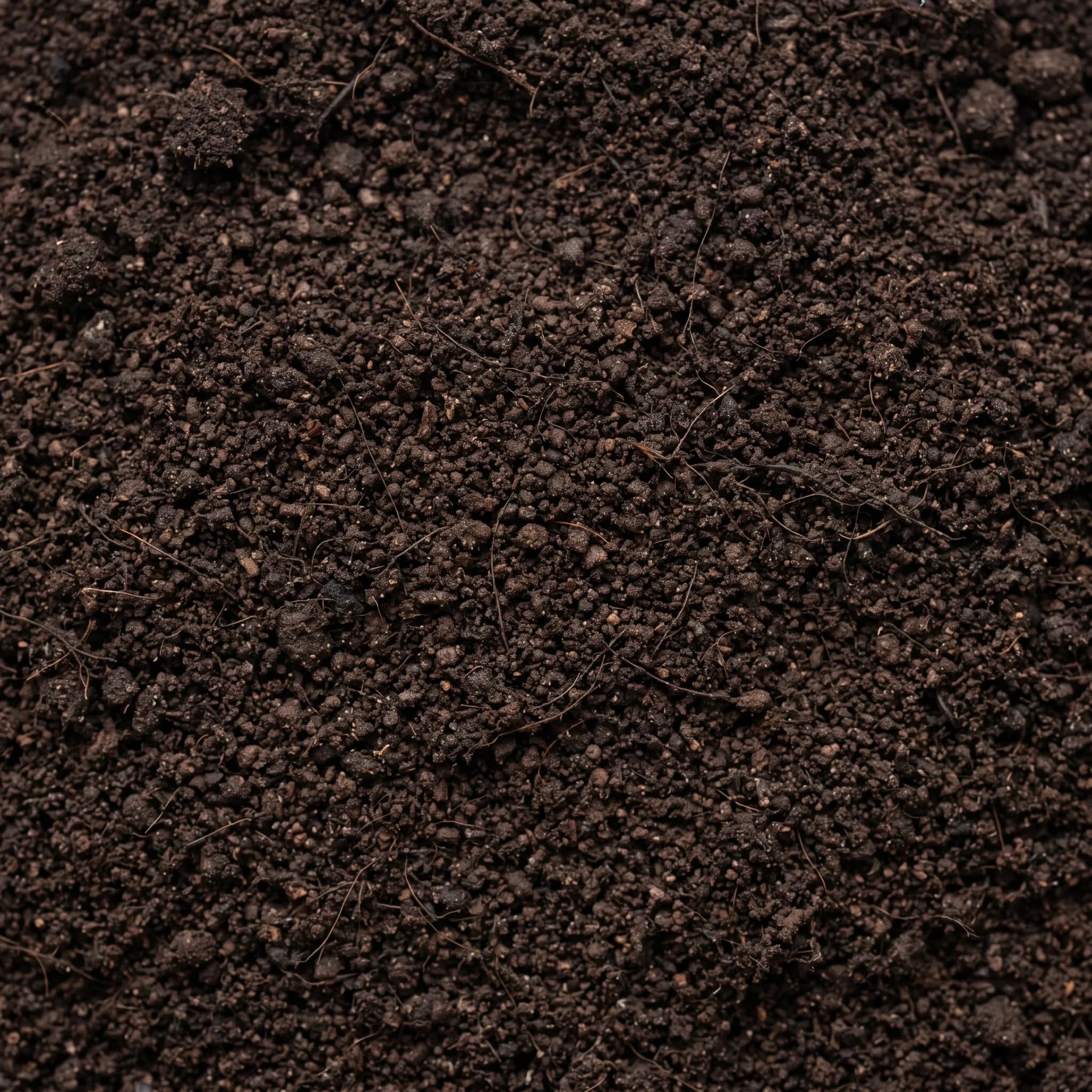
Compost and well-rotted manure, chosen for Dubai's alkaline, sandy ground.
New sweet soil is clean but nearly empty of nutrients — composted manure, compost, gypsum and slow-release feeds build the fertility and structure Dubai's alkaline, sandy ground doesn't have on its own.
From AED 30 per m² of bed prepared
Market range AED 30–70/m² for compost/manure incorporation into new beds. Bagged materials and lawn-wide feeding programmes are priced separately — see the cost guide.
Why it matters
Built for alkaline sand
Amendments chosen for the UAE's naturally alkaline, low-organic-matter soil, not a generic mix.
Only well-rotted manure
Cow, sheep or chicken manure — always composted first, since fresh manure can scorch roots and carry weed seed.
Gypsum for sodic patches
Where soil is sodic as well as saline, gypsum displaces sodium so it can be leached out with irrigation.
Delivered and worked in
Bulk compost and manure delivered and incorporated to the depth your bed or lawn actually needs.
Deep dive
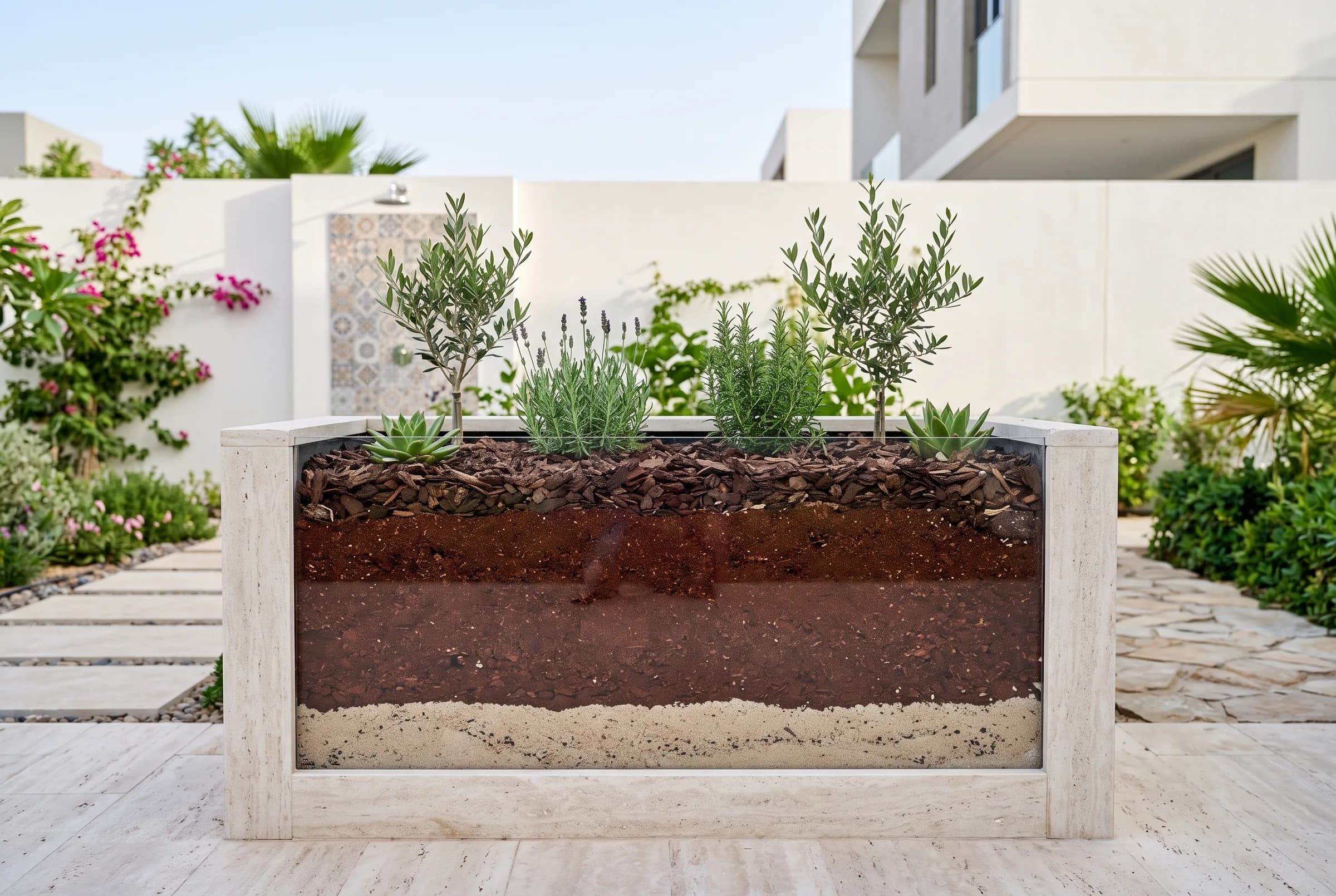
Sweet soil (see our sweet soil service) solves one problem — salinity — and stops there. UAE ground, even once topped with clean sweet soil, is still typically sandy, fast-draining and alkaline, commonly sitting around pH 8–9, with very little of the organic matter and soil life that holds moisture and nutrients in a temperate garden. Left alone, that combination means nutrients wash straight through after every watering and roots have almost nothing to hold onto. Soil improvement is the one-off and ongoing work of building that missing fertility and structure back in — composted organic matter for structure and slow-release nutrition, and targeted amendments like gypsum or iron chelate for specific chemical problems a soil test uncovers.
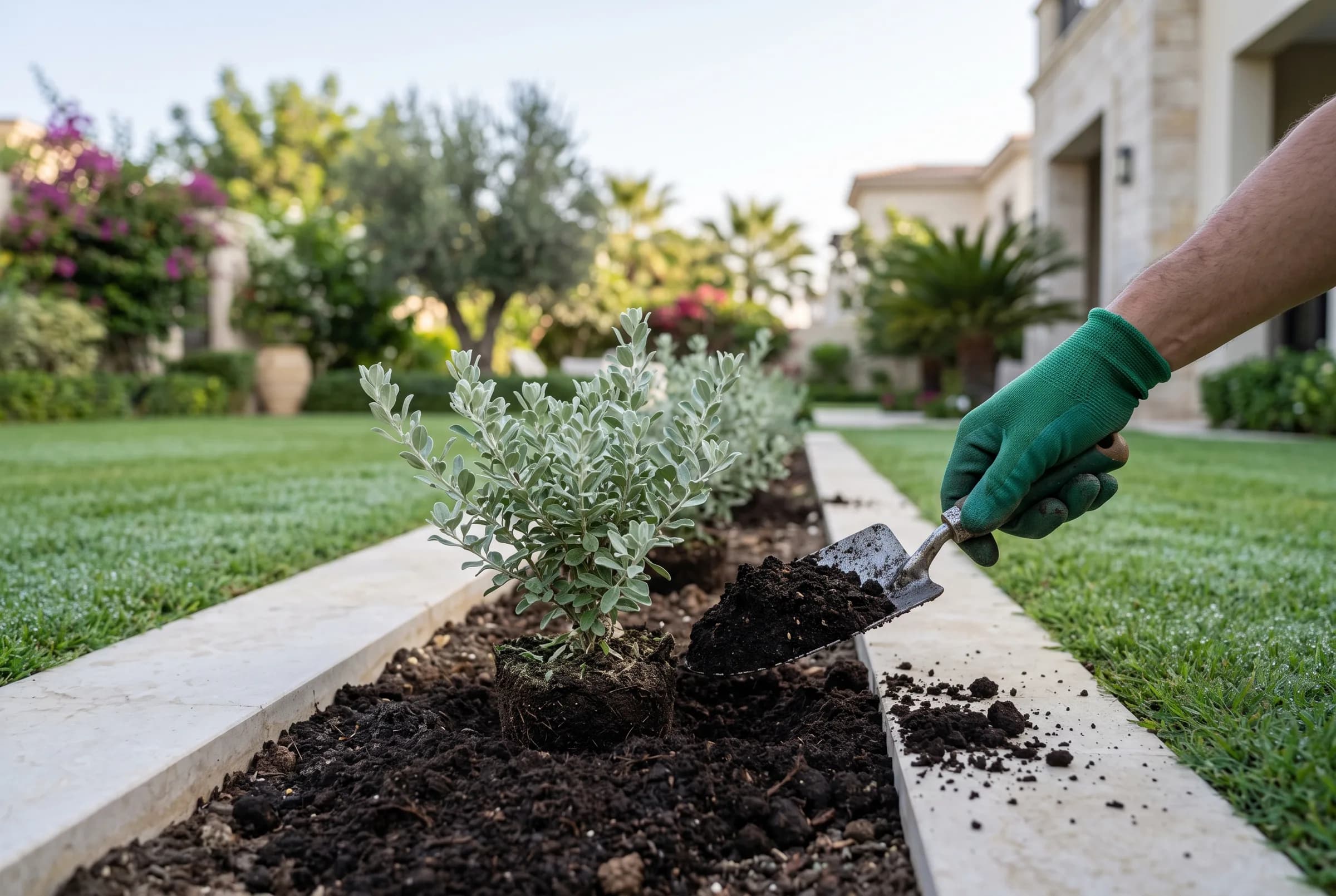
Only well-rotted manure goes into a UAE garden bed — cow, sheep or chicken, always composted first. Fresh manure is too strong for most roots, can scorch new planting, often carries weed seed, and can pose a pathogen risk if it touches edible crops. As a general application guide, cow or sheep manure is a fairly mild fertiliser and is commonly applied at around 2–4 litres per m² of bed, dug into the top 10–15cm of soil; chicken manure is considerably stronger and is applied in smaller amounts, more often, rather than one heavy dose. Compost — general garden or green-waste compost — does a similar structural job with a gentler nutrient load, and is the safer default where you're not sure of a manure's maturity.
| Amendment | Typical use | Note |
|---|---|---|
| Composted cow / sheep manure | New beds, established shrubs | ~2–4 L/m², dug into the top 10–15cm; only well-rotted |
| Composted chicken manure | Feeding, not bulk structure | Stronger — smaller, more frequent doses |
| Compost / green-waste compost | New beds, lawn top-dressing | Gentler than manure; a good default when in doubt |
| Peat moss / coco peat | Water retention in sandy soil | Blended in at planting, especially for pots and raised beds |
| Gypsum | Sodic (high-sodium) patches only | Needs a soil test first — see below |
Most of a UAE garden's ongoing feeding, once it's established, comes from a slow-release NPK fertiliser worked in a couple of times a year rather than heavy, frequent feeding that mostly washes through sandy soil. The other common gap is iron: alkaline soil chemically locks up iron so plants can't take it up even when it's present, which shows as yellowing leaves with green veins (iron chlorosis) — common on hibiscus, citrus and other exotics grown in UAE beds. An iron chelate feed, applied to the soil or as a foliar spray, corrects this far more reliably than a general fertiliser, since it keeps the iron in a form alkaline soil can't immediately bind up.
Salinity and sodicity are related but different problems. A sodic soil has too much sodium relative to calcium and magnesium on its clay particles, which makes it disperse and seal over when wet — water and roots struggle to get through even after the soil has been leached of salt. Gypsum (calcium sulfate) treats this specifically: the calcium it supplies displaces sodium in the soil, which can then be leached away by irrigation, improving structure and drainage. General soil-science guidance — not UAE-specific, but the chemistry is the same everywhere — sets application rates by how sodic the soil is: roughly 2–5 tonnes per hectare (about 0.2–0.5 kg/m²) for moderately sodic soil, rising to 5 tonnes per hectare or more for badly affected ground. Get a proper soil test (exchangeable sodium percentage, or ESP) before applying gypsum at scale — it isn't a general-purpose fix for compacted or poorly draining soil, and applying it without a test can waste money on ground that doesn't actually need it.
Gypsum isn't for everything
Gypsum specifically corrects sodium-affected soil. It does little for a soil that's simply saline (salty but not sodic), which usually needs extra leaching irrigation instead — and it won't fix drainage problems caused by compacted subgrade or a perched soil layer (see our sweet-soil service).
Compost and well-rotted manure are safe to handle with basic hygiene — gloves, and washing hands afterwards. Keep any manure that isn't fully composted away from edible crops and harvest areas, and give a fresh application a proper composting period, not just a few weeks, before it goes near food plants like tomatoes or herbs.
Pool + garden care
From AED 500/month
Price depends on your garden's size, pool and complexity. Prices in AED, excluding 5% VAT.
Process
Soil test
Check pH, EC (salinity) and, where drainage is poor, ESP (sodicity) before choosing amendments.
Choose the mix
Compost, well-rotted manure, peat/coco peat and gypsum combined to what the test actually shows.
Incorporate
Worked into the top 10–15cm of beds, or top-dressed and watered in on an established lawn.
Feed
Slow-release NPK added to the programme, plus iron chelate where leaves show chlorosis.
Re-test
A follow-up test after a season confirms the amendment worked before repeating it.
Cost guide
| Item | Cost | Notes |
|---|---|---|
| Compost / manure incorporation, new beds | AED 30–70 AED/m² | Digging composted organic matter in before planting |
| Cow / sheep manure, composted (bagged, 10–25kg) | AED 26–44 AED per bag | Dubai retail pricing, 2026 |
| Peat moss / coco peat (340L bag) | AED 245–490 AED per bag | Dubai retail pricing, 2026 (sale vs list price) |
Keeping it running: Garden Care
Garden Care includes seasonal fertilising as standard, so beds and lawns keep getting fed and reassessed after the initial soil-improvement work, not just once at planting.
FAQ
More from Build a Garden
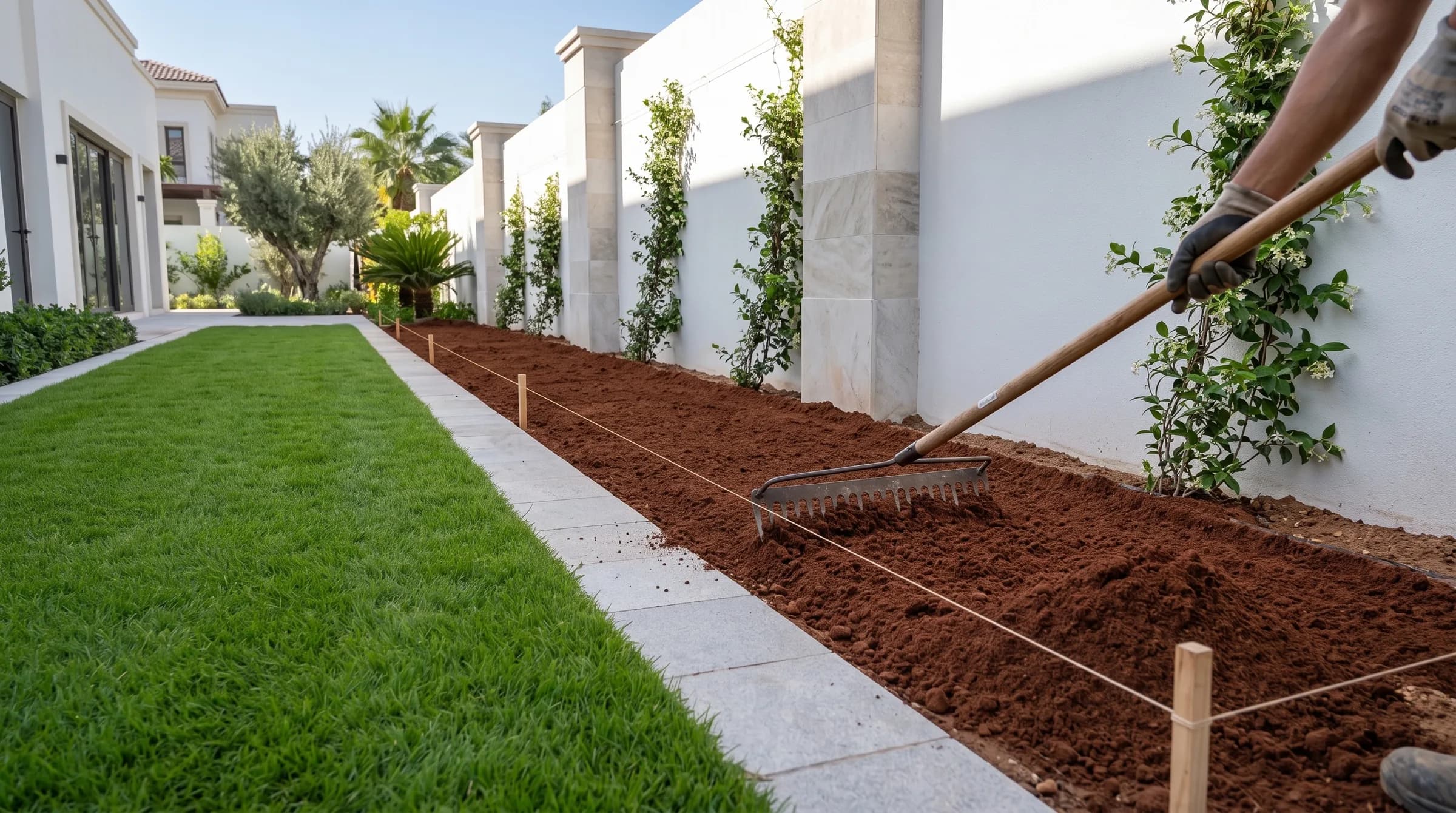
Sweet soil supply & levelling
Clean, low-salinity soil for lawns and beds — sized and delivered by the truckload.
From AED 20 per m², supplied and levelled
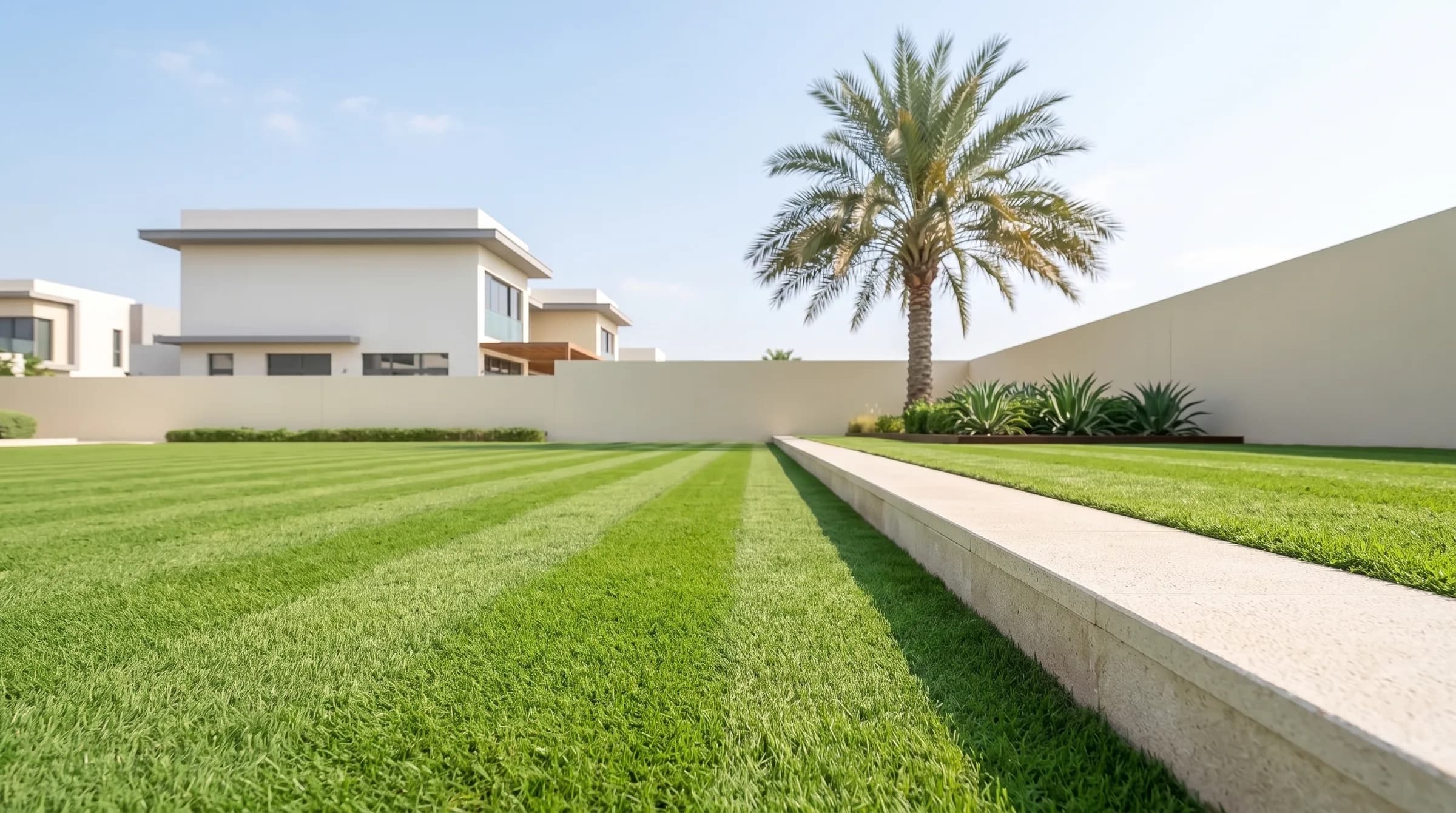
Natural & artificial lawns
Paspalum, Bermuda or artificial turf, matched to how the lawn actually gets used.
From AED 35 per m² (natural turf, installed)
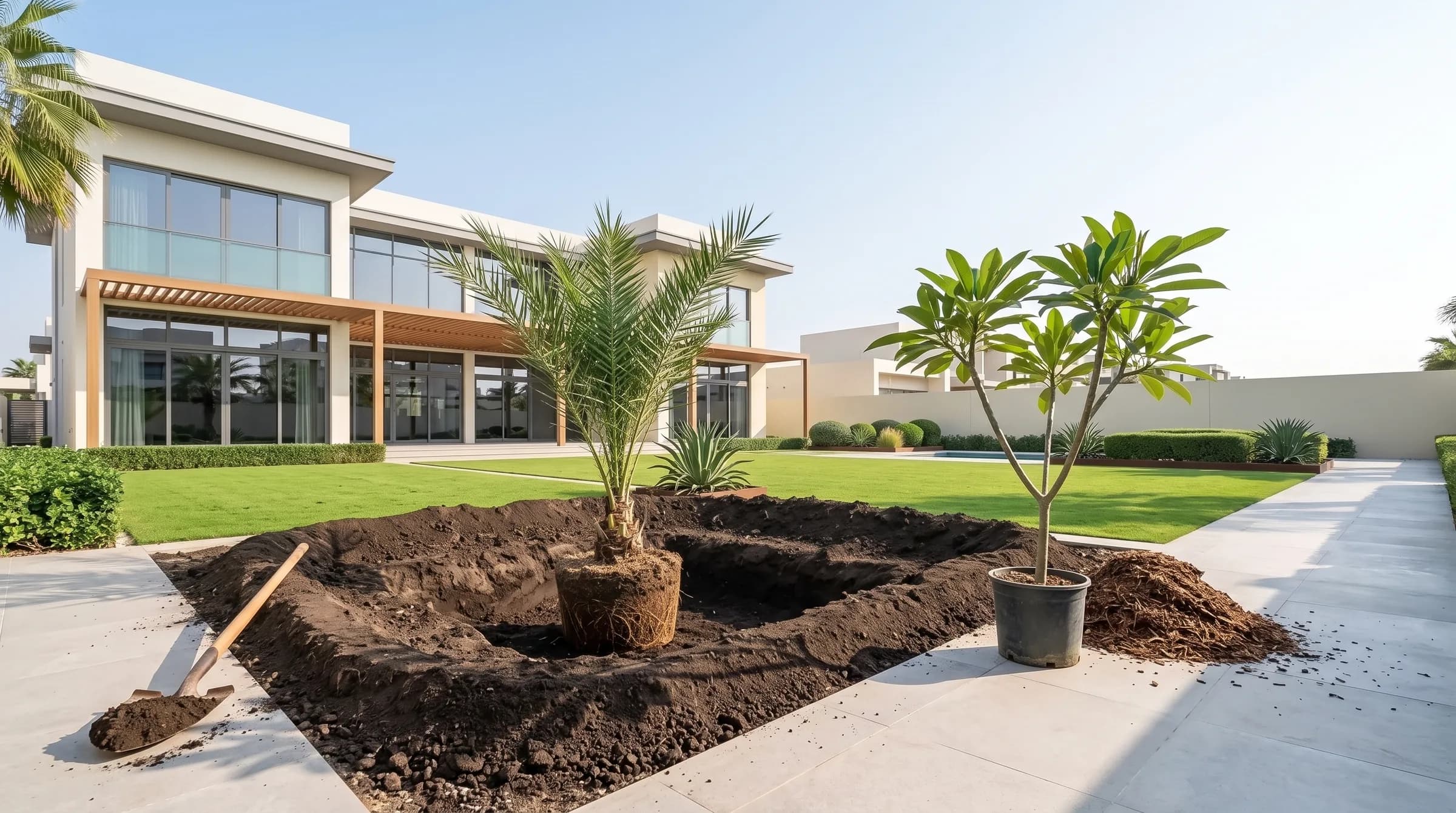
Trees, palms & planting
Trees, palms and shrubs planted the way Dubai's heat and nursery stock actually need.
From AED 250 per shrub cluster, supplied and planted
Plant library
Hibiscus
Hibiscus rosa-sinensis

Cherry tomato
Solanum lycopersicum var. cerasiforme

Ghaf
Prosopis cineraria
Pool + garden care
From AED 500/month
Price depends on your garden's size, pool and complexity. Prices in AED, excluding 5% VAT.