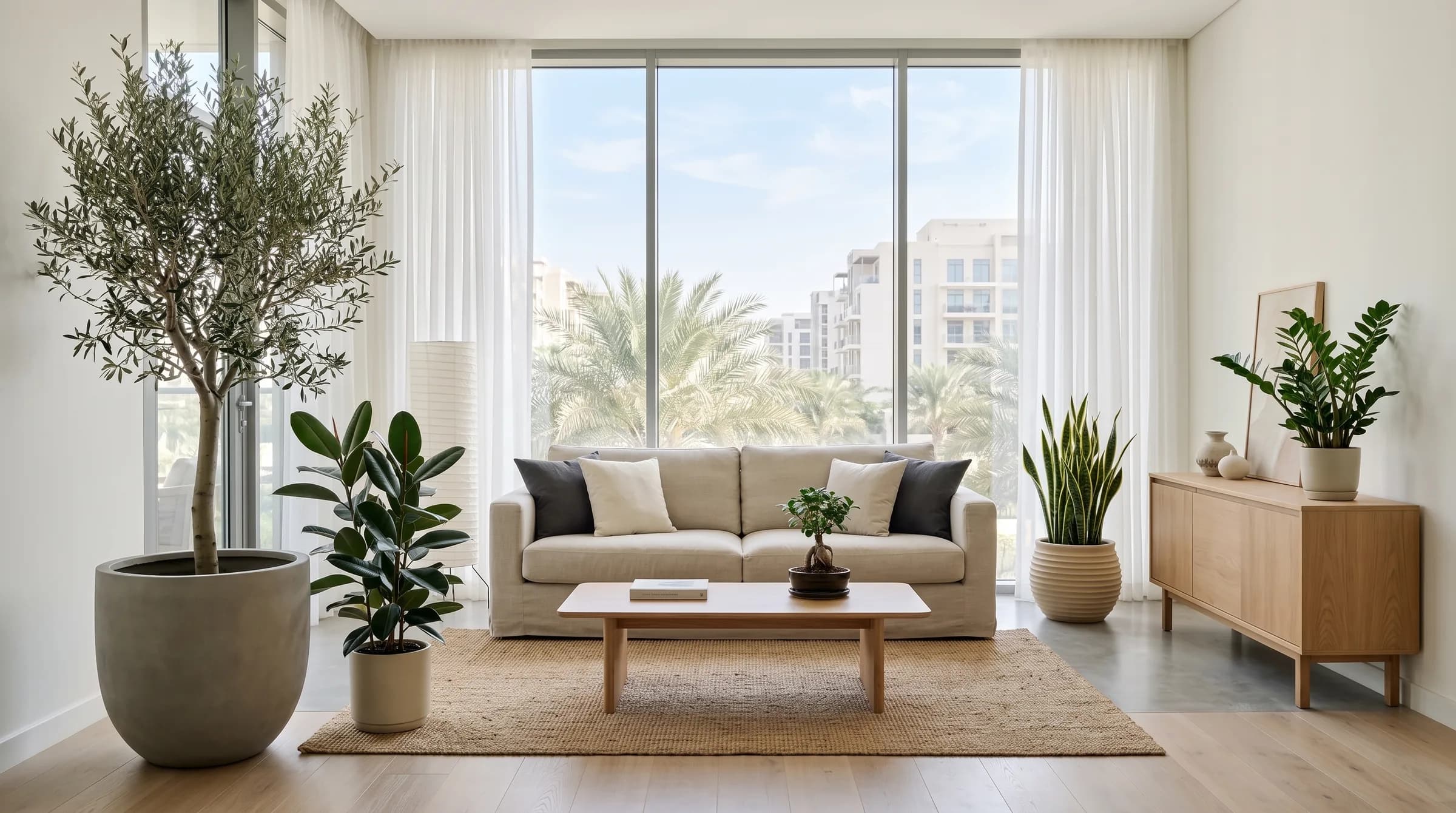
Indoor style
Japandi calm
One characterful plant per room, in matte stone and sand pots, with space left around it.
- Living room · Bedroom
- Medium–Bright
- Effort: 2 of 5
A calm, uncluttered look for apartment living rooms and bedrooms: one or two sculptural plants in matte ceramic, with space around each. Low effort, provided any olive is kept for the sunniest glass.
The mood
What the japandi calm look feels like
Japandi borrows Japanese restraint and Scandinavian warmth: pale oak, linen, a washi-paper lamp and a lot of empty floor. The plants follow the same rule. Plants & Flowers Foundation Holland advises one statement plant per room, asymmetry rather than matching pairs, empty space around each plant, and matte ceramic, terracotta or natural stone for the pots.
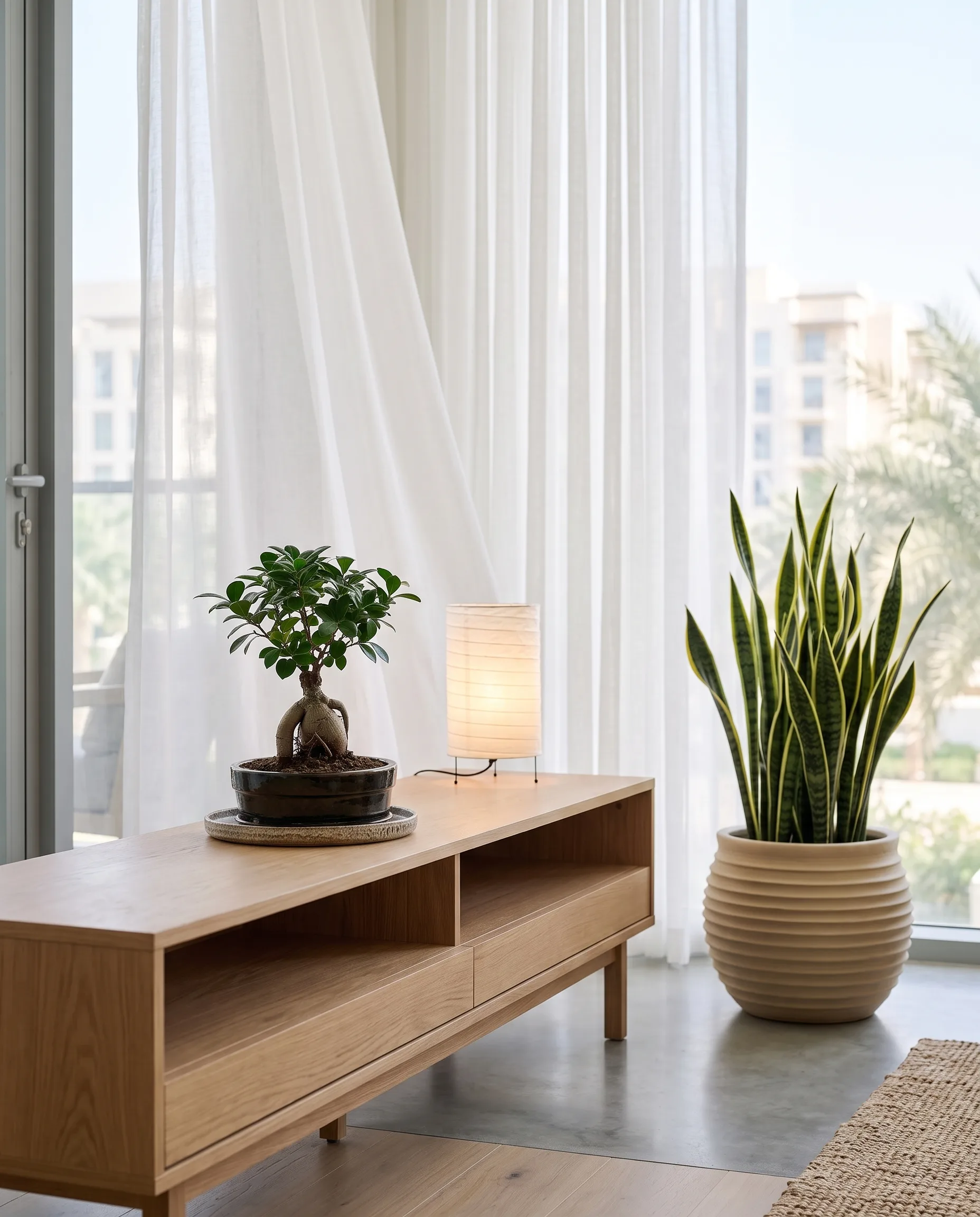
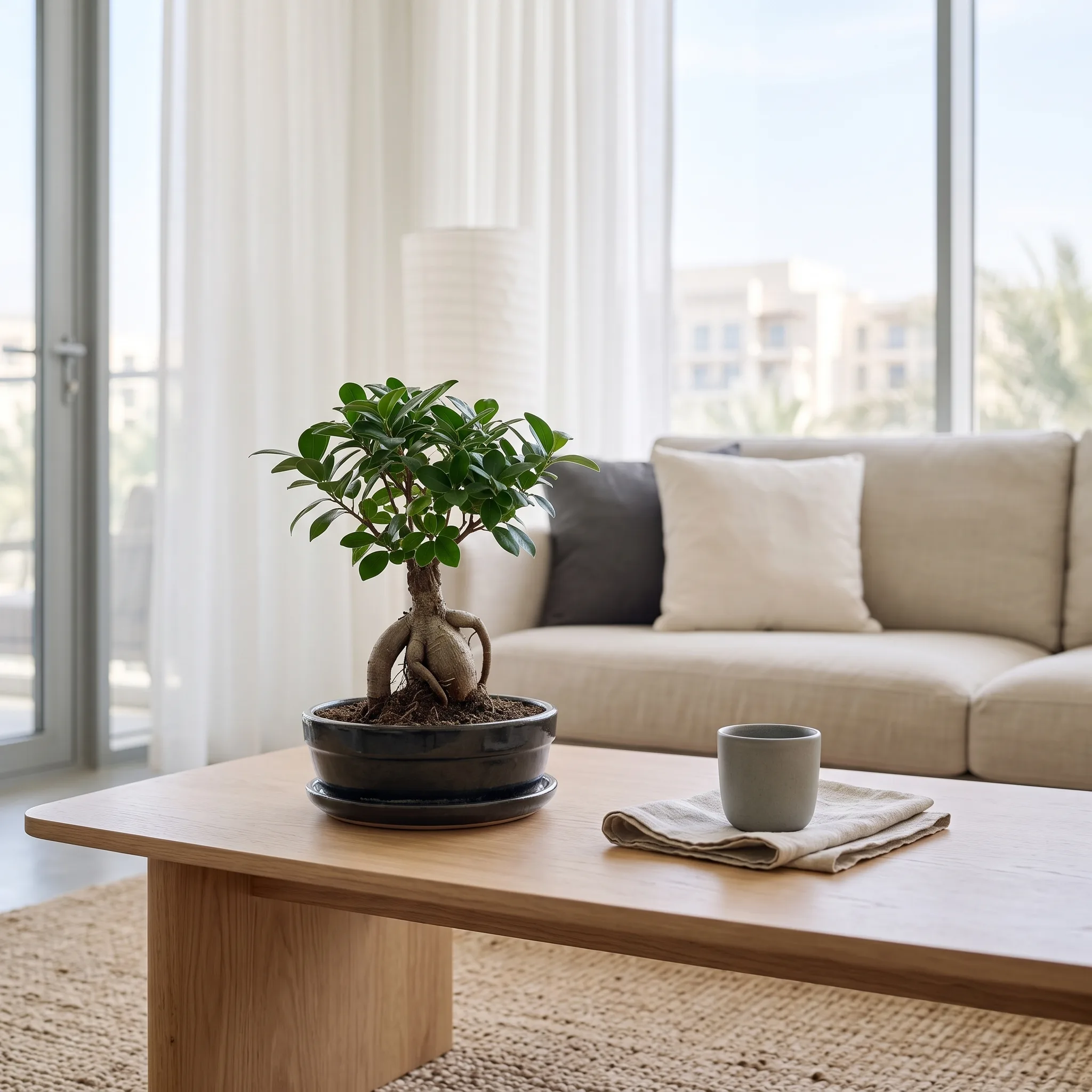
In a Dubai apartment the hero is usually a ginseng ficus bonsai on a low table, or a tall snake plant or ZZ plant beside the sofa, with a rubber plant or kentia palm for height. ZZ and snake plant cope with soft light and dry AC air. Kentia palm copes with soft light but wants its soil kept lightly moist. The ginseng ficus is the fussy one: NC State says it likes bright light and high humidity, so give it your brightest spot and keep it out of the AC airflow.
An olive tree is the classic Japandi hero, and it is the hardest plant here to keep indoors. NC State rates olive as full sun, six or more hours of direct sunlight a day. In Dubai that means the sunniest unshaded glass or a balcony. In an ordinary living room, choose a kentia palm or a cast iron plant instead: both manage in soft light, and the ASPCA lists both as non-toxic to cats and dogs.
Keep it sparse. Leave floor space around each pot, stay in one colour family for the pots, and let the plant be the only strong colour in the corner. A bare pale shelf shows dust, so wipe the leaves when you can feel dust on them (Ohio State Extension).
- Calm
- Uncluttered
- One hero plant
- Matte and natural
- Warm neutrals
Palette
- Stone grey #B9B6AE
- Sand #D8C9AE
- Pale oak #C9AE86
- Linen #F3EFE6
- Olive leaf #5C7A55
- Soft charcoal #3B3B38
Key plants
What grows into the japandi calm look

Ginseng ficus
Ficus microcarpa 'Ginseng'

Snake plant
Dracaena trifasciata

ZZ plant
Zamioculcas zamiifolia

Rubber plant
Ficus elastica

Olive
Olea europaea

Kentia palm
Howea forsteriana

Cast iron plant
Aspidistra elatior
Starter set
Start the japandi calm look
Ginseng ficus
Ficus microcarpa 'Ginseng'
Snake plant
Dracaena trifasciata
ZZ plant
Zamioculcas zamiifolia
Cast iron plant
Aspidistra elatior
A rough budget
AED 600–1,300
Plants AED 350–680 (ficus 55–250, snake plant from 29, ZZ from 49, cast iron plant about 220; shops, 2026-10-07). Pots: IKEA UAE ceramic AED 65–95; designer stoneware is our estimate.
How to get the look
Step by step
Step 1: Pick one hero
Choose a single statement plant per room: a ginseng ficus on a low table, or a tall snake plant or kentia palm on the floor. Keep any second plant small and off to one side.
Step 2: Pot it in matte neutrals
Choose matte ceramic, terracotta or stone in stone-grey and sand: one colour family only. Keep the plant in its nursery pot inside the cover pot, and empty the saucer after watering.
Step 3: Place it for light
Set the hero near the window but out of the direct airflow of the AC vent. For a dimmer corner use a cast iron plant or kentia palm. Add an olive only at the sunniest glass or on a balcony.
Step 4: Leave the space
Clear the floor or table around the plant. Add one low oak piece, linen and a paper lamp, then stop.
Step 5: Water by finger test
Push a finger two inches into the soil before watering (University of Maryland Extension). ZZ and snake plant should dry out between waterings; keep ginseng ficus soil lightly moist, never soggy.
Pots and planters
- Matte stone-grey ceramic: a low, wide bowl for a ginseng ficus bonsai
- Sand-coloured stoneware cylinders, 30–40 cm, for snake plant and ZZ
- Unglazed terracotta in a pale finish, or a natural stone planter
- A plain nursery pot inside a matte cover pot, so you can lift it out to drain
Furniture and finishes
- Low pale-oak table or bench
- Linen curtains and cushions in cream and stone
- A washi-paper lamp or paper shade
- Bare floor or table around each plant; resist adding a second pot
In a Dubai home
What is different here
- Dry AC air suits ZZ, snake plant and cast iron plant. The ginseng ficus likes humid air (NC State), so keep it out of vent airflow and look under its leaves weekly for spider mites.
- Tinted or low-E glass: low-E coating alone takes a further 5–10% of the light plants use (Melinda Myers), and tint takes more. If growth turns spindly, move the plant nearer the glass (Iowa State Extension).
- Olive needs six or more hours of direct sun (NC State), so it suits only the sunniest unshaded glass or a balcony. For the same calm shape in a dimmer room, use a kentia palm or a cast iron plant.
- Summer travel: water the day before you leave, move plants out of direct light and leave the AC on. ZZ and snake plant tolerate long gaps; the ginseng ficus does not, so give it a self-watering pot or a wick.
Pros
- ZZ, snake plant and cast iron plant forgive dry air and missed waterings
- Only a few plants, so it is cheap to start and quick to water
- Suits dim corners if you choose kentia palm or cast iron plant
- Kentia palm and cast iron plant are non-toxic to cats and dogs (ASPCA)
Cons
- The classic olive tree needs full sun and does poorly in most living rooms
- The ginseng ficus wants humid air and bright light: the fussiest plant here
- Snake plant and ZZ are toxic to pets (ASPCA); treat rubber plant and ginseng ficus as toxic too
- Sparse by design, so every dusty leaf or brown tip shows
FAQ
Common questions
Can I keep an olive tree indoors in Dubai?
Only in the sunniest spot. NC State rates olive as full sun, six or more hours of direct sunlight a day, and says it is brought indoors in colder areas. Here that means the sunniest unshaded glass or a balcony. In a normal living room, a kentia palm or cast iron plant gives the same calm shape in soft light.
Which plants suit a Japandi bedroom?
Pick something calm and small: a ZZ plant, a cast iron plant or a snake plant. Keep it out of the AC airflow, and check pet safety if an animal sleeps there. The ASPCA lists cast iron plant as non-toxic to cats and dogs, and snake plant and ZZ plant as toxic.
What pots and colours suit Japandi?
Matte ceramic, terracotta or natural stone in warm neutrals such as stone-grey, sand and cream (Plants & Flowers Foundation Holland). Avoid glossy colour glazes. Use a pot with drainage, or a cover pot over a nursery pot, and empty the saucer after watering.
How often should I water in an air-conditioned room?
Go by the soil, not the calendar. Push a finger about two inches into the soil (University of Maryland Extension): if it is dry, water. ZZ and snake plant should dry out between waterings, and NC State warns that snake plant roots rot if overwatered. Every four to six months, flush each pot with at least twice its volume of water to wash out the salts that show as a white crust.
How much does a Japandi starter set cost in Dubai?
About AED 600–1,300 for four plants and their pots. On 2026-10-07 snake plant started at AED 29 and ZZ plant at AED 49, a ginseng ficus ran AED 55–250 depending on size, and a cast iron plant was about AED 220 (Plantsworld, Heavenly Plants, Acacia Garden Center). IKEA UAE ceramic pots cost AED 65–95. Sizes, stock and prices change, so compare plants of the same height.
Keep exploring
Other indoor styles
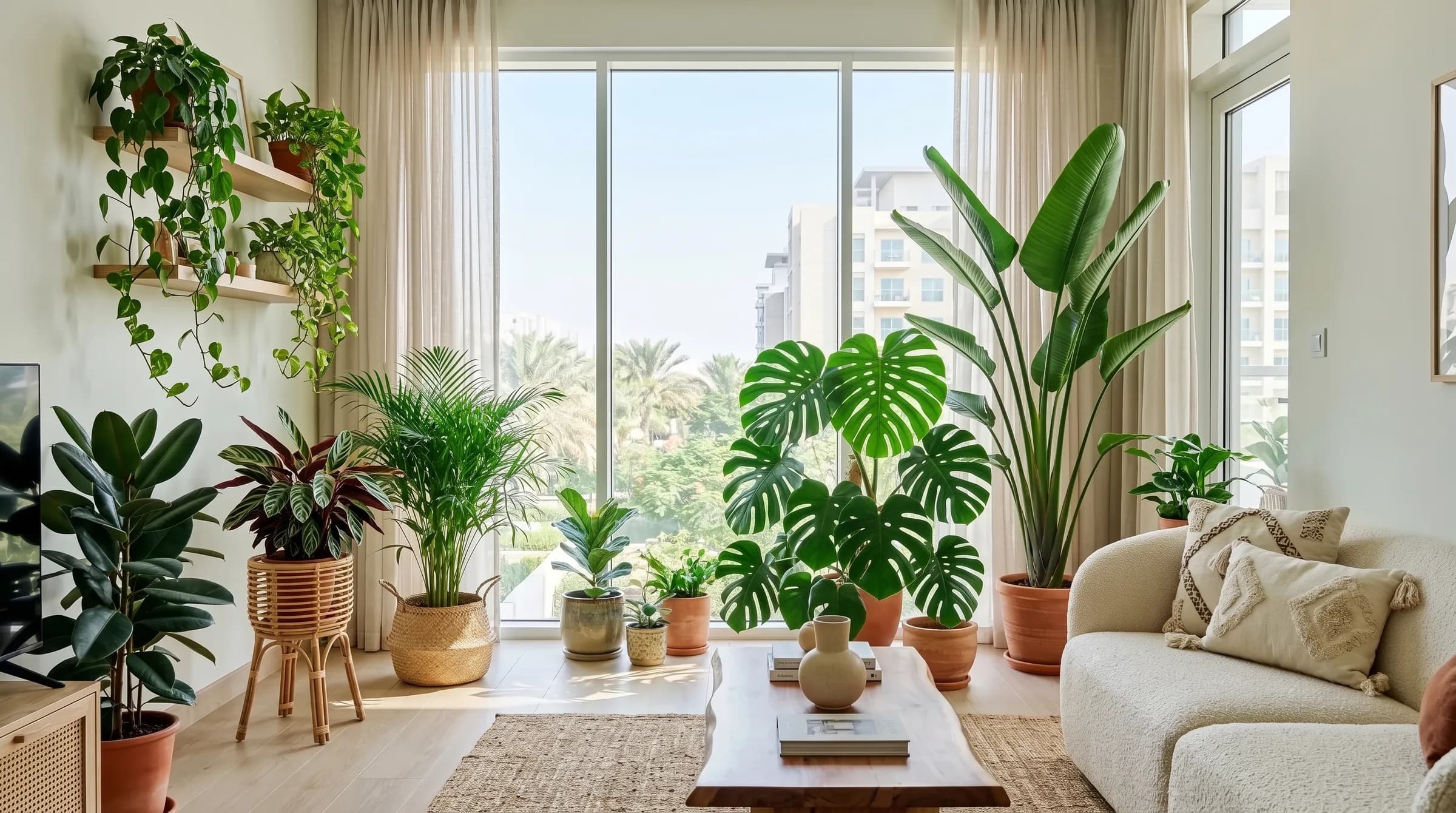
Urban jungle
Big leaves, trailing vines and plants at every height, in terracotta, rattan and baskets.
Living room
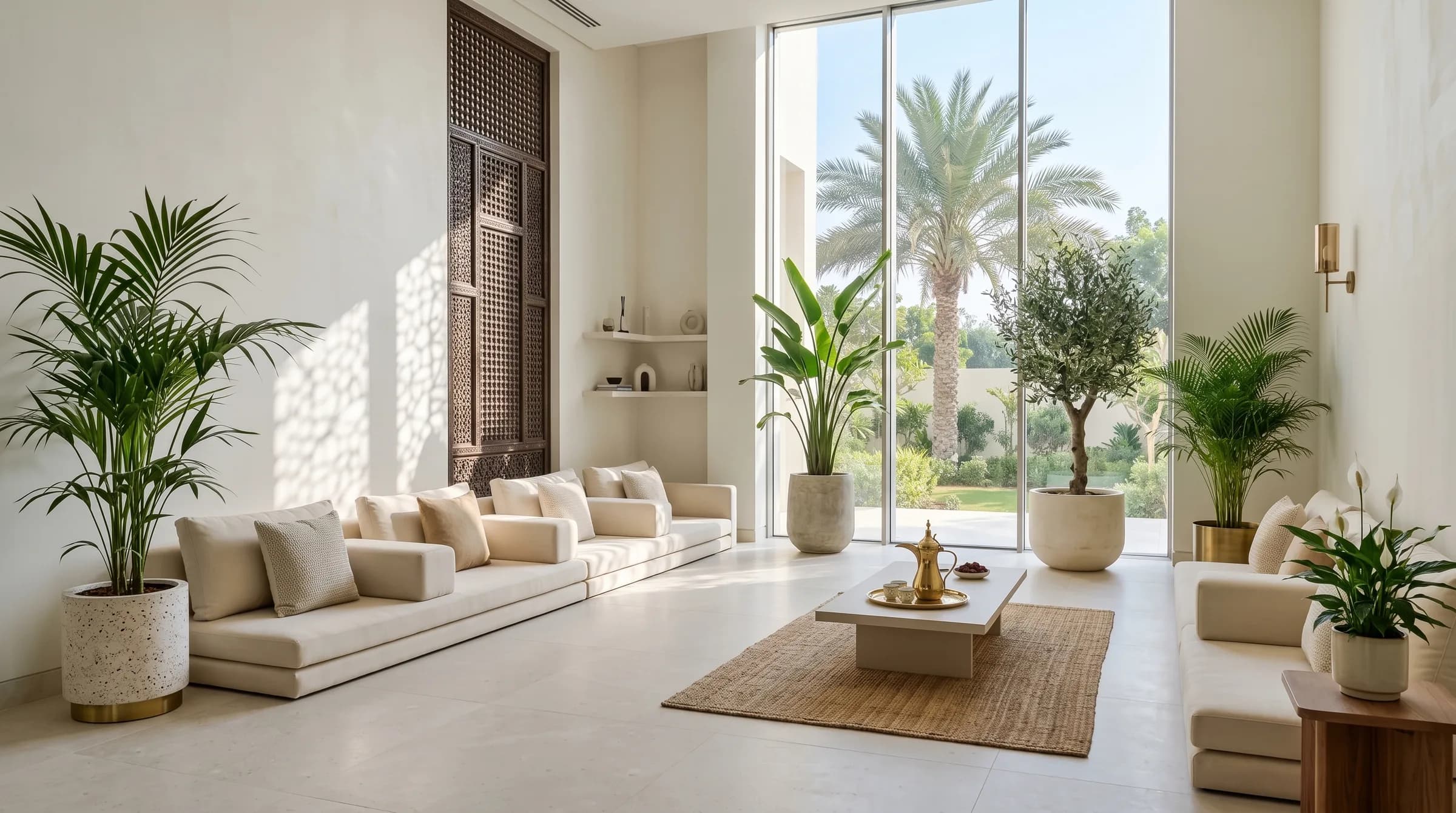
Modern majlis
Matching palms, brass and limestone: a formal, symmetrical look for a villa majlis.
Majlis · Living room
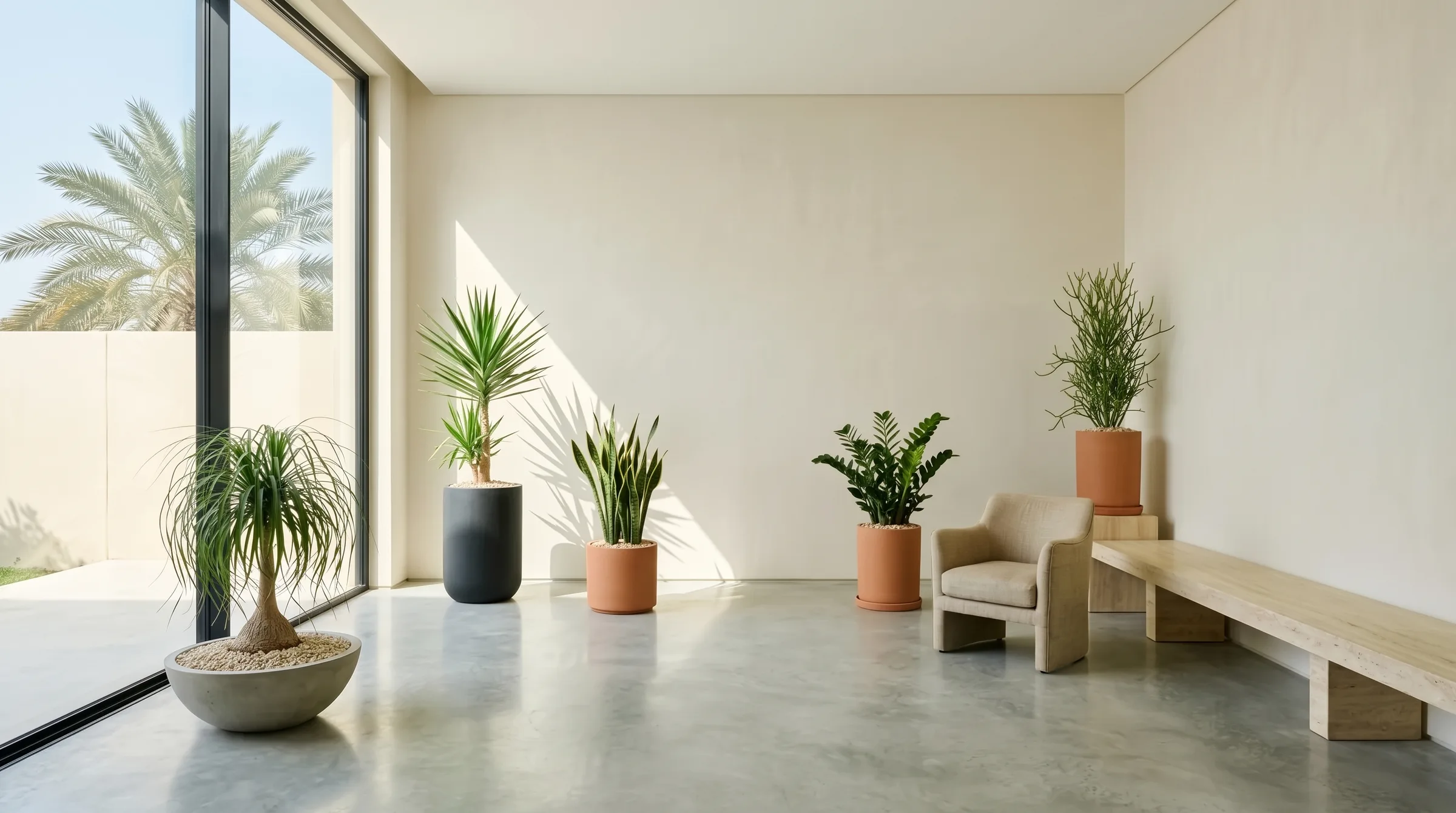
Sculptural minimal
One bold, architectural plant per corner, in concrete and terracotta against pale plaster.
Living room · Hallway · Home office
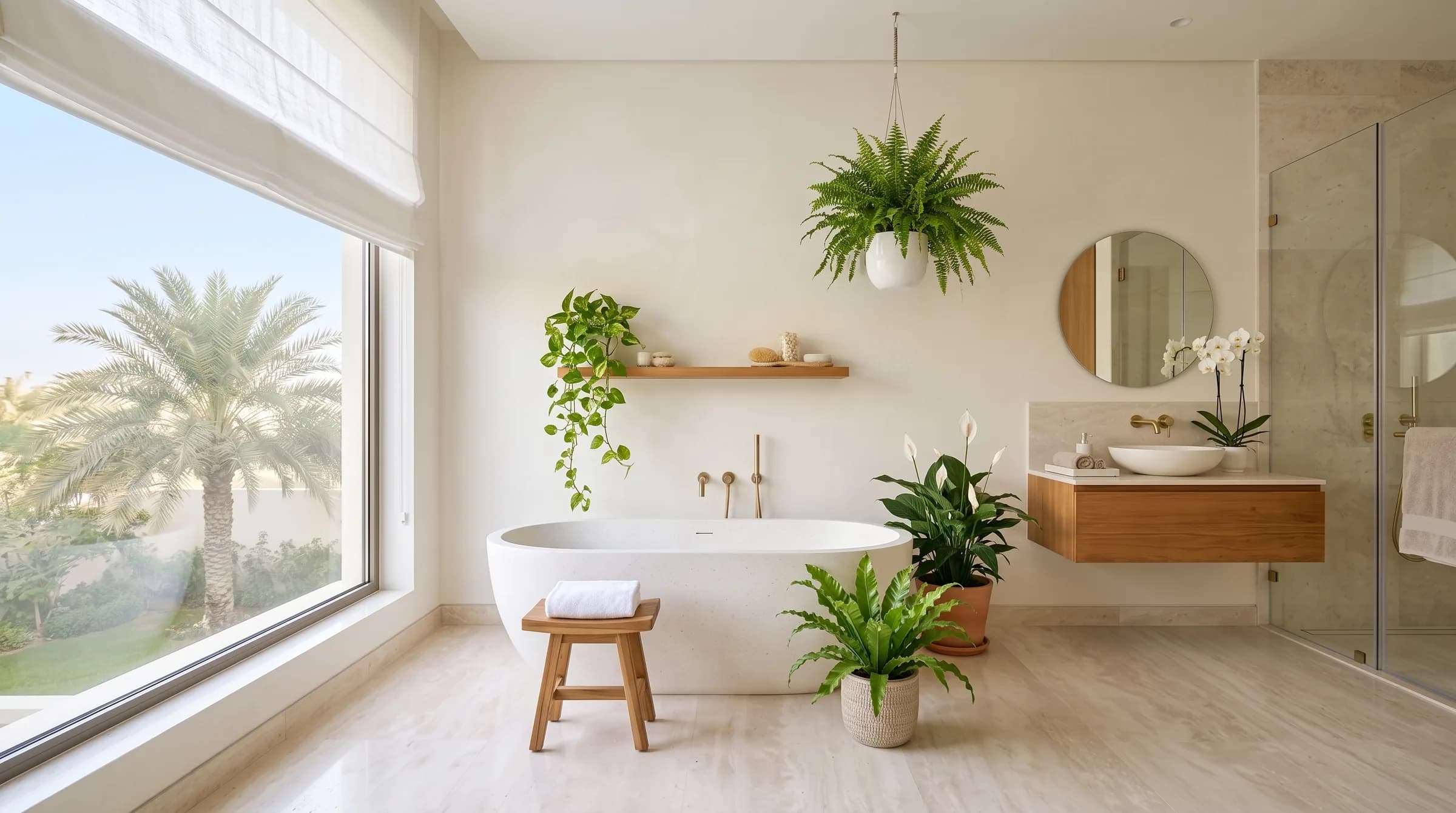
Spa bathroom
Ferns, a white orchid and a trailing vine in white ceramic and teak. It needs a window.
Bathroom
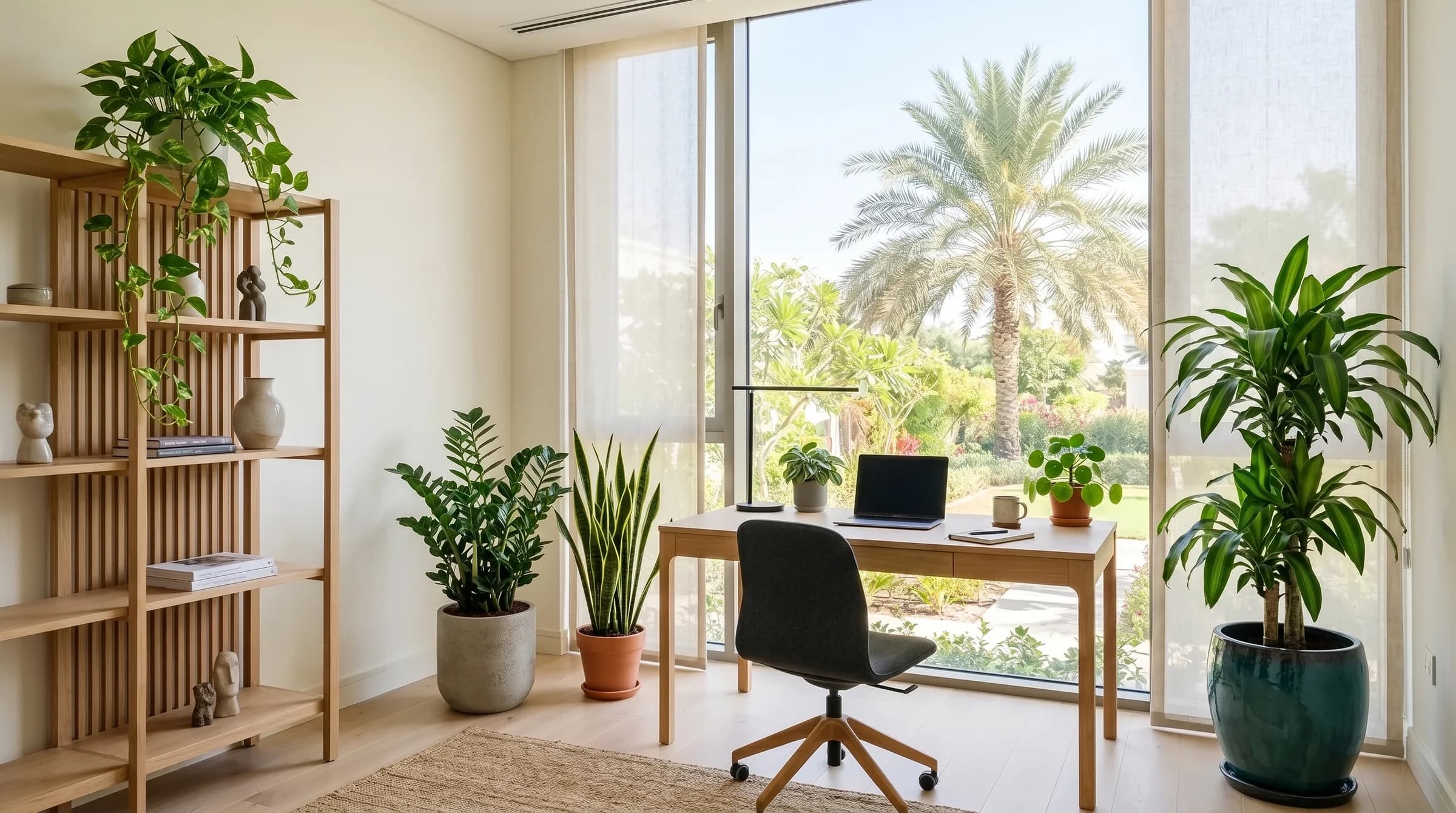
Green home office
Tough, tidy plants for the desk and shelf, chosen to survive weekends and summer trips.
Home office · Bedroom
Sources
- Plants & Flowers Foundation Holland: plants for a Japandi interior
- NC State Extension Plant Toolbox: Olea europaea (olive)
- NC State Extension Plant Toolbox: Ficus microcarpa
- NC State Extension Plant Toolbox: Howea forsteriana (kentia palm)
- NC State Extension Plant Toolbox: Aspidistra elatior (cast iron plant)
- ASPCA: kentia palm
- ASPCA: cast iron plant
- ASPCA: snake plant
- University of Maryland Extension: watering indoor plants
- Melinda Myers: low-E glass and houseplants
- Acacia Garden Center: indoor plants (prices checked 2026-10-07)
- IKEA UAE: plant pots (prices checked 2026-10-07)
Pool + garden care
From AED 500/month
Price depends on your garden's size, pool and complexity. Prices in AED, excluding 5% VAT.