
Ghaf
Prosopis cineraria
Full sunSalt: 4 of 5
Native
Water & irrigation
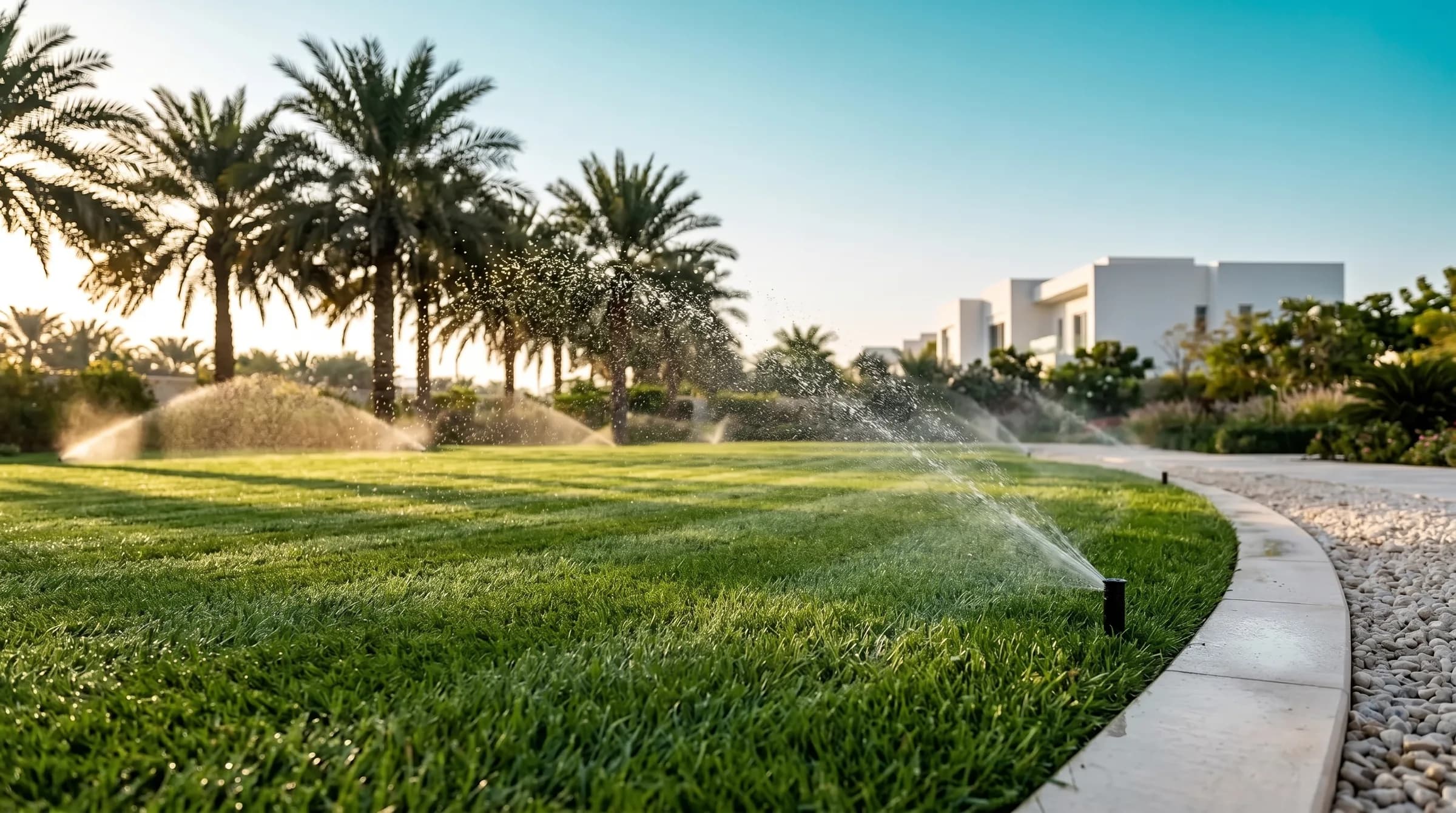
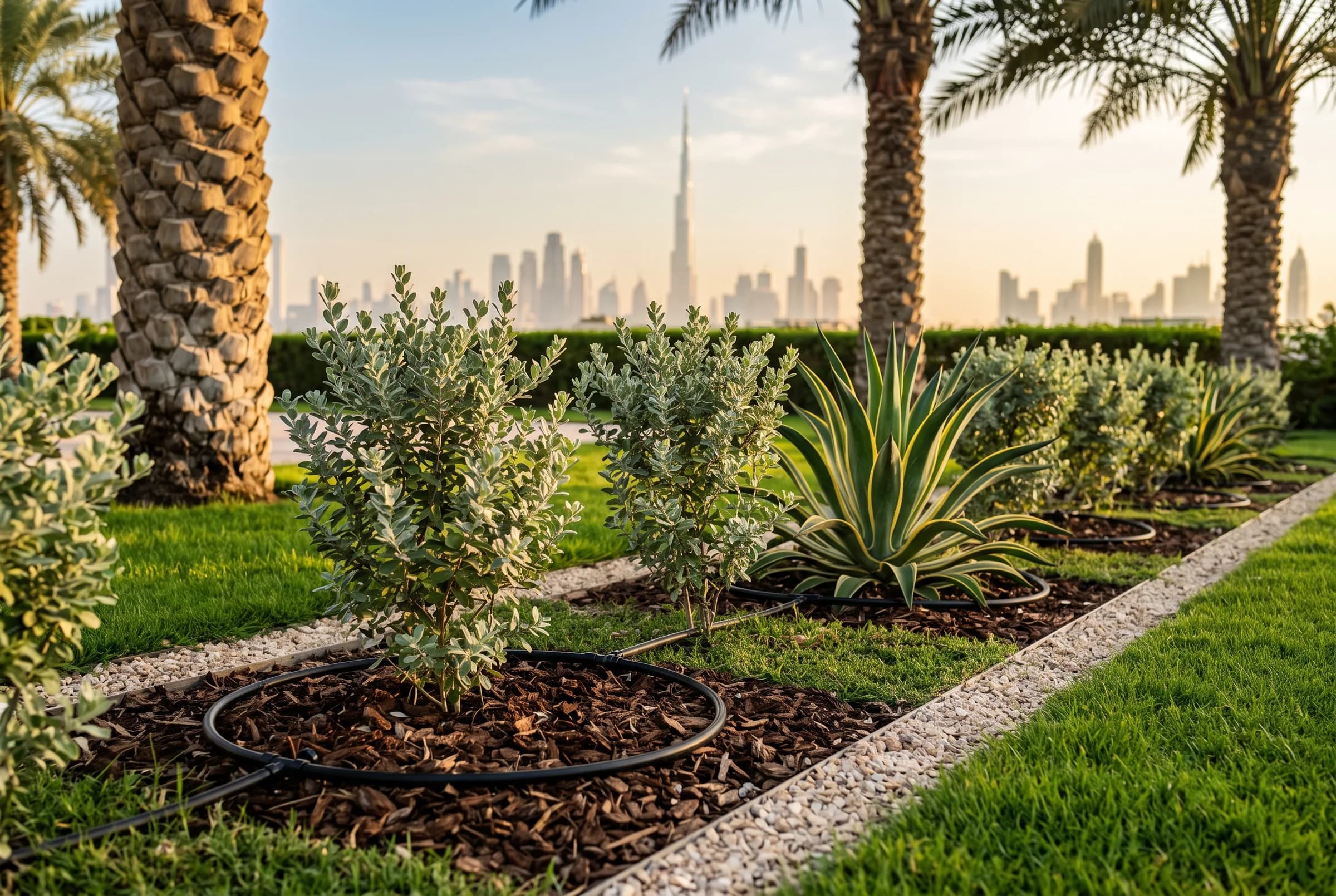
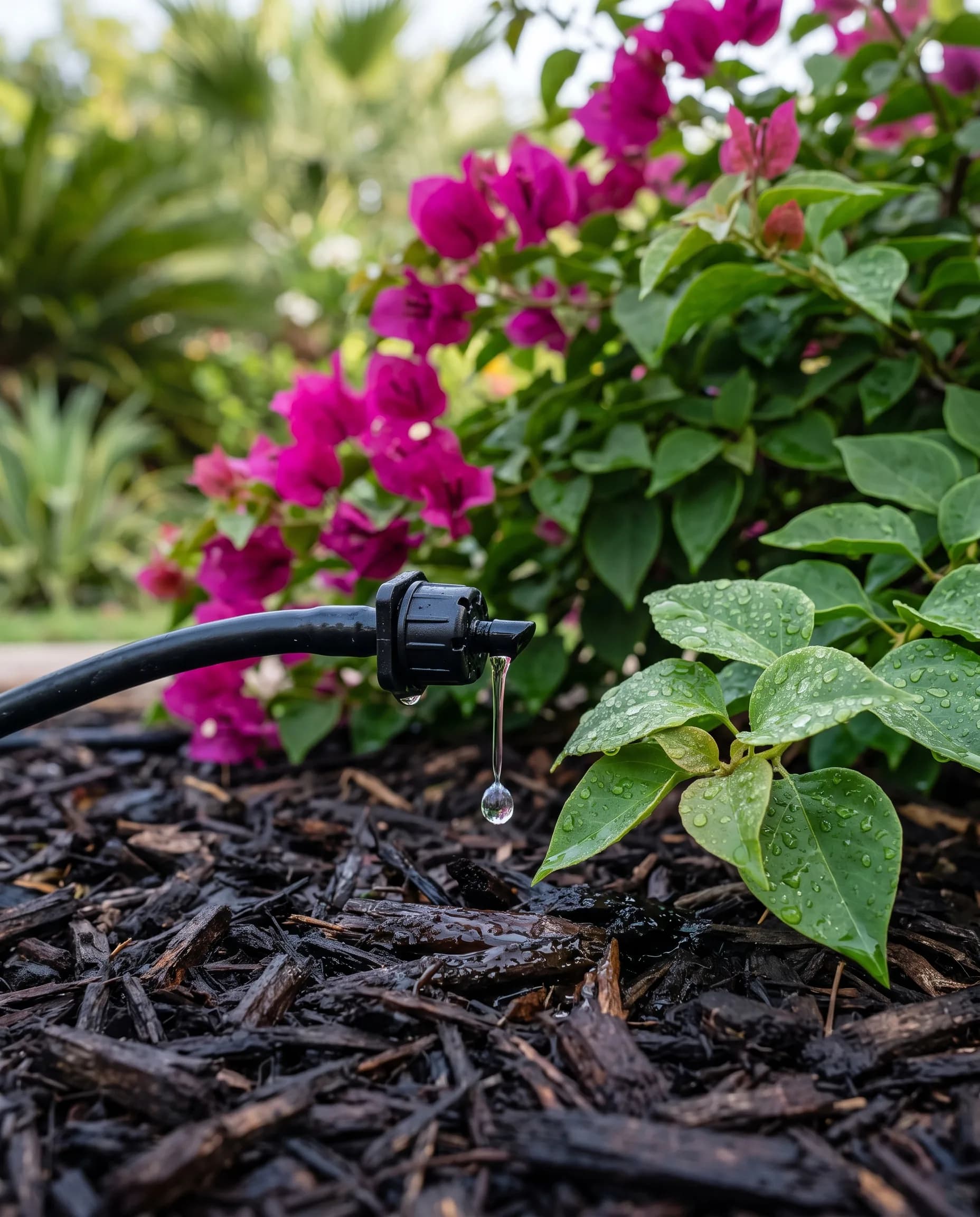
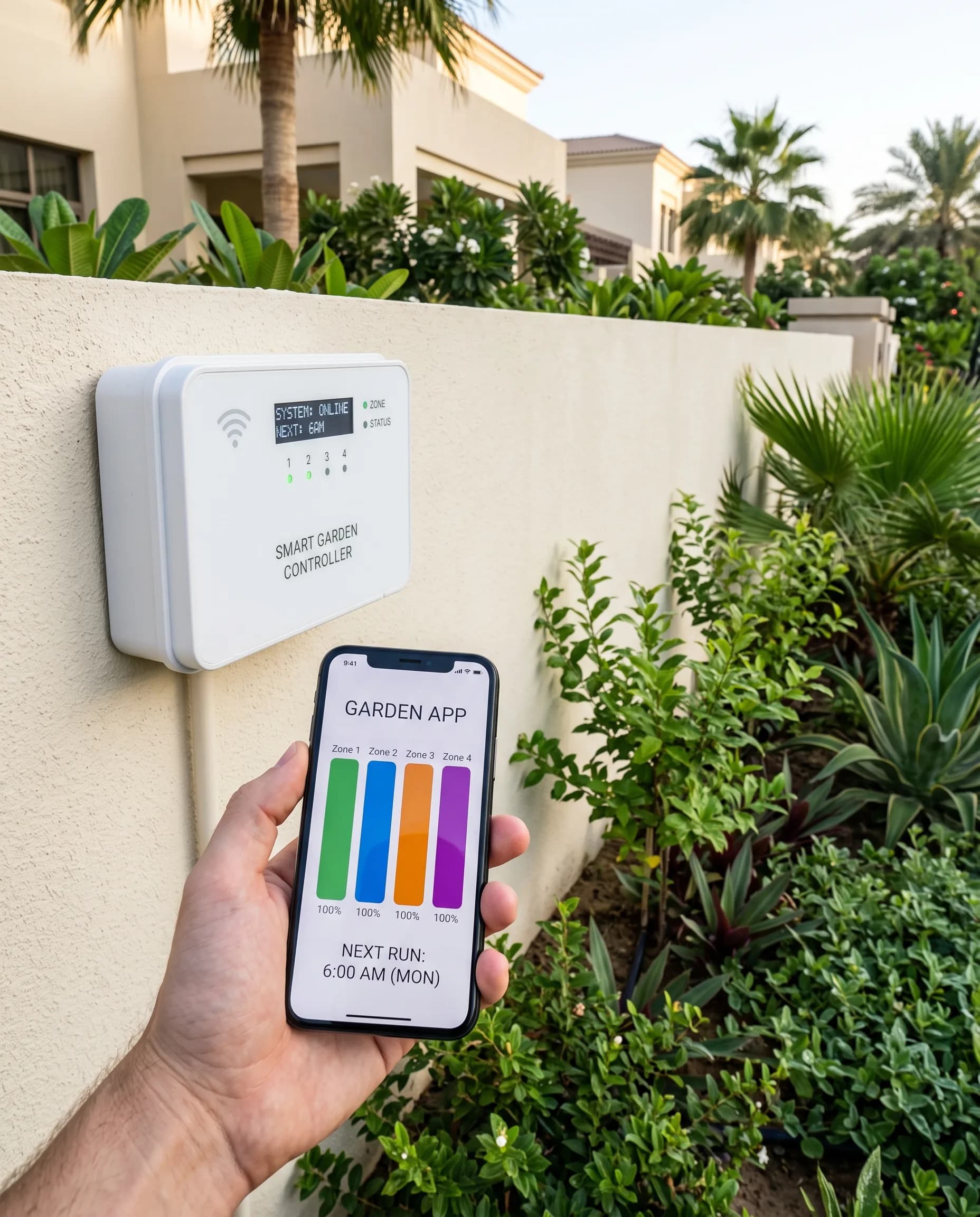
Hydrozoned drip, spray and bubbler systems, run by a Wi-Fi controller that adjusts itself.
A properly zoned irrigation system waters lawn, beds, hedges, trees and pots on separate schedules, and a Wi-Fi smart controller adjusts run times through the year, flags leaks and skips a cycle after rain.
From AED 8,000 per villa system
Typical full villa system: drip and spray zones, controller and filtration. Small drip-only setups start lower; large or complex plots cost more — see the cost guide.
Why it matters
Wi-Fi smart control
Run and adjust every zone from your phone, with seasonal scheduling that trims watering automatically as temperatures change.
Hydrozoned by design
Lawn, beds, hedges, trees, palms and pots each get their own zone, so nothing is over- or under-watered.
TSE and borehole-ready
Dedicated filtration protects drip emitters where the supply is treated sewage effluent or borehole water.
Weather-aware scheduling
Rain, wind and temperature skips stop a system watering when the garden doesn't need it.
Leak and flow alerts
A flow sensor can flag a burst line or stuck valve and shut the zone down before it wastes water for days.
Plan it
Your garden
DEWA mains water is potable and needs no special filtration for irrigation beyond a standard inline filter on drip zones.
Suggested zones
Water use (estimate)
3,457 L/day
in summer · 1,389 L/day in winter
About AED 1,027/month at summer usage, excl. VAT.
Stations & install
7 stations
5 zones + 2 spare
AED 8,500–21,000 installed, excl. VAT.
7-station Wi-Fi smart controller
Controlled from your phone, with weather-adjusted watering and a first run at 04:30.
Deep dive
A good irrigation system is mostly invisible: water runs at the right time, in the right amount, to the right plants, and nobody has to think about it. Getting there in a Dubai garden means treating irrigation as proper infrastructure rather than an afterthought bolted on once the planting's in — hydrozoning it correctly, matching the delivery method to each zone, protecting it from this climate's water-quality and pressure quirks, and controlling it with something that actually adapts through the year. This page covers all of it, plus what a system like this typically costs to install and to run.
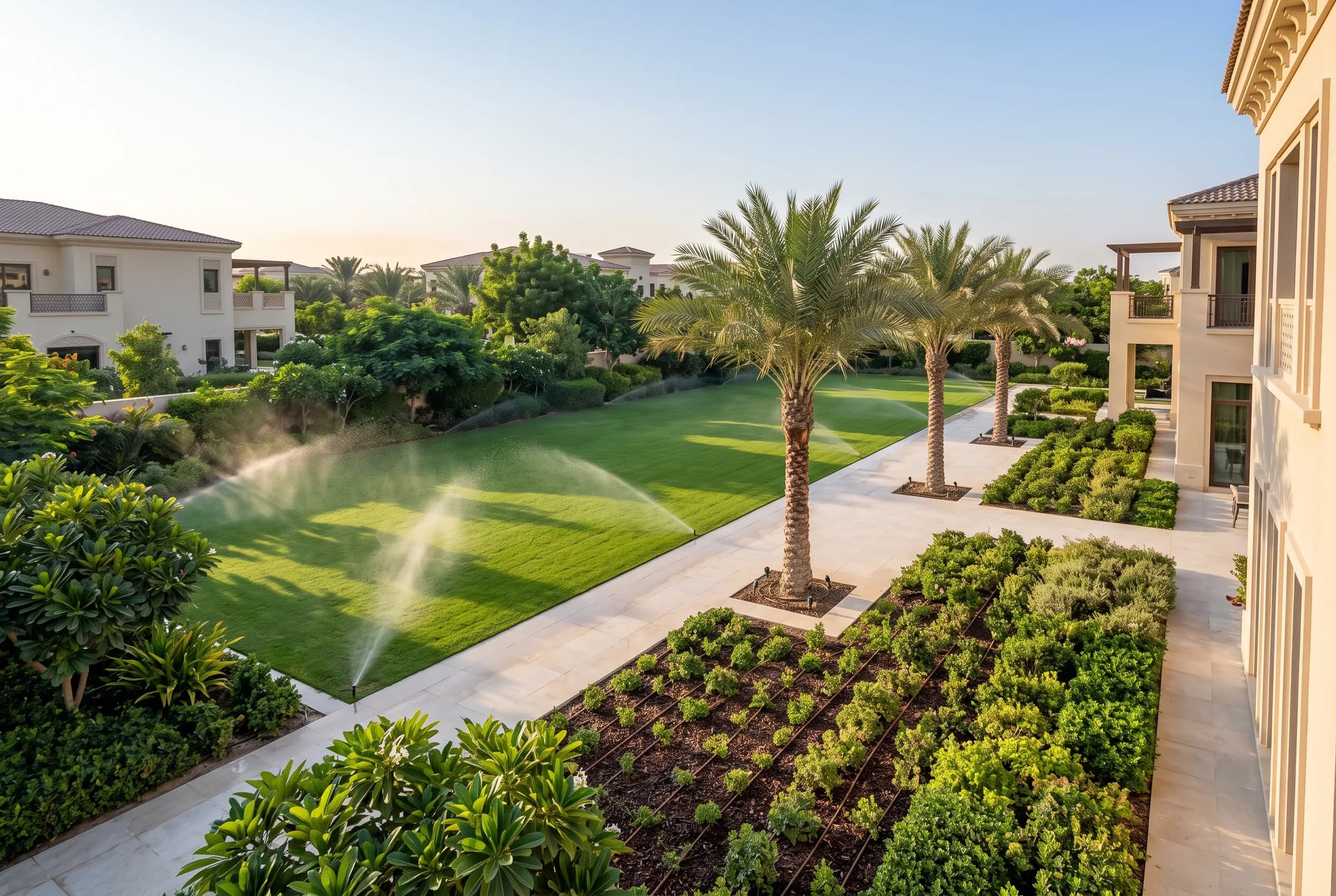
A villa garden usually carries at least four different kinds of water demand under one roof: lawn, planting beds, hedges, and trees or palms — often with pots on a terrace as a fifth. Grass roots sit in the top 10–15cm of soil and dry out fast in direct sun; a bed of drought-tolerant shrubs on drip can go much longer between waterings; a mature tree or palm wants a deep, infrequent soak rather than a daily sprinkle; a terrace pot can dry out in a single hot afternoon. Hydrozoning means grouping plants with similar water needs onto their own irrigation zone — a separate valve with its own start time and run length — instead of running the whole garden off one schedule.
It's the single biggest lever in irrigation design, because it fixes the most common fault we see in Dubai gardens: a lawn and a bed of desert-modern planting sharing one zone, so the lawn is underwatered, the shrubs are overwatered, or both. A well-zoned villa garden typically separates lawn, beds, hedges, trees, palms and pots into their own zones — often four to eight zones on a normal-sized plot, more on a large or complex one — each with a delivery method suited to what it's watering and a run time suited to how fast that zone dries out.
Five delivery methods cover almost every zone in a Dubai garden, and matching the right one to the right zone matters more than almost any other irrigation decision. Drip irrigation delivers water at low pressure through emitters spaced along a tube, straight to the root zone — the standard choice for beds, hedges and mixed shrub planting, since very little is lost to evaporation or wind drift. Pop-up spray heads throw a fan-shaped pattern of fine droplets a few metres, retracting flush with the lawn when off — the usual choice for smaller lawn areas. Rotors throw a single rotating stream much further and suit larger, more open lawn areas where spray heads would need too many heads for even coverage. Bubblers and drip rings deliver a slow, flooding trickle around the base of a tree or palm — exactly the deep, localised soak an establishing or mature specimen wants. Micro-drip (small-bore tubing with mini-emitters or spray stakes) is the usual choice for pots and planters, tuned to a single container's small root zone.
| Method | Best for | Why |
|---|---|---|
| Drip line / emitters | Beds, hedges, mixed shrubs | Very low evaporation loss; water goes straight to the root zone |
| Pop-up spray | Small to medium lawn areas | Even fan coverage over turf; retracts flush when off |
| Rotor heads | Larger, open lawn areas | Throws further, so fewer heads are needed for big turf areas |
| Bubblers / drip rings | Trees and palms | Slow, flooding soak that wets a wide, deep root zone |
| Micro-drip | Pots, planters, small beds | Tunable to a single container; minimal waste |
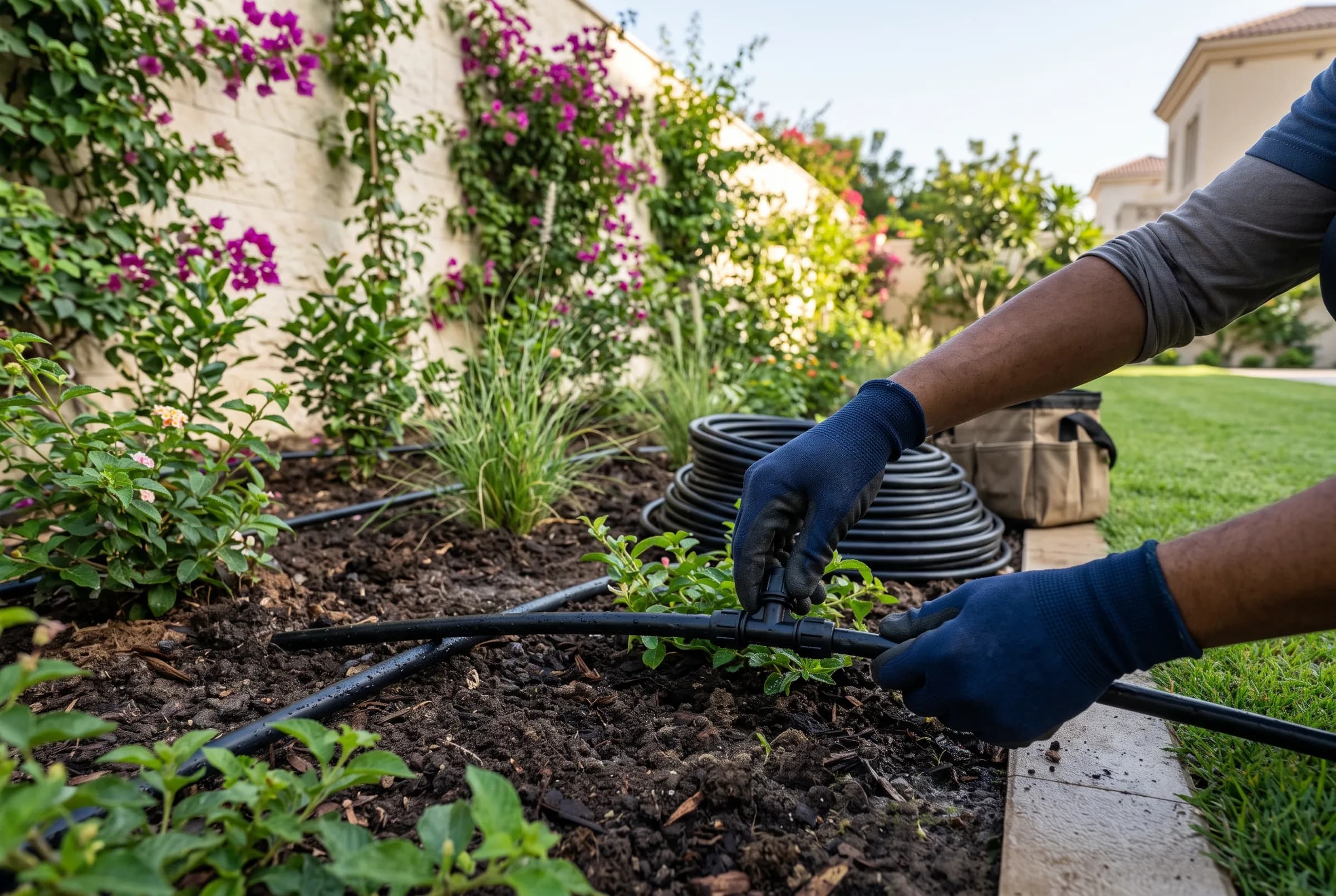
Underneath the emitters, every system is built from the same handful of parts. A valve switches one zone on and off, usually electric and wired back to the controller; several valves are commonly grouped in a manifold, a cluster of valves in one accessible box near the water source, which makes future repairs far easier than valves buried and scattered across the garden. From the manifold, a mainline runs under constant pressure to each zone's start point, and laterals — the drip tube or sprinkler pipe actually watering the plants — branch off from there, pressurised only when their valve opens. Pressure regulation matters more here than many installers let on: mains pressure varies by building and by time of day, and drip emitters in particular are rated for a fairly narrow pressure window — too high and they can blow off fittings or water unevenly along a long run; too low and the far end of a zone barely wets at all. A pressure-reducing valve at each zone, or at the manifold, keeps output consistent regardless of what the rest of the villa's plumbing is doing that day.
Filtration matters more on TSE or borehole water
Many Dubai communities irrigate from treated sewage effluent (TSE) rather than mains DEWA water, and some properties draw from a private borehole. Both can carry more fine sediment and dissolved salts than mains water. A dedicated disc or screen filter ahead of any drip zone is standard practice on TSE or borehole supply, since blocked emitters are the single most common drip failure. Salts left behind by evaporation can also build up in and around emitters and on the soil surface over time; an occasional deep flush — running a zone well past its normal cycle to push water past the root zone — carries accumulated salts below it instead of letting them concentrate where roots are trying to grow.
A booster pump is worth designing in wherever mains pressure alone won't reliably reach a large plot, a raised planter well above ground level, or a zone at the far end of a long run — better to size for it up front than to retrofit one after half the garden turns out to run weak. And wherever the system ties back into a mains supply, a backflow preventer stops irrigation water (which can pick up soil, fertiliser or, on TSE, treated effluent) siphoning back into the drinking-water side of the plumbing — a small, inexpensive fitting that's cheap insurance against a genuinely unpleasant fault.
Control technology for irrigation has moved through three broad generations, and a lot of older Dubai gardens are still stuck on the first. A basic mechanical or digital timer runs one or two programs at fixed times with no weather adjustment — reliable, but it waters exactly the same on a mild December day as on a 45°C August one, unless someone manually changes it. An automated multi-zone controller steps this up: independent start times and run lengths per zone, several programs a day, and battery-backed memory — but it still needs a person to walk out and reprogram it every season. A Wi-Fi smart controller connects to the home network and an app, and does most of that seasonal adjustment on its own.
Several Wi-Fi controller ranges sold in the UAE cover this ground, among them Hunter Hydrawise, Rain Bird models paired with an LNK2 Wi-Fi module, and Rachio — named here as examples of what to look for, not a recommendation of one brand over another.
DEWA's published advice is to water before 8am or after 6pm, avoiding the middle of the day altogether, when evaporation losses are highest. Split a day's water into a short pre-dawn run and, in peak summer, a second evening run, rather than one long midday soak — soil absorbs two shorter doses more effectively than it can shed one large one. Frequency should track the season, not stay fixed year-round: a natural lawn commonly needs watering most days from June to September, tapering back to a few times a week — sometimes less — once temperatures drop from November through February. Beds on drip and established trees need far less: a well-zoned bed can often run every second or third day even in summer, and a mature tree or palm on bubblers may need only one deep soak a week.
Dubai's mandatory green building rules, Al Sa'fat, apply to new buildings — including private villas — and include a water-efficient irrigation regulation that defines and promotes drip irrigation as the high-efficiency standard for landscaped areas, ahead of less efficient spray methods. If you're building or extensively renovating, ask your contractor how the irrigation design meets this requirement, and check current rules with Dubai Municipality, since standards are reviewed periodically. Even outside a new-build project, it's a useful benchmark: a design that leans on drip wherever it reasonably can, reserving spray or rotor heads for turf specifically, is already aligned with where Dubai's own building code is pushing.
Outdoor irrigation is consistently the largest swing factor in a villa's water bill. DEWA bills residential water by the cubic metre on a rising slab, so the more your household uses in a month, the more each additional cubic metre costs.
DEWA residential water slabs
| Band (m³/month) | Rate |
|---|---|
| 0–27 | AED 7.70/m³ |
| 27–54 | AED 8.80/m³ |
| 54+ | AED 10.12/m³ |
Plus a fuel surcharge of AED 1.10/m³ and 5% VAT. Rates and surcharges are reviewed periodically — check your current DEWA bill.
Before 8am / after 6pm
DEWA's recommended irrigation watering window
AED 7.70–10.12/m³
DEWA's residential water slab rates, before the fuel surcharge and VAT
DEWA slab tariff
4–8
Typical zone count in a well-hydrozoned villa garden
An irrigation system doesn't fail all at once — it drifts. A schedule set correctly in March is quietly wrong by July; a filter that was clean at handover clogs gradually over a season of TSE water; a drip line nicked by a trowel keeps most of a zone watered while one plant slowly dies. None of that shows up on a quick glance from the terrace, which is why a system genuinely needs walking, not just glancing at, on a regular basis.
Walk it each season change
Run every zone and look for dry patches, pooling or a head that's stopped popping up — the fastest way to catch a fault before it kills planting.
Check filters and flush lines
Clean or replace filters and flush drip zones, especially on TSE or borehole supply, to clear sediment and accumulated salt.
Test the controller's actual schedule
Confirm run times and start times still match the season — a controller nobody's touched since spring is a common source of waste.
Inspect exposed tubing
UV exposure makes drip tube brittle over a few years; replace anything cracked or sun-damaged before it splits mid-season.
Recheck after any garden work
Planting, digging or paving work near a line is a common cause of an accidental cut — test the zone afterwards, not just visually inspect it.
Most wasted water in a Dubai garden doesn't come from an obviously broken system — it comes from a working one nobody's checked in a while. These are the signs worth acting on before the next DEWA bill lands:
Pool + garden care
From AED 500/month
Price depends on your garden's size, pool and complexity. Prices in AED, excluding 5% VAT.
Process
Site walk & water audit
We map existing planting, lawn and hardscape and check your water source — DEWA mains, TSE or borehole — along with pressure and any existing pipework.
Hydrozone plan
Lawn, beds, hedges, trees/palms and pots are grouped into zones sized to your garden and what's actually planted in each part of it.
Pipework & valves
Mainline, manifold, valves and laterals are laid and pressure-tested before anything is backfilled.
Filtration & pressure regulation
A filter and pressure regulator are fitted at the manifold, especially important where the supply is TSE or borehole water.
Controller & Wi-Fi setup
The controller is programmed, connected to your Wi-Fi, and the app is set up with your zones and a starting schedule.
Test run & handover
Every zone is run and checked for even coverage, then you get a walkthrough of the app and an as-built zone map.
Seasonal check-ins
Garden Care visits include an irrigation check, with schedule adjustments made each season.
Options
Essential
From AED 3,000 per system
Plus
From AED 8,000 per system
Premium — Wi-Fi smart
From AED 12,000 per system
Cost guide
| Item | Cost | Notes |
|---|---|---|
| Small drip-only setup (beds only, no lawn) | AED 3,000–7,000 per system | Townhouse or courtyard garden, a few zones |
| Full villa system (drip + spray, controller, filtration) | AED 8,000–15,000 per system | Standard 3–5 zone villa garden |
| Large or complex plot (450 m²+, multiple zones, pump) | AED 25,000–50,000 per system | |
| Additional zone, installed | AED 1,000–2,500 per zone | |
| Wi-Fi smart controller upgrade | AED 1,500–3,500 per controller | Hardware plus installation and wiring |
| Seasonal service / repair visit | AED 150–900 per visit | Leak repair, valve or dripline fix, controller check |
Keeping it running: Garden Care
Every Garden Care visit includes an irrigation check — walking the zones, testing the controller and catching a blocked emitter or a drifted schedule before it shows up as a dead patch or an inflated DEWA bill.
FAQ
More from Build a Garden
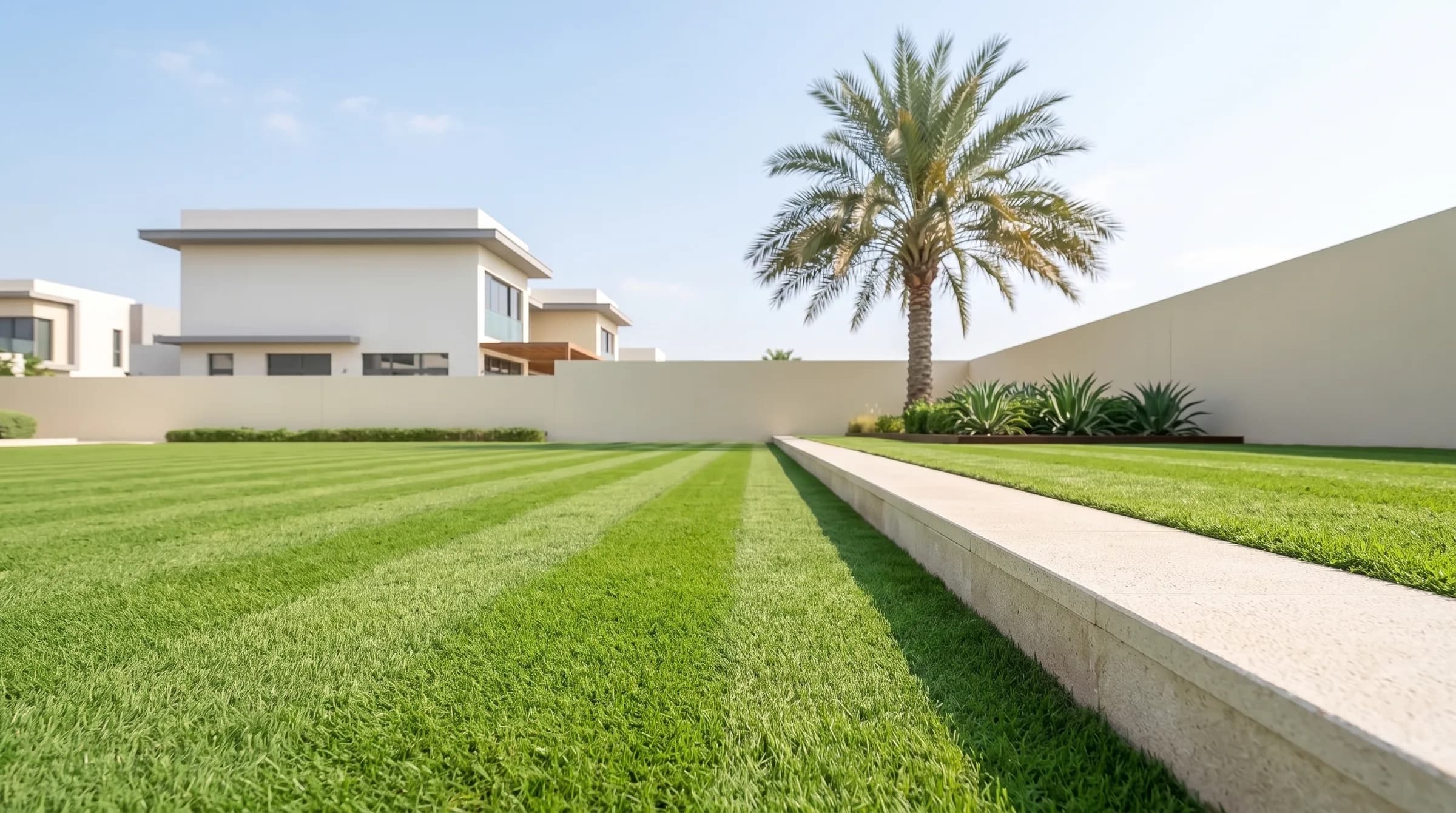
Natural & artificial lawns
Paspalum, Bermuda or artificial turf, matched to how the lawn actually gets used.
From AED 35 per m² (natural turf, installed)
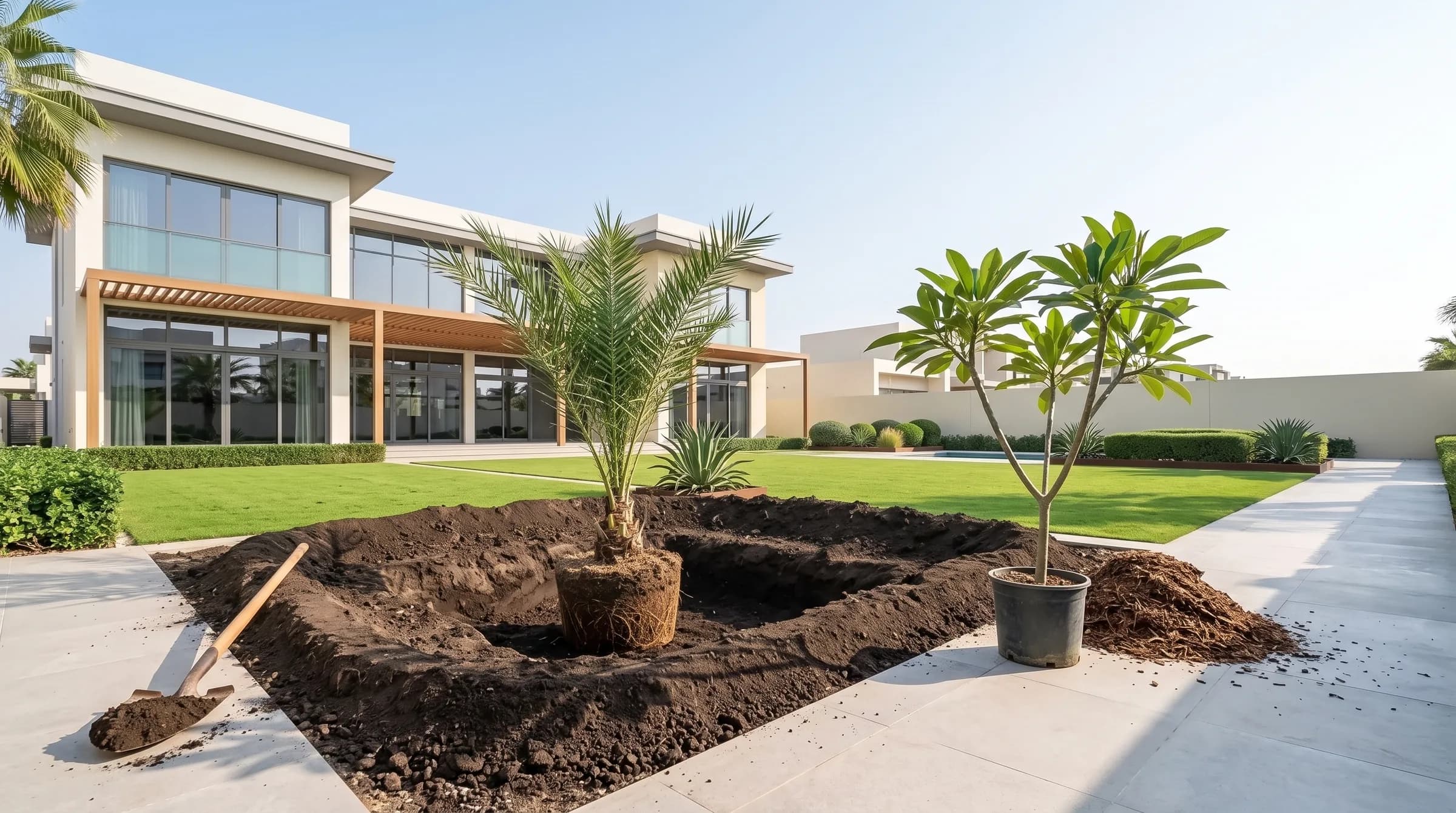
Trees, palms & planting
Trees, palms and shrubs planted the way Dubai's heat and nursery stock actually need.
From AED 250 per shrub cluster, supplied and planted
Garden design & plans
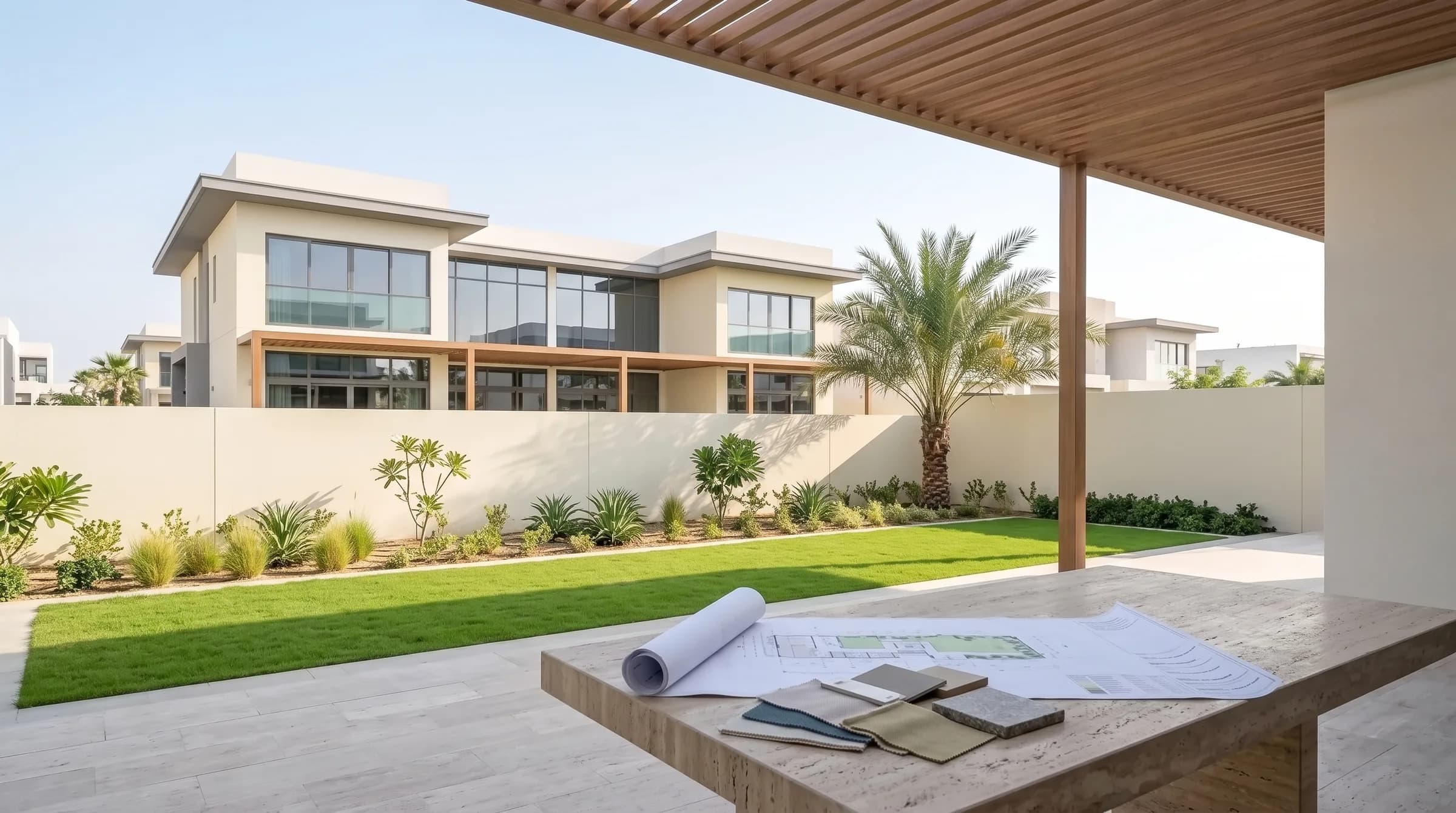
A garden plan that works for Dubai's heat, before a single tree goes in the ground.
From AED 5 % of build cost (design fee)
Plant library
Ghaf
Prosopis cineraria
Seashore paspalum
Paspalum vaginatum

Desert Rose
Adenium obesum
Guides
Costs & water
Watering your garden through a Dubai summer
Water before 8am or after 6pm, favour drip over spray, and expect new planting to need far more water than anything established — plus what it actually costs on your DEWA bill.
29 Sept 2026 · 5 min read
Maintenance
How much does pool and garden maintenance cost in Dubai?
Combined pool and garden care in Dubai starts from about AED 500 a month. What changes the number is your garden's area, your pool size, and how complex the planting and pool equipment are.
29 Sept 2026 · 5 min read
Pool + garden care
From AED 500/month
Price depends on your garden's size, pool and complexity. Prices in AED, excluding 5% VAT.