Costs & water
Artificial vs natural grass in Dubai: the 10-year cost, worked out
Natural grass costs less to install but keeps adding to your water bill every year; artificial turf costs more upfront but barely touches it. Here's a worked 10-year comparison for a 100 m² lawn.
Updated 29 Sept 2026 · 5 min read
On this page
The short answer
Over 10 years, a 100 m² natural lawn and a 100 m² artificial one land closer in total cost than the upfront price tags suggest — natural is cheaper to install but keeps costing water every year; artificial costs more upfront but very little after that. Below is a worked example with every assumption stated, plus the other factors — heat, feel underfoot, and durability — that matter as much as the money.
Worked example: 100 m² lawn over 10 years
Assumptions used in this example
Install cost from typical Dubai landscaping rate cards: natural lawn AED 35–60/m², artificial turf AED 60–130/m². Summer irrigation at 10.2 L/m² every 3 days, based on Abu Dhabi's UPC/ADM landscape irrigation guidance for turf, run for roughly 4 summer months, with a lower rate assumed for the remaining 8. Water priced at a blended AED 9/m³ plus the AED 1.10/m³ fuel surcharge and 5% VAT — your actual rate depends on your household's total consumption band. Tariffs, install quotes and turf quality all vary; treat the totals as an illustration of the shape of the cost, not a quote.
100 m² lawn, 10-year estimate
| Natural grass | Artificial turf | |
|---|---|---|
| Install cost (100 m²) | ≈ AED 4,000–6,000 | ≈ AED 6,000–13,000 |
| Estimated annual water cost | ≈ AED 800–900 | Minimal — occasional rinsing only |
| 10-year water total | ≈ AED 8,000–9,000 | Well under AED 1,000 |
| Typical lifespan before major work | Ongoing — overseed and renovate as needed | ≈ 8–10 years, then replacement |
| Rough 10-year total (install + water) | ≈ AED 12,000–15,000 | ≈ AED 7,000–14,000 |
Excludes mowing, fertilising and aeration for natural grass, and infill top-ups and cleaning for artificial turf — both real costs, but too variable to generalise here.
The ranges overlap — a budget artificial install can land close to a well-specified natural lawn once ten years of water are counted, and a premium artificial product can cost as much upfront as natural grass costs including water. What the table doesn't include, on either side, is labour: mowing and feeding for natural grass, or occasional brushing and top-ups for artificial.
The heat difference is not close
This is where the two surfaces stop being comparable. A widely cited BYU study measured synthetic turf at up to 86°F (about 48°C) hotter than natural grass under the same conditions, with turf surface temperatures exceeding 150°F (65°C) on a hot day and briefly over 200°F (93°C) at peak. A separate Penn State study of multiple infill types found synthetic surface temperatures consistently in the 120–150°F (49–65°C) range, and concluded that changing the infill material shaved off at most a further 10°F — nowhere near enough to make bare feet comfortable on a Dubai afternoon. Both studies found that watering the turf cools it briefly, but it rebounds within minutes as the water evaporates (Synthetic Surface Heat Studies).
In a Dubai garden, that means artificial turf is genuinely uncomfortable to walk on barefoot for a large part of the day across much of the year, unless it's shaded or specified with a cooling infill — a real cost of its own, in comfort if not in AED.
Scaling beyond 100 m²
The shape of this comparison holds at other sizes, but the crossover point moves. On a small lawn — a courtyard strip of 20–30 m² — the fixed costs of an artificial install (delivery, base preparation, edging) weigh more heavily relative to the small amount of water a natural lawn that size would actually use, which tends to favour natural grass for small areas. On a large lawn — 300 m² or more — the compounding annual water cost of natural grass becomes the dominant number, which tends to tip larger areas toward artificial turf, water budgets and comfort trade-offs aside. Run your own garden's numbers through the Garden Care calculator for a sense of the ongoing cost either way.
Maintenance and durability
Natural grass needs regular mowing, seasonal feeding, occasional aeration and overseeding, and is vulnerable to drought stress if irrigation fails even briefly. Artificial turf needs brushing to keep the pile upright, periodic infill top-ups, and occasional rinsing to clear dust — far less frequent, but not zero. Good artificial turf in UAE conditions is commonly rated for 8–10 years, sometimes longer with premium UV-stabilised products; budget products can fade and stiffen within 3–5 years under constant sun (TurfKingz).
Where each wins
Natural grass wins where the lawn is genuinely used barefoot, where a lower upfront cost matters more than ongoing water, or where the garden leans on real plants and grass for its feel, as in a tropical or luxury resort style. Artificial turf wins on shaded or awkward-shaped areas where a natural lawn struggles anyway, on strict water budgets, and for owners who travel often and don't want a lawn dependent on irrigation working perfectly while they're away — see our guide to garden care while travelling. Compare grass options directly on our grasses page.
Other factors worth weighing
Cost and heat aren't the only differences. A natural lawn keeps changing through the year — greener after rain, tougher in peak summer — while artificial turf looks the same in January and August, which some owners want and others find flat. Natural grass can trigger pollen sensitivity for some households; artificial turf removes that but can hold pet urine odour if it isn't rinsed regularly. For resale or rental appeal, expectations vary by buyer and area, so it's worth a quick look at what's typical in your specific community rather than assuming either surface is universally preferred.
The two natural lawn options this comparison is based on
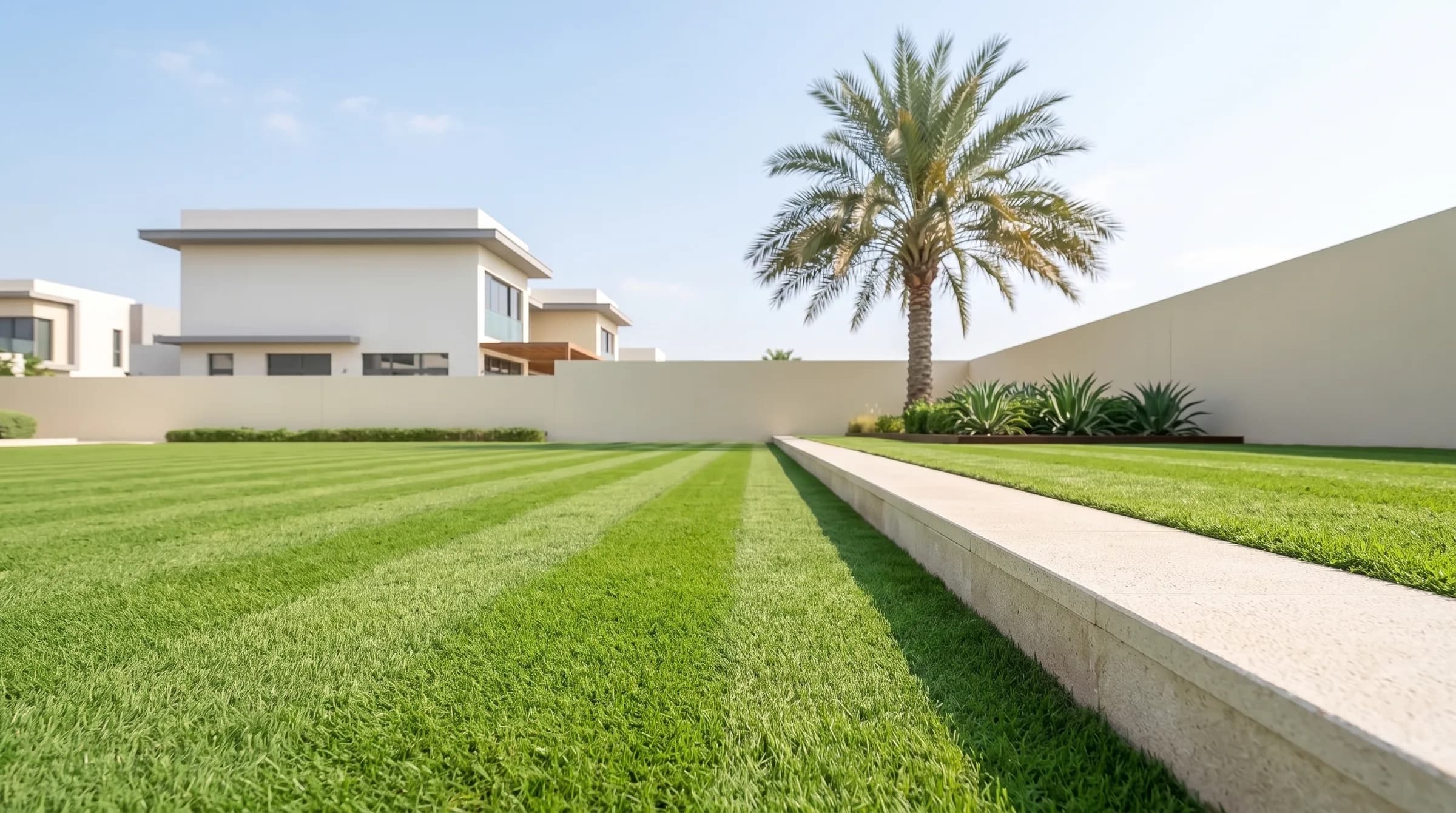
Seashore paspalum
Paspalum vaginatum

Bermuda grass
Cynodon dactylon
Pool + garden care
From AED 500/month
Price depends on your garden's size, pool and complexity. Prices in AED, excluding 5% VAT.
Frequently asked
Is artificial grass actually cheaper over time in Dubai?
Does artificial grass really get too hot to walk on?
How long does artificial turf last in Dubai's climate?
Can I mix real lawn and artificial turf in the same garden?
Sources
Written by Ghaf Gardens horticulture desk · last reviewed 29 Sept 2026
Related guides
Planting
Paspalum vs Bermuda grass: which lawn suits your Dubai garden?
Paspalum, often sold locally as "Sharjah grass", handles shade and salty irrigation water better than Bermuda, sold as "American grass", which is usually cheaper to install and tougher in full sun.
29 Sept 2026 · 5 min read
Costs & water
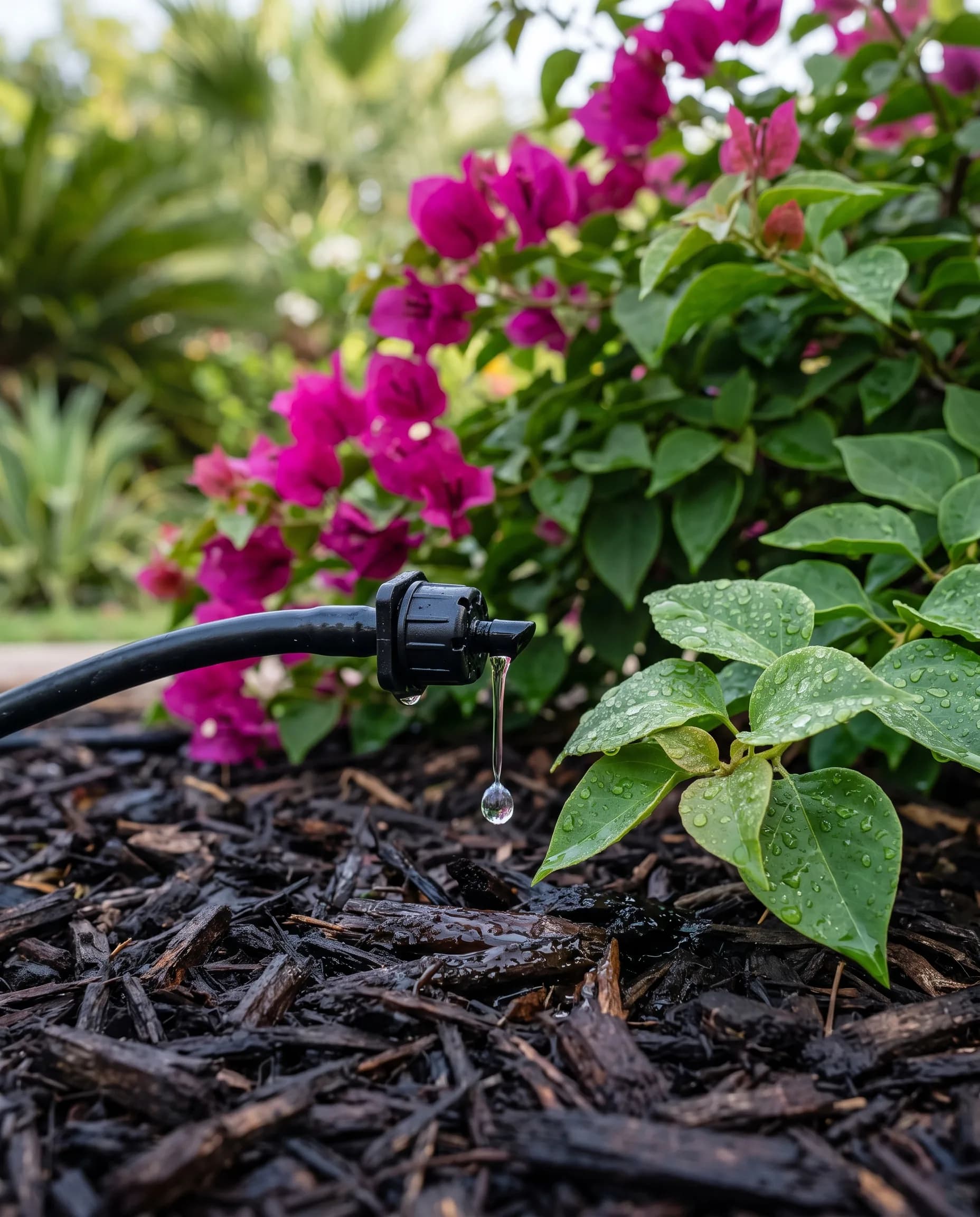
Watering your garden through a Dubai summer
Water before 8am or after 6pm, favour drip over spray, and expect new planting to need far more water than anything established — plus what it actually costs on your DEWA bill.
29 Sept 2026 · 5 min read
Maintenance
How much does pool and garden maintenance cost in Dubai?
Combined pool and garden care in Dubai starts from about AED 500 a month. What changes the number is your garden's area, your pool size, and how complex the planting and pool equipment are.
29 Sept 2026 · 5 min read
Pool + garden care
From AED 500/month
Price depends on your garden's size, pool and complexity. Prices in AED, excluding 5% VAT.