Costs & water
Watering your garden through a Dubai summer
Water before 8am or after 6pm, favour drip over spray, and expect new planting to need far more water than anything established — plus what it actually costs on your DEWA bill.
Updated 29 Sept 2026 · 5 min read · Best read in Jun–Sep
On this page
When to water
DEWA's own advice is simple: water before 8am or after 6pm, and avoid the middle of the day altogether. Watering a lawn at midday in summer can lose as much as 30% of the water to evaporation before it ever reaches the roots (Gulf News). Splitting a day's water into two shorter sessions — a shorter run before sunrise and another in the evening — generally beats one long midday soak, since soil absorbs shorter, more frequent doses more effectively than it can shed a single large one.
Drip vs sprinkler
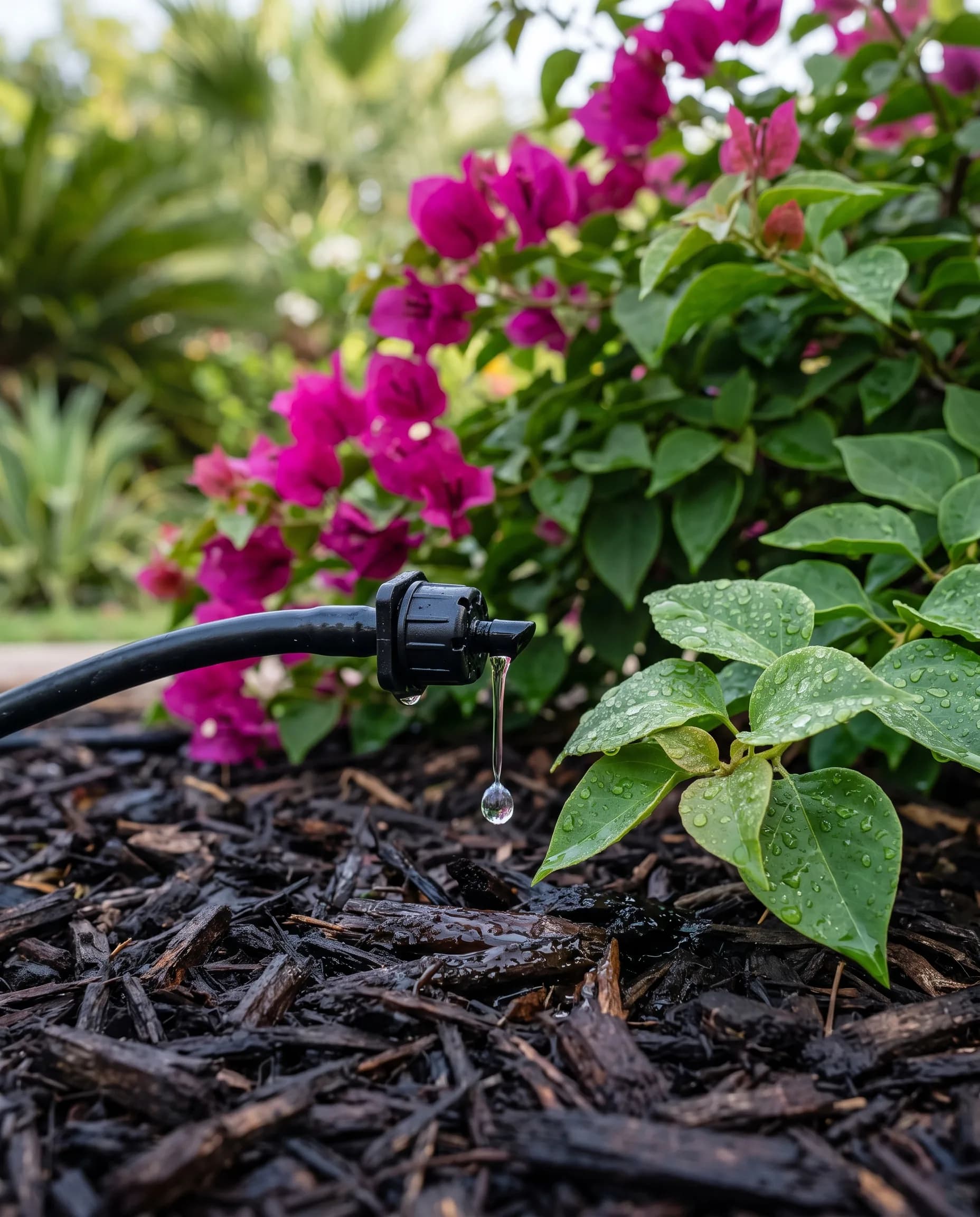
Spray or sprinkler irrigation loses a large share of its water to evaporation and wind drift in Dubai's heat — commonly cited estimates put it as high as 60% lost before it reaches the plant. Drip irrigation, which delivers water directly to the root zone through emitters, typically uses noticeably less water for the same result. As a rule of thumb: use drip for trees, shrubs, beds and climbers, and reserve sprinklers or pop-ups for open lawn area, where their even coverage over a large surface still makes sense.
Establishment vs mature watering
A newly planted tree and a three-year-old specimen of the same species have almost nothing in common when it comes to water needs. In the first few weeks after planting, roots are confined to the original root ball and dry out fast — that usually means watering every day or every other day, even in a species that will later be very drought-tolerant. As roots spread outward over the following one to two years, watering should taper to deeper, less frequent soaks that encourage roots to grow down and out rather than staying shallow near a sprinkler. Ghaf is a good example: newly planted trees need regular watering through their first year or two, but an established Ghaf can go a week or two between deep waterings even in peak summer.
Signs of over- and under-watering
| Sign | Usually means |
|---|---|
| Yellowing leaves and soggy, smelly soil | Overwatering — roots may be starved of oxygen |
| Leaves wilt in the afternoon but recover by evening | Normal heat response, not necessarily a water problem |
| Leaves wilt and stay wilted, crisp brown edges | Underwatering |
| Fungus gnats or mould on the soil surface | Overwatering, often paired with poor drainage |
| Sudden leaf drop after a very hot week | Could be either — check soil moisture at root depth before adding more water |
| Lawn footprints that stay flattened for minutes | Underwatering — the grass has lost turgor |
Check the soil, not just the leaves
The single best way to tell over- from under-watering is to push a finger or a screwdriver a few centimetres into the soil near the root zone. Wilting leaves over wet soil almost always mean too much water, not too little.
What it costs on your DEWA bill
Since March 2025, DEWA bills water by the cubic metre (m³) rather than the Imperial gallon it used before. Residential water is billed on a rising slab, so the more your whole household uses, the more each additional cubic metre costs — and outdoor irrigation is usually the single biggest swing factor in that total.
DEWA residential water slabs
| Band (m³/month) | Rate |
|---|---|
| 0–27 | AED 7.70/m³ |
| 27–54 | AED 8.80/m³ |
| 54+ | AED 10.12/m³ |
Plus a fuel surcharge of AED 1.10/m³ and 5% VAT. Check your current DEWA tariff — rates and surcharges are reviewed periodically.
~85%
of a typical villa's total water use happens outdoors
Abu Dhabi study, mssanz.org.au
Before 8am / after 6pm
DEWA's recommended watering window
Getting the irrigation system itself right
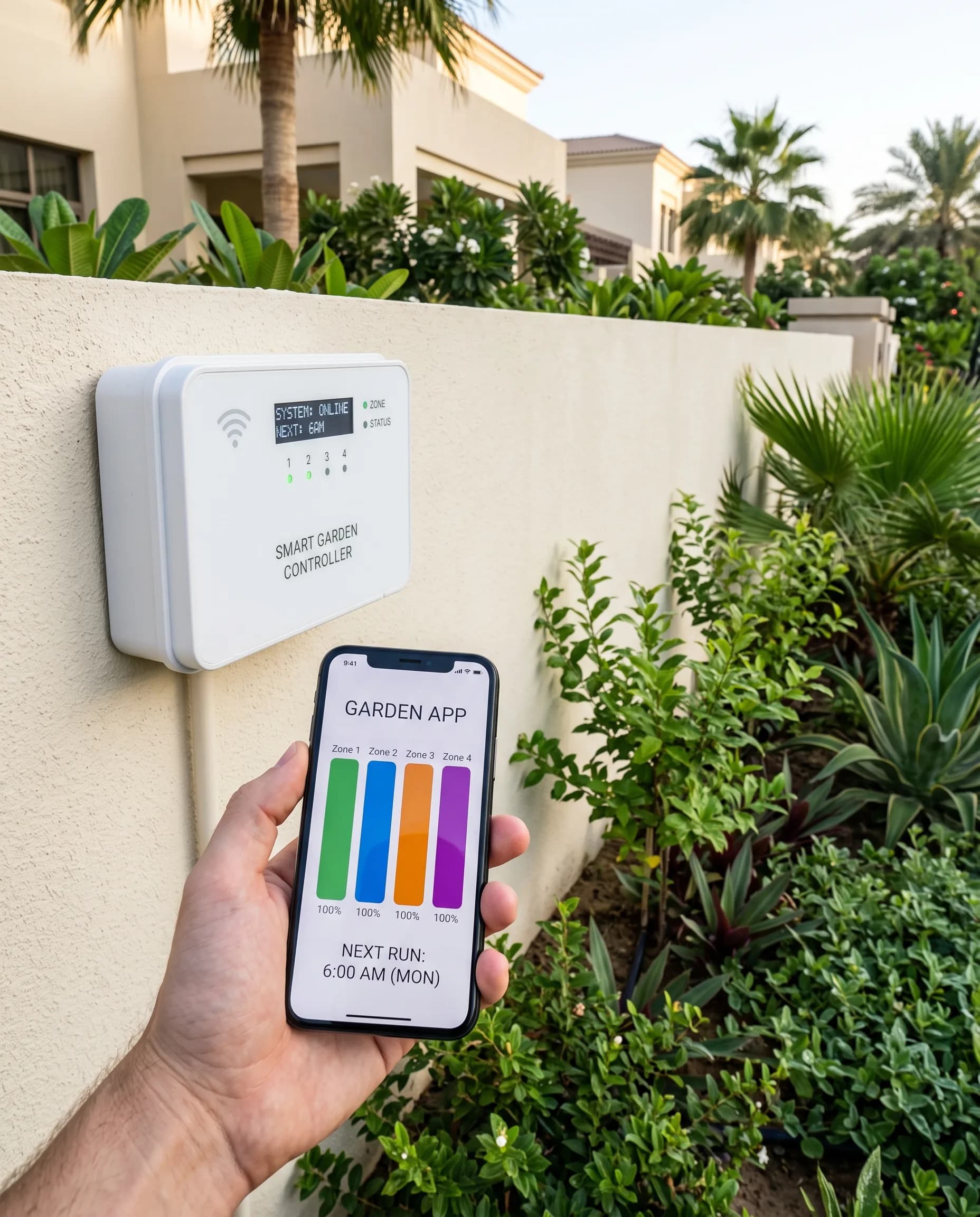
A lot of over- and under-watering in Dubai gardens isn't really a watering-habit problem, it's a system-design problem. Separate zones for lawn, beds and trees matter because they have different needs — a single zone trying to serve a lawn and a bed of drought-tolerant shrubs will always overwater one or underwater the other. A basic electronic controller with separate start times and run lengths per zone, checked and adjusted at least each season, does more for a garden's health than almost any single watering technique. If you inherited a system you don't fully understand, it's worth having it mapped — zone by zone — before summer, not during it.
Cutting water use without losing the garden
- Mulch beds 5–7 cm deep — it meaningfully slows evaporation from the soil surface and keeps roots cooler.
- Group plants by water need (hydrozoning) so a drip line isn't watering a drought-tolerant shrub at the same rate as a thirsty lawn.
- Fix drip leaks and blocked emitters promptly — a single stuck emitter can waste more water over a month than most people expect.
- Fit a smart irrigation controller that adjusts with the season instead of running a fixed year-round schedule.
- Choose lower-water plants for new beds — see our desert-modern garden style, built around exactly this.
Different parts of the garden, different rules
A single blanket watering rule rarely suits a whole garden. Lawn area generally needs the most frequent water of anything in a Dubai garden, simply because grass roots sit shallow and the leaf surface loses moisture fast in direct sun. Planting beds on drip can run leaner and less often once established, since mulch and deeper root systems buffer them better between waterings. Mature trees need the least frequent attention of all — a deep soak every one to two weeks is often plenty for an established specimen — but each watering should be a proper soak, not a quick pass, so it actually reaches the deeper roots rather than wetting only the surface.
Pool + garden care
From AED 500/month
Price depends on your garden's size, pool and complexity. Prices in AED, excluding 5% VAT.
Frequently asked
How often should I water my lawn in a Dubai summer?
Does watering in the evening attract pests or fungus?
What is the fuel surcharge on my DEWA bill?
Can I water with a garden hose instead of drip or sprinkler?
Is 85% of water really used outdoors?
Sources
Written by Ghaf Gardens horticulture desk · last reviewed 29 Sept 2026
Related guides
Maintenance
How much does pool and garden maintenance cost in Dubai?
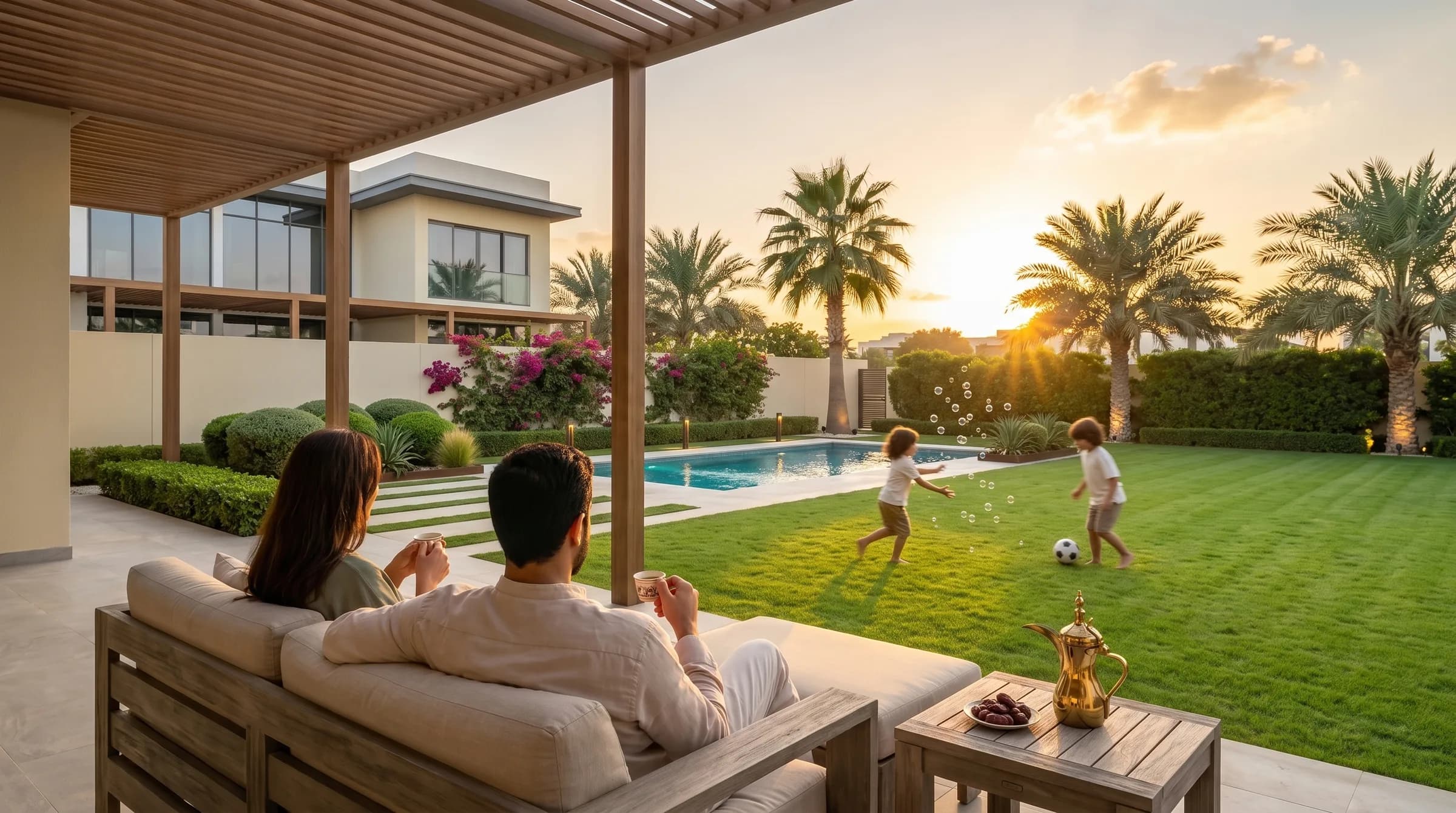
Combined pool and garden care in Dubai starts from about AED 500 a month. What changes the number is your garden's area, your pool size, and how complex the planting and pool equipment are.
29 Sept 2026 · 5 min read
Costs & water
Artificial vs natural grass in Dubai: the 10-year cost, worked out
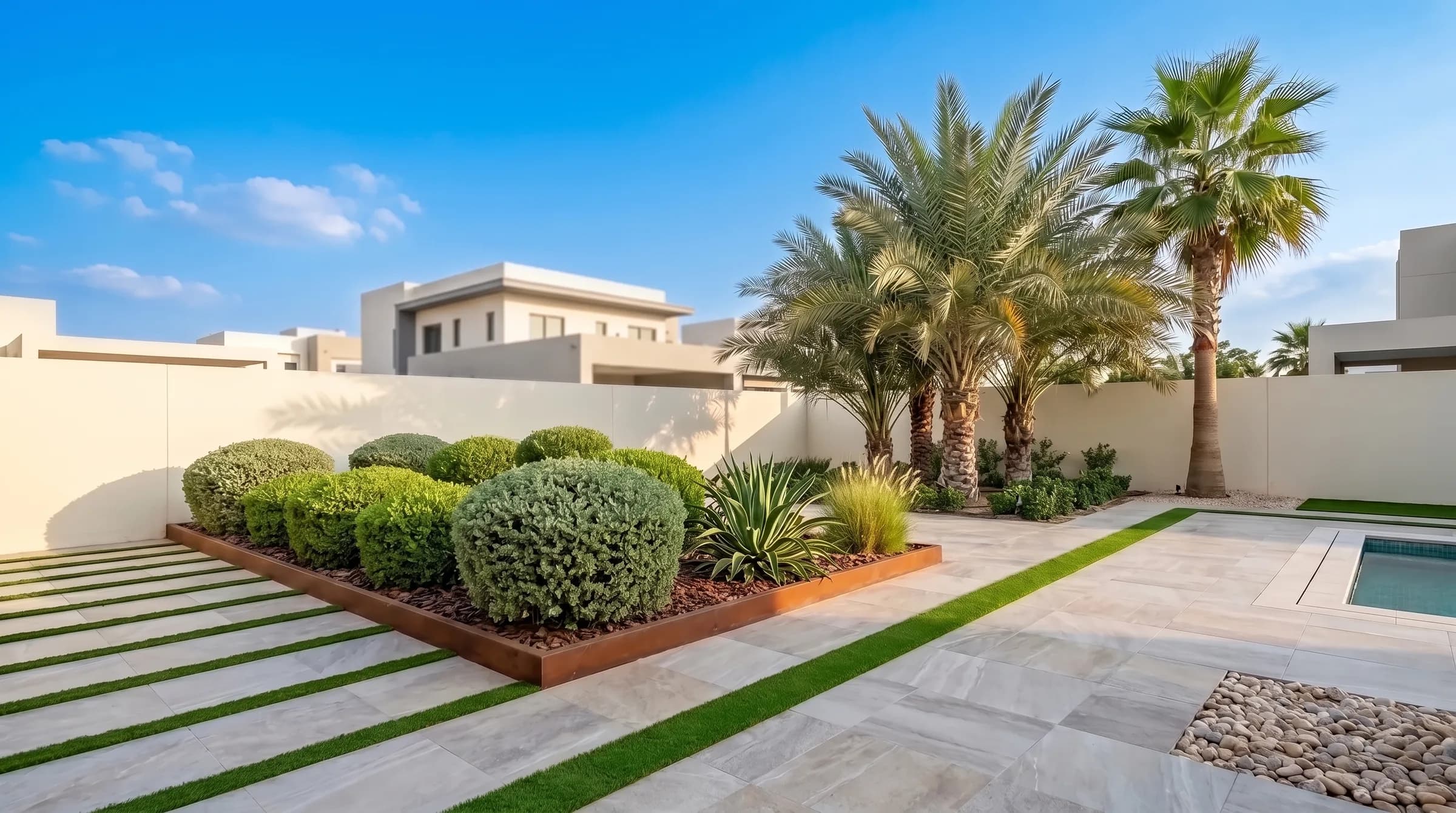
Natural grass costs less to install but keeps adding to your water bill every year; artificial turf costs more upfront but barely touches it. Here's a worked 10-year comparison for a 100 m² lawn.
29 Sept 2026 · 5 min read
Maintenance
Keeping your garden and pool alive while you're away for summer
A Dubai garden left unattended through a summer trip can go from healthy to stressed in days, not weeks. A short pre-trip checklist covers irrigation, mulch, pots and the pool.
29 Sept 2026 · 5 min read
Related plants

Ghaf
Prosopis cineraria

Desert Rose
Adenium obesum
Seashore paspalum
Paspalum vaginatum
Pool + garden care
From AED 500/month
Price depends on your garden's size, pool and complexity. Prices in AED, excluding 5% VAT.