
Arak
Salvadora persica
Full sunSalt: 5 of 5
Native
Dodonaea viscosa
مشراس
A native UAE shrub found wild in wadis from Fujairah to Abu Dhabi — highly salt tolerant and useful for screening or stabilising saline, disturbed ground.
See it planted
Season
How Hopbush behaves through Dubai's seasons, month by month.
Best planting window
Spring flush
Greenish-yellow flowers
Winged, hop-like seed capsules
Shaping / hedge clip
Best planting window: Oct–Feb
Plant in the cool season so roots settle before summer heat.
Spring flush: Mar–Apr
Greenish-yellow flowers: Feb–Apr
Winged, hop-like seed capsules: Apr–Jun
Shaping / hedge clip: Feb–Mar
First clip of the year; fast growers may need 2–3 more clips through the warm months to hold a hedge line.
Hopbush changes little through the year — it holds its small, glossy, evergreen leaves in every month, giving a desert-modern hedge or screen constant cover rather than a seasonal thinning. The main event is late winter into spring: a modest flush of greenish-yellow flowers in February and March, followed by papery, hop-like winged seed capsules through April, May and June that add texture and colour long after the flowers themselves have gone. A hard-clipped hedge shows a flush of fresh new growth within weeks of its first spring trim, then holds its shape through the heat with minimal further change.
Meet the plant
Meet the hopbush, a shrub that does not need a garden to prove itself — it is already out there, rooted in the cracks and gravel of wadis from Fujairah to the Hajar foothills, surviving on whatever rain and runoff the mountains give it. Its small, glossy, faintly sticky leaves and loose, twiggy form have none of the polish of an imported ornamental, and that honesty is exactly its appeal in a desert-modern garden that wants to look like it belongs to this place rather than to a nursery catalogue.
In late winter it flowers modestly, small and greenish-yellow, then follows with papery, three-winged seed capsules that catch the light and rattle faintly in a breeze — the detail that gives the plant its English name, and a genuinely different texture from the flowers and foliage most of this list offers. Left loose it reads as scrub; clipped, it becomes a dense, tidy hedge or screen faster than most native shrubs manage.
A purple-leaved cultivar sold in UAE nurseries carries all the same toughness in a deeper, bronzed colour, useful where a desert-modern planting wants contrast without giving up any drought and salt tolerance.
Hopbush grows wild across all four of the UAE's wadi-bearing emirates — Abu Dhabi, Dubai, Sharjah and Fujairah, including the ultrabasic slopes of Wadi Wurayah National Park. It's a compact, evergreen shrub with glossy, slightly sticky leaves and greenish-yellow flowers from February to April, followed by papery, winged seed capsules that give the plant its English name.
The UAEFlora reference database and ICBA both note it as highly salt tolerant, which is why it's used not just as an ornamental but also to help reclaim and stabilise saline or disturbed soils. Its fibrous, spreading root system also makes it a genuinely useful plant for holding loose ground on slopes and dunes, not just a decorative choice. That toughness makes it a practical, low-water screen or windbreak alongside natives like Ghaf and Arak.
It is also, independently of its salt tolerance, a properly wind-hardy shrub — happy on an exposed boundary or a coastal plot that would rough up softer ornamentals, and unbothered by the reflected heat off paving or a boundary wall. Alongside the plain green native form, UAE nurseries also sell a purple-leaved cultivar ('Purpurea') that adds colour to a desert-modern hedge without giving up any of the species' drought, salt or wind tolerance.
It's fast growing and responds well to clipping, so it fills in as a hedge or screen faster than many other native shrubs — though left unclipped, the plain green form can look loose and scrubby rather than tidy, a look some desert-modern schemes want deliberately and others do not.
Design
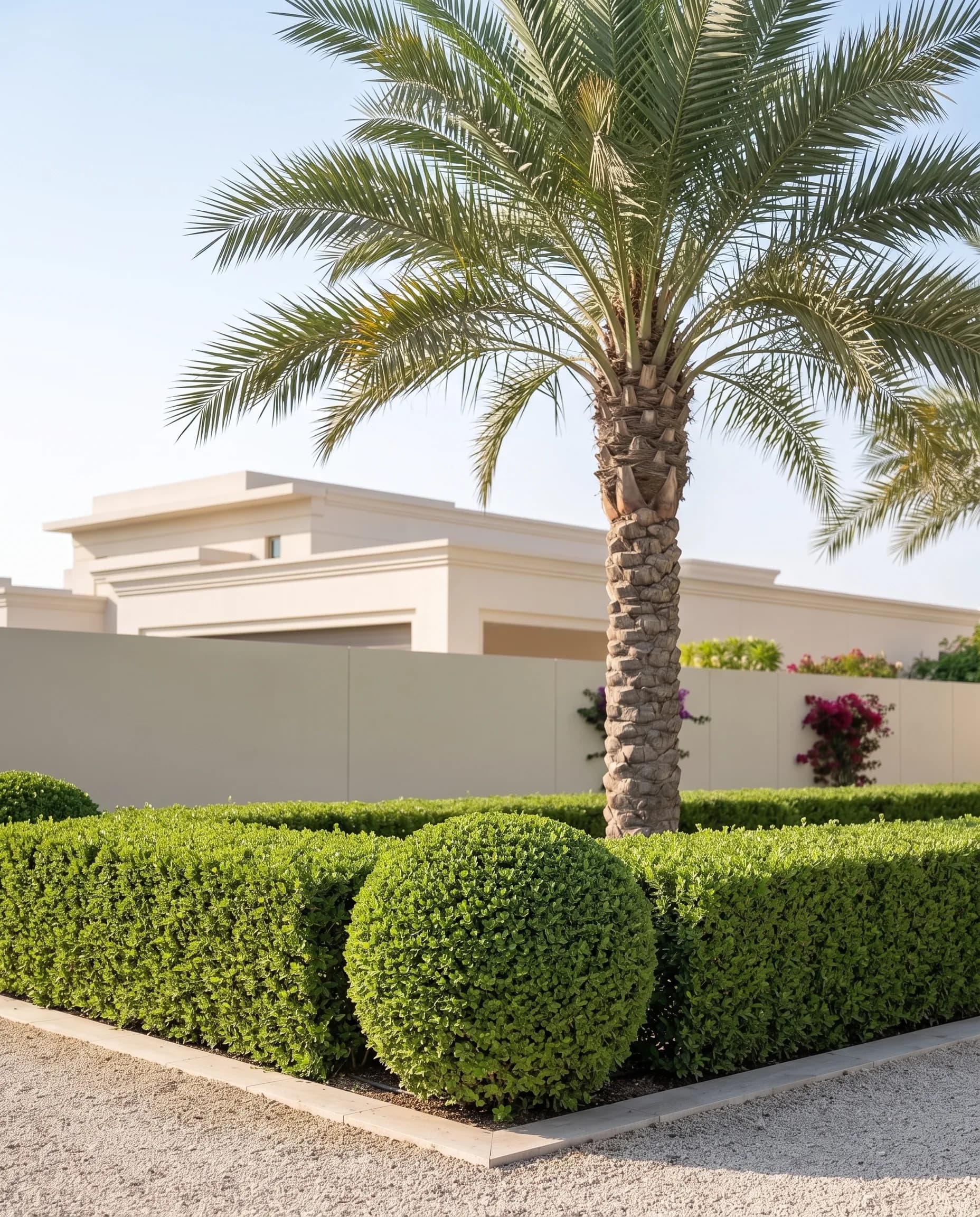
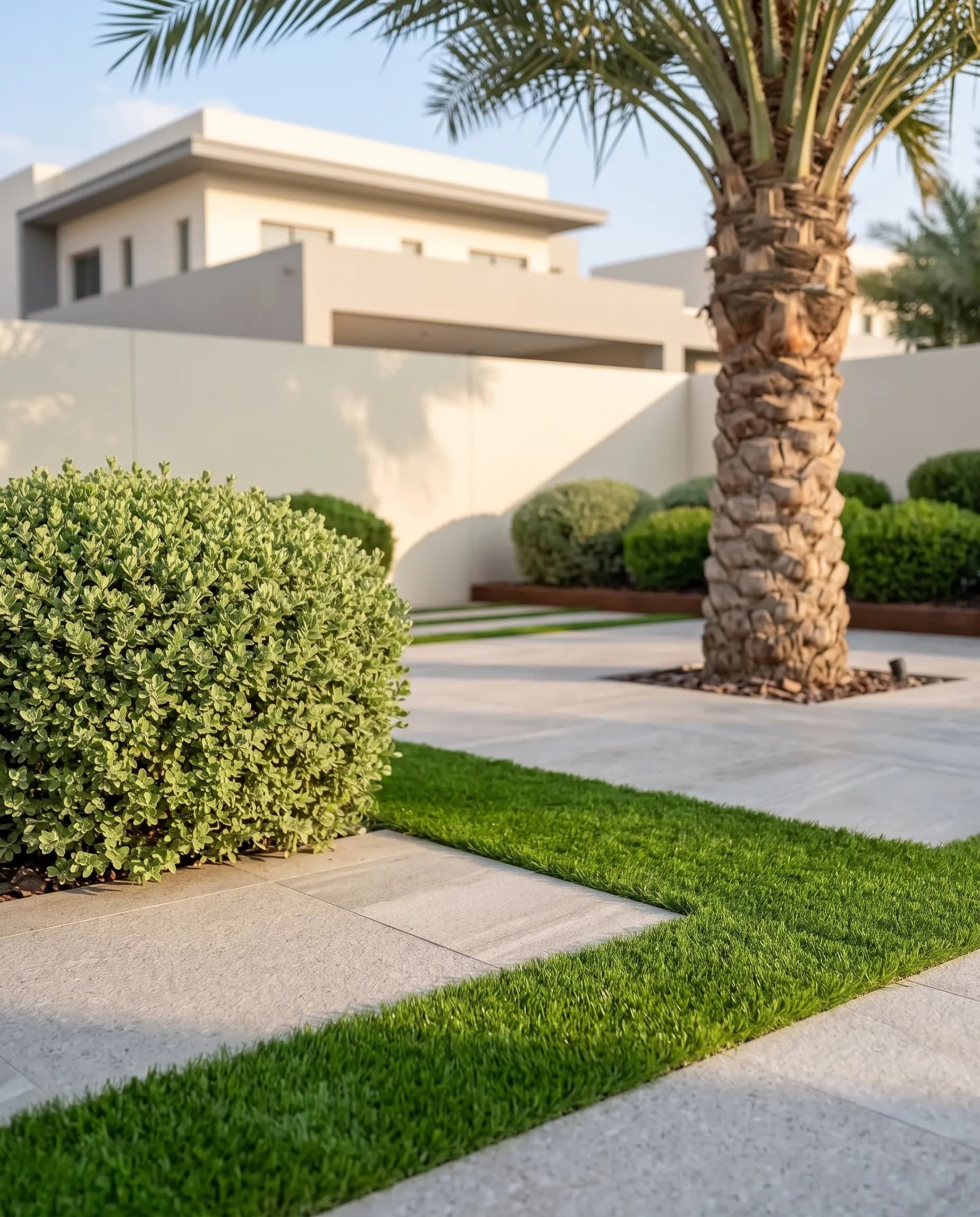
Hopbush is at its best doing a job rather than posing as a specimen: a clipped hedge line along a boundary, a loose windbreak on an exposed edge, or planted on a slope or disturbed, saline patch where little else will hold the ground. It takes full sun and reflected heat from paving without complaint, tolerates coastal wind and salt spray, and works equally well as a crisp manicured hedge or left loose as informal native screening — the choice is about the look wanted, not the plant's tolerance.
Arak
Both are genuinely native, low-water shrubs, so planting them together extends a desert-modern scheme's authenticity without mixing in thirstier exotics.

Texas Sage
Texas sage's silvery foliage and occasional purple flush contrast well against hopbush's glossy green or bronze-purple leaves in a mixed native hedge.
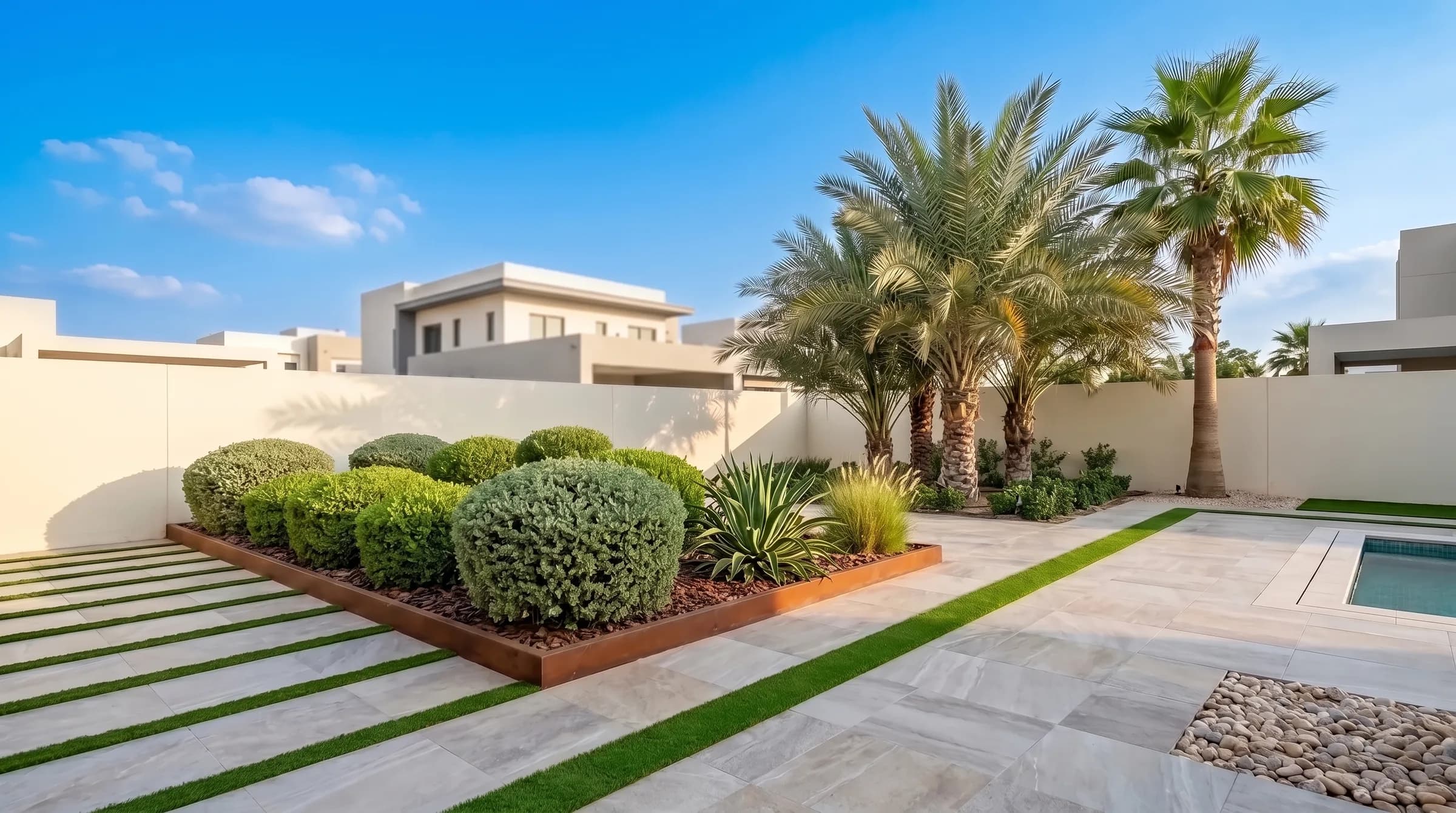
Desert grass
A loose hopbush screen underplanted with desert grass gives a naturalistic, layered look that reads as wild rather than landscaped.
Care guide
Summer: A deep soak every 1–2 weeks is enough for a hedge; established specimen shrubs need even less.
Winter: Rainfall is usually sufficient; established plants rarely need extra water.
Establishment: Water weekly for the first couple of months.
Avoid these
Extra notes
Toxicity: Not known to be toxic on skin contact and not typically grazed; traditional medicinal preparations exist but this is a landscape plant, not something to eat.
FAQ
Not sure how it suits your garden?
Ask about Hopbush on WhatsAppKeep exploring
Arak
Salvadora persica

Ghaf
Prosopis cineraria
Texas Sage
Leucophyllum frutescens

Lantana
Lantana camara
Desert grass
Pennisetum divisum
Sources
Last reviewed 2026-09-30 by Ghaf Gardens horticulture desk.
Pool + garden care
From AED 500/month
Price depends on your garden's size, pool and complexity. Prices in AED, excluding 5% VAT.