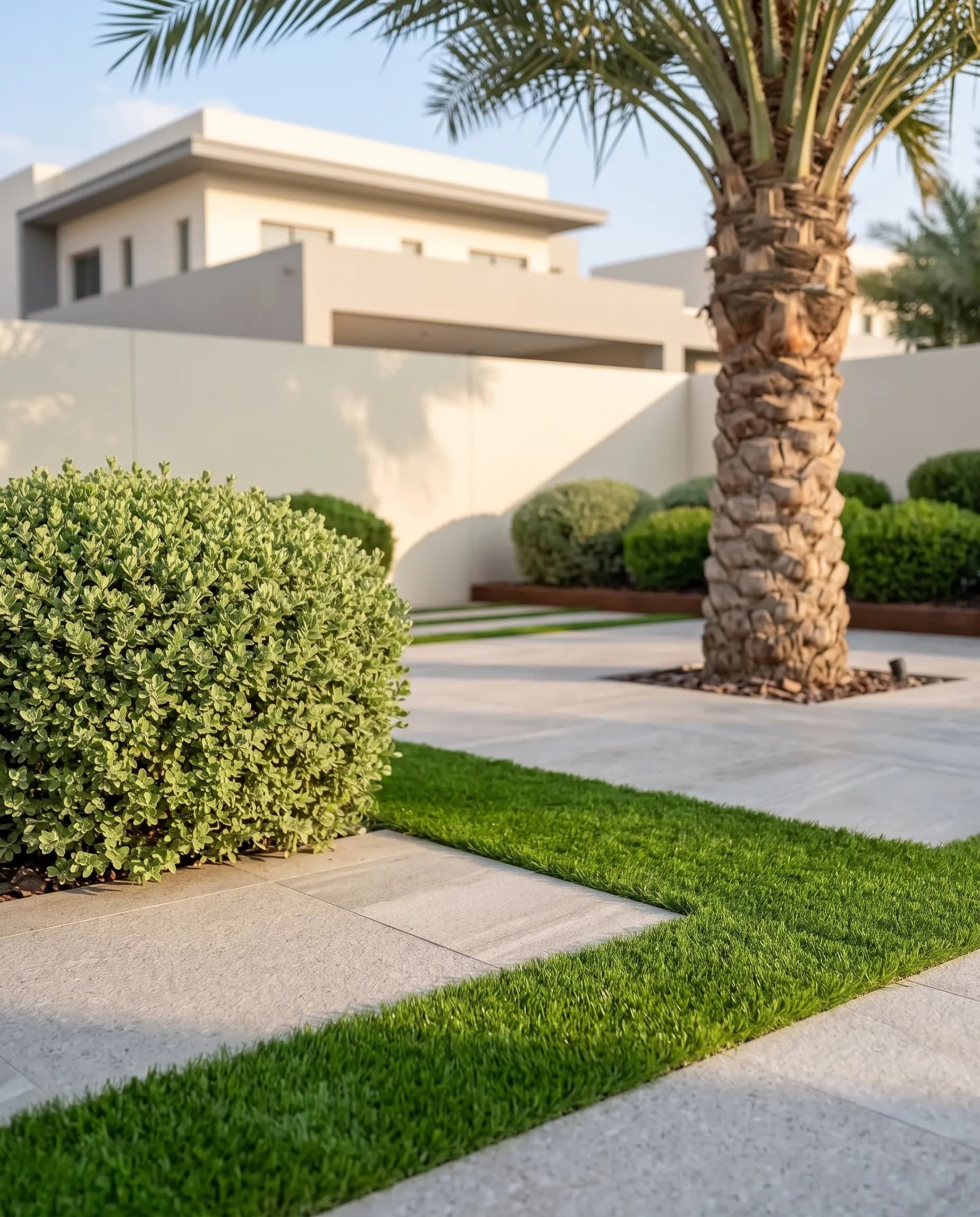

Ghaf
Prosopis cineraria
Full sunSalt: 4 of 5
Native
Salvadora persica
أراك
A native UAE shrub so salt-tolerant it can be irrigated with water almost as salty as the sea, traditionally harvested for miswak chewing sticks.
See it planted
Season
How Arak behaves through Dubai's seasons, month by month.
Best planting window
Spring flush
Small greenish-yellow flowers
Small sweet fruit
Light shaping
Best planting window: Oct–Feb
Plant in the cool season so roots settle before summer heat.
Spring flush: Mar–Apr
Small greenish-yellow flowers: Feb–Apr
Small sweet fruit: Apr–Jun
Traditionally eaten; also draws birds.
Light shaping: Jan–Feb
Tidy the drooping branches or train as a small multi-stem tree.
Arak is evergreen, so it never goes bare, but the cool season is when it's most active: plant between October and February so roots settle in before summer, then watch a spring flush of soft new growth through March and April. Small greenish-yellow flowers appear from February through April, followed by small sweet fruit from April into June that draws birds and is traditionally eaten. A light shaping prune in January or February keeps the naturally drooping branches tidy. Through summer it simply holds its form on minimal water, its glaucous, fleshy leaves unbothered by the heat that stresses more delicate exotics.
Meet the plant
Meet arak, a plant that has been useful to people here for far longer than it has been ornamental. Long before it had any role in a designed garden, its twigs were being cut, chewed and frayed into miswak — a habit so deeply embedded in the region's daily life that the World Health Organization still names it as an effective, natural oral hygiene aid. That working history gives the plant a different kind of presence: it isn't grown to impress, it's grown because people here have always known what it's for.
Visually it has none of the discipline of a clipped hedge. Its branches droop and cascade in soft, untidy curtains of fleshy grey-green leaf, closer to a willow's informality than the rigid lines of most Gulf landscaping. Left loosely shaped, it reads as genuinely wild — a deliberate note of unmanicured desert character against the trimmed hedges and lawn around it.
What it brings to the mood of a garden is resilience without effort. Planted where the soil has gone salty, where a saltwater pool splashes the border, or right on a coastal boundary, arak simply carries on while almost everything else struggles — a reminder, in plant form, of what actually survives here without irrigation trucks and imported topsoil.
Arak grows wild in sandy wadis, dunes and coastal plains across Abu Dhabi, Dubai and Sharjah. It's an evergreen shrub or small tree with soft, drooping branches and fleshy, glaucous leaves, and it has one of the widest salt tolerances of any UAE native: ICBA rates it extremely salt tolerant, capable of growing in soil and irrigation water up to seawater strength.
Its best-known use is as miswak — the root and twig traditionally chewed as a natural toothbrush across the region, still recommended by the World Health Organization as an oral hygiene aid. In spring it carries small greenish-yellow flowers, followed by small sweet fruit that is traditionally eaten and draws birds.
In a villa garden, arak's extreme salt tolerance makes it useful exactly where exotic shrubs struggle: near the coast, next to a saltwater pool, or in soil that has built up salts over years of irrigation. Its light, drooping canopy pairs naturally with Ghaf, Samr and Date Palm in a native or desert-modern planting.
Give it a couple of seasons to establish and then leave it alone: like most UAE natives it is slow to moderate growing and needs very little water or feeding once its roots are down.
Design
Use it exactly where salt is the limiting factor for anything else: right on a coastal boundary, next to a saltwater pool, or in a bed where years of irrigation have built up salts in the soil. Its drooping habit wants room to cascade rather than being crowded against a wall — allow its full 2–4 m spread. Left unclipped it gives a native planting scheme a genuinely wild, soft-textured edge; clipped, it still works as a loose windbreak or screen, just with more maintenance than a formal hedge plant.
Ghaf
Both are UAE natives suited to the same low-water, saline conditions, with arak's soft drooping form contrasting ghaf's upright canopy.

Samr
A classic native desert-modern pairing — two acacia-adjacent, salt-tolerant species that need no irrigation infrastructure once established.
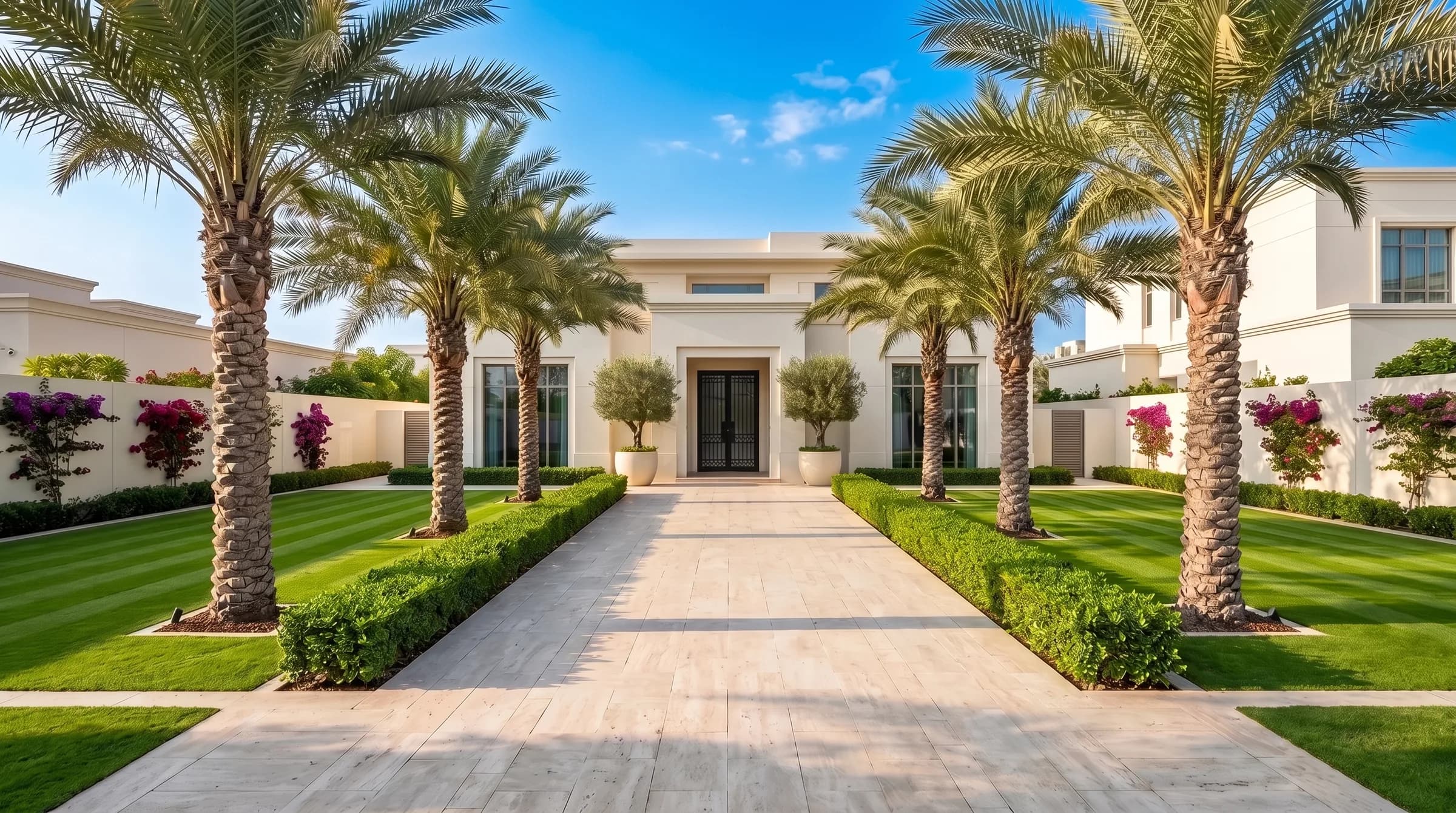
Date Palm
Arak's low, spreading screen works well as underplanting beneath a date palm's high canopy without competing for the same root zone.
Care guide
Summer: Established plants tolerate brackish or reclaimed irrigation water; a deep soak every 2–3 weeks is enough even in peak summer.
Winter: Little to no irrigation needed once mature.
Establishment: Water weekly for the first few months while roots establish.
Avoid these
Extra notes
Toxicity: Not known to be toxic. The fruit is traditionally eaten and the twigs are chewed as a natural toothbrush (miswak).
FAQ
Not sure how it suits your garden?
Ask about Arak on WhatsAppKeep exploring
Ghaf
Prosopis cineraria
Samr
Vachellia tortilis

Sidr
Ziziphus spina-christi

Hopbush
Dodonaea viscosa
Date Palm
Phoenix dactylifera
Sources
Last reviewed 2026-09-30 by Ghaf Gardens horticulture desk.
Pool + garden care
From AED 500/month
Price depends on your garden's size, pool and complexity. Prices in AED, excluding 5% VAT.