
Ghaf
Prosopis cineraria
Full sunSalt: 4 of 5
Native
Ziziphus spina-christi
سدر
A native shade tree that copes with salty, stony soil better than almost anything else in Dubai, giving fragrant winter flowers, prized honey and edible nabk fruit for very little water.
Season
How Sidr behaves through Dubai's seasons, month by month.
Best planting window
Fragrant cream-yellow flowers
Nabk fruit forms
Nabk fruit ripens for harvest
Light formative pruning
Best planting window: Oct–Feb
Plant in the cool season so roots establish before summer heat.
Fragrant cream-yellow flowers: Nov–Jan
The main nectar flow for sidr honey; UAE nursery sources place peak flowering in the cooler months.
Nabk fruit forms: Jan–Mar
Nabk fruit ripens for harvest: Mar–May
Fruit can be picked and eaten fresh or dried; exact timing varies with location across the emirates.
Light formative pruning: Dec–Feb
Remove crossing or low branches in the cool season; wear thick gloves for the thorns.
Sidr holds a green, semi-evergreen crown through nearly all of the year, only thinning modestly in the driest stretches. Fragrant cream-yellow flowers cluster along the branches from November into January, the UAE's coolest months, bringing bees and a light honeyed scent to the garden when most other flowering plants are dormant. Small green nabk fruit follows from January into March and ripens through spring, ready to pick fresh or dry by April or May. Through peak summer it simply holds its shade and colour, asking for little beyond the occasional deep soak.
Meet the plant
Meet Sidr, a tree that has been feeding, sheltering and treating people across Arabia for longer than almost any garden plant can claim. Its broad, thorny crown stays green through the driest months, giving genuine shade in a landscape where shade is the rarest resource. It doesn't perform for attention the way an exotic flowering tree does; its value is quieter and more enduring, closer to a working tree than an ornamental.
Its cool-season flowers are unassuming individually but collectively significant — a key nectar source for the honey bees that produce sidr honey, one of the most prized honeys in the region, and a genuine draw for pollinators at a time when little else nearby is flowering. The small nabk fruit that follows is edible fresh or dried, a direct, practical reward that few Dubai garden trees offer.
Beyond the garden, Sidr carries weight that goes past horticulture: it is identified with the lote tree referenced in Islamic tradition, and that association means planting one can feel less like adding a tree and more like keeping something continuous with the region's older, wilder landscape.
Sidr grows wild across the UAE's wadis, gravel plains and desert margins, and is one of the native trees the Environment Agency – Abu Dhabi now tags and protects alongside Ghaf and Samr as part of its native tree-tagging programme. Left alone it forms a broad, thorny, semi-evergreen crown 4–10 metres tall, and it has sheltered, fed and medicated people across Arabia for millennia. It is identified with the lote tree of Islamic tradition, which is part of why it still carries real cultural weight beyond the garden.
In a villa garden, Sidr is entirely at home in sandy, alkaline Dubai soil and copes with saline groundwater, salty irrigation water and coastal airborne salt far better than most trees. Given space and full sun it needs almost no ongoing attention once established, and it pairs naturally with Ghaf, Samr and Date Palm in a desert-modern planting scheme.
The trade-off is the thorns on every branch, so keep it well away from paths, pool edges and play areas. Its cool-season flowers are a key nectar source for the region's prized sidr honey, which research on UAE honeys credits with high phenol, mineral and antioxidant content and genuine antibacterial activity, including against E. coli and Candida albicans. The small nabk fruit that follows can be eaten fresh or dried — a genuinely useful, low-water tree rather than a purely ornamental one.
Sidr's usefulness runs deeper than honey and fruit: traditional Arabian medicine has long used its leaves, bark and fruit, and modern phytochemical reviews confirm the plant contains a wide range of bioactive compounds, supporting at least some of that traditional reputation. For a Dubai garden, though, its everyday value is simpler — year-round green cover, real shade, and almost no irrigation bill, from a tree that was already thriving here long before the city was.
Design
Give Sidr an open, sunny position with real clearance from paths, pool edges, seating and play areas — the thorns are sharp and present on every branch, so treat spacing as a safety measure first and a design choice second. It works well as a shade tree over a gravel courtyard or seating area, as a windbreak along a boundary, or as a specimen where its cool-season flowers and fruit can be appreciated without foot traffic passing directly beneath it. Because surface roots near the trunk can lift paving, keep hard landscaping a reasonable distance from the planting hole.
Ghaf
Both are native, very low-water, deep-rooted trees that combine naturally in a desert-modern planting without competing for scarce water.

Samr
Samr's flatter, wider canopy and Sidr's denser, thornier one give a varied desert skyline while sharing identical soil and water needs.
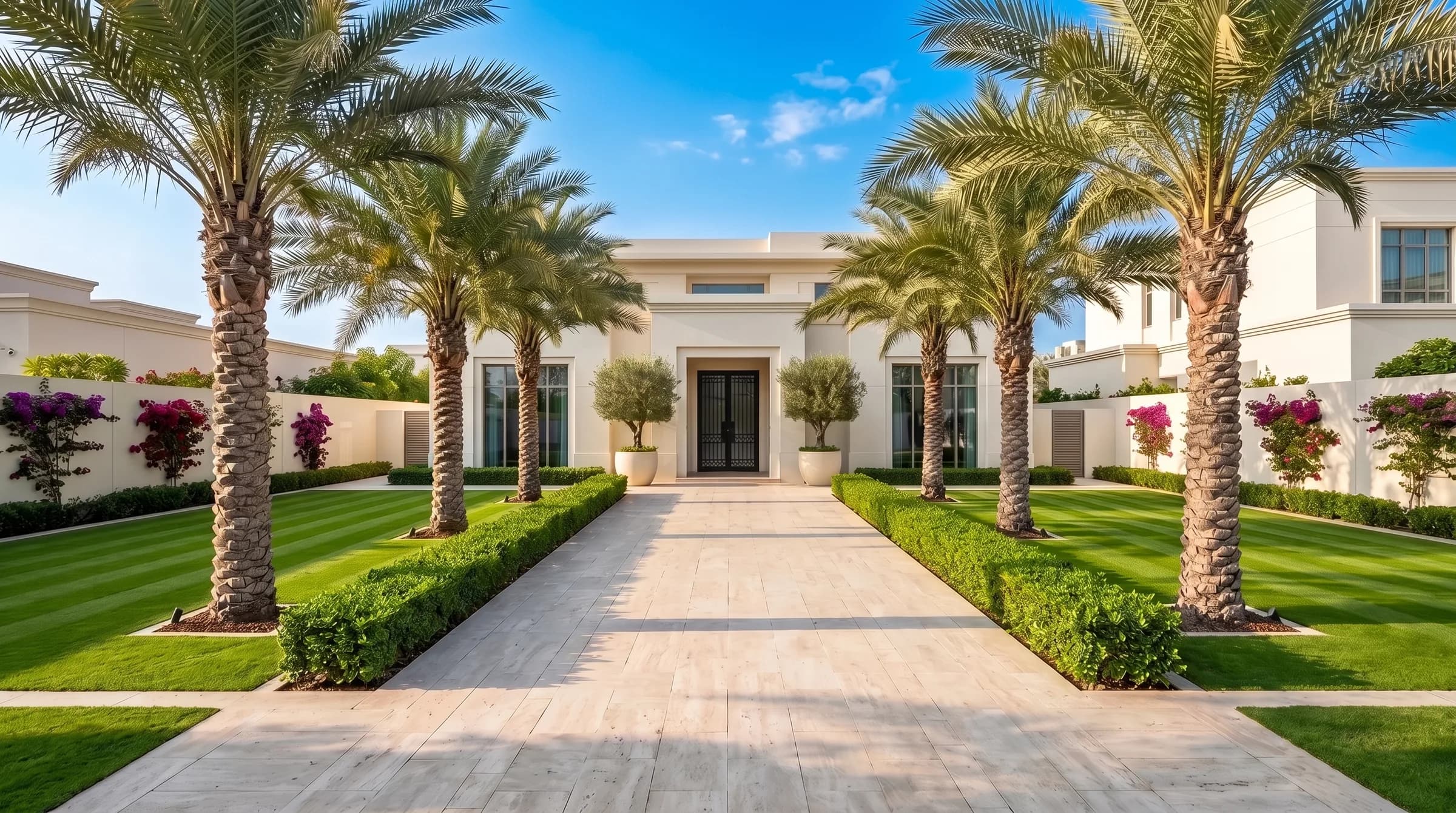
Date Palm
A date palm's vertical silhouette against Sidr's broad, rounded crown creates classic desert-garden contrast, and both tolerate saline irrigation.

Arak
Low, shrubby arak fills the ground layer beneath Sidr's canopy without competing for its deep water reserves.
Care guide
Summer: Established trees: a deep soak every 1–2 weeks on a drip line is enough. Avoid frequent shallow watering.
Winter: Little to no irrigation needed beyond occasional rain.
Establishment: Deep-water two to three times a week through the first two summers, tapering off as the roots establish.
Avoid these
Extra notes
Toxicity: Not known to be toxic. The nabk fruit is traditionally eaten fresh or dried across the region.
FAQ
Not sure how it suits your garden?
Ask about Sidr on WhatsAppKeep exploring
Ghaf
Prosopis cineraria
Samr
Vachellia tortilis

Tamarisk
Tamarix aphylla
Arak
Salvadora persica
Date Palm
Phoenix dactylifera
Sources
Last reviewed 2026-09-30 by Ghaf Gardens horticulture desk.
Pool + garden care
From AED 500/month
Price depends on your garden's size, pool and complexity. Prices in AED, excluding 5% VAT.