
Arabian Jasmine
Jasminum sambac
Sun/part shadeSalt: 2 of 5
Adapted
Clerodendrum inerme
ياسمين بري
A tough, salt-spray-tolerant hedge and screening shrub with small jasmine-like white flowers — thrives right on the coast where few other shrubs will.
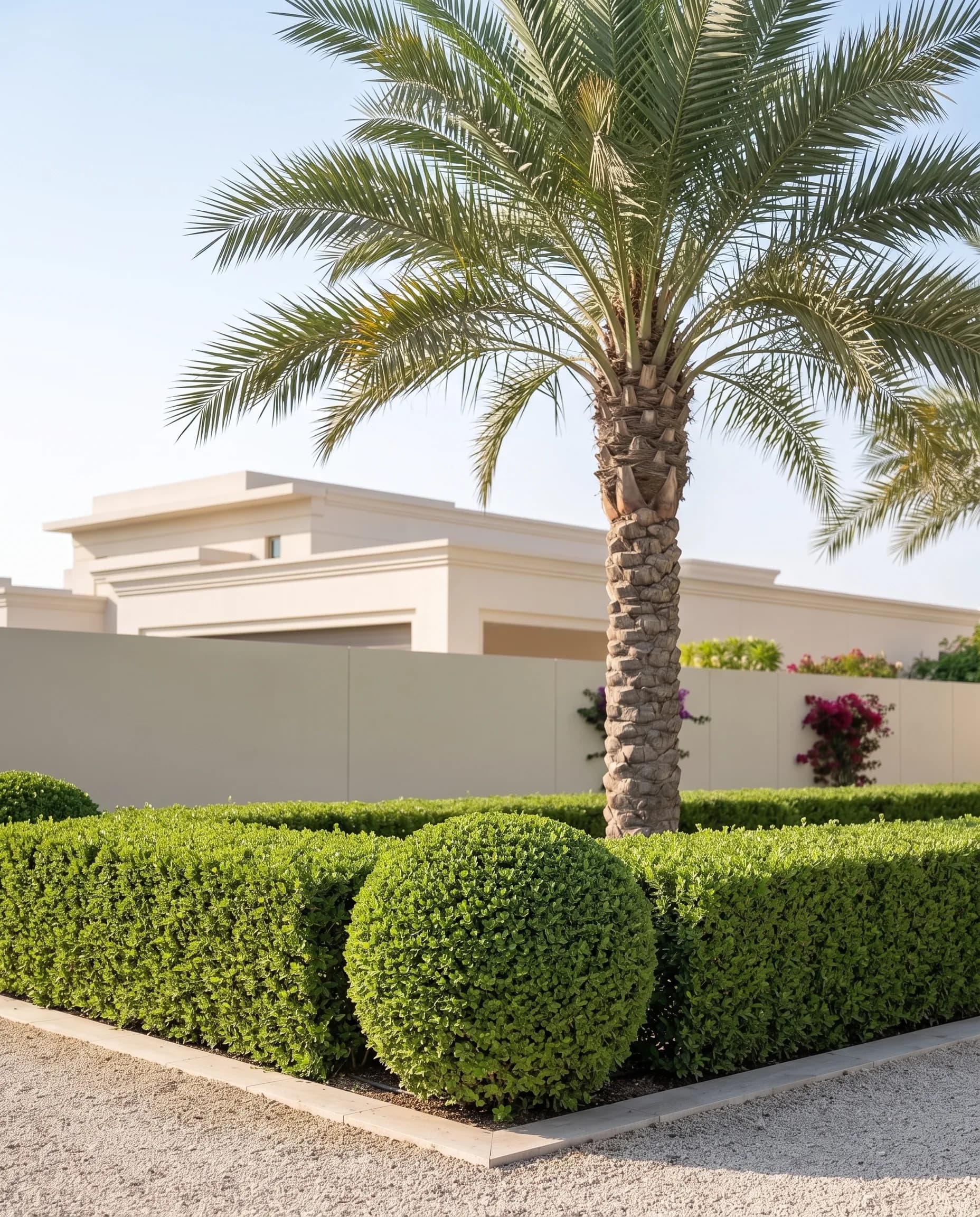
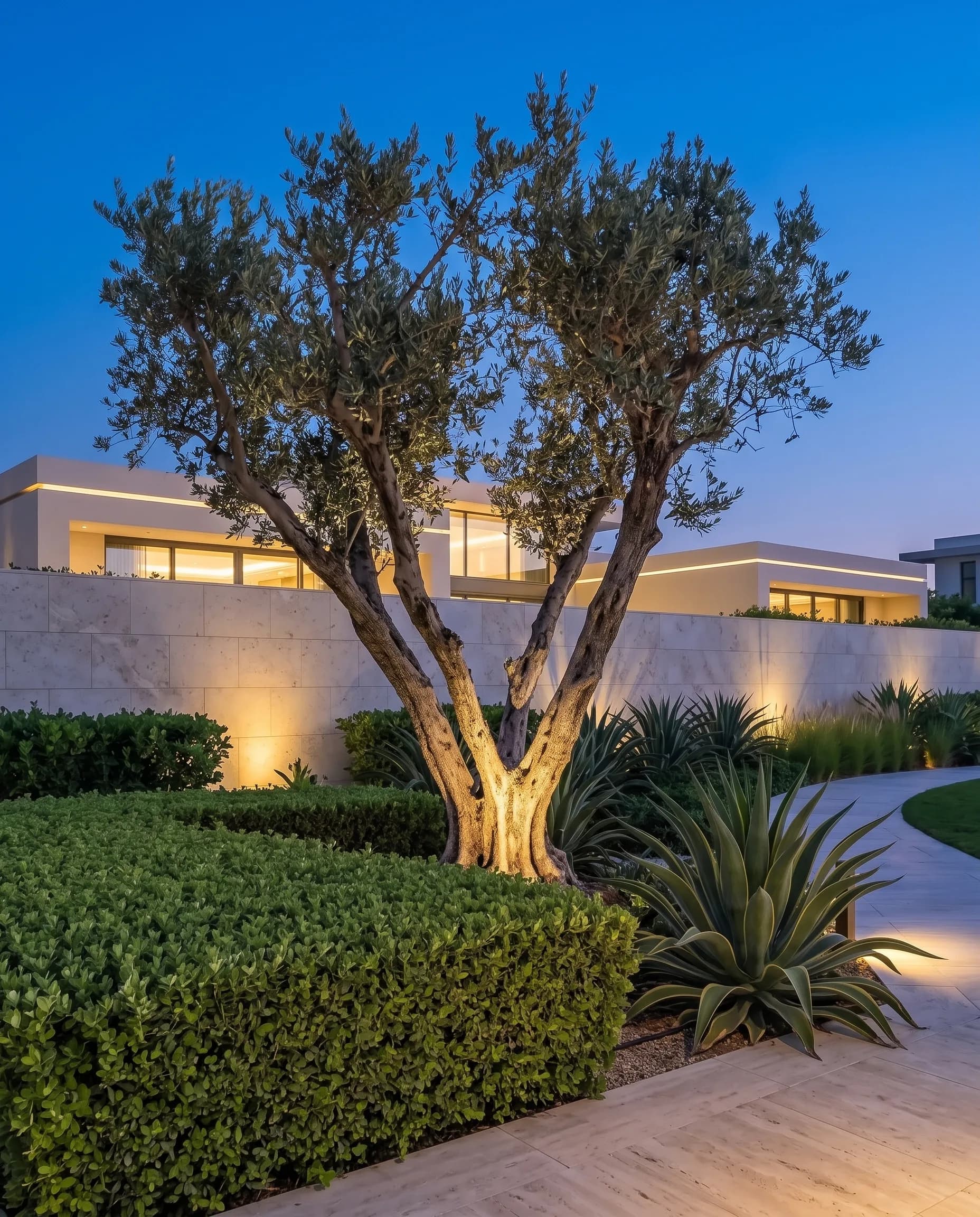
See it planted
Season
How Sea Jasmine behaves through Dubai's seasons, month by month.
Best planting window
Spring flush
White jasmine-like flowers
Hedge clip
Best planting window: Oct–Mar
Cool season is easiest, though it establishes readily most of the year given its heat tolerance.
Spring flush: Mar–Apr
White jasmine-like flowers: Apr–Oct
Hedge clip: Mar, Jun, Sep
Repeated hard clipping through the growing season keeps a formal hedge shape.
Sea jasmine stays glossy and evergreen year-round, so its presence barely changes with the seasons — what shifts is flowering and growth rate. A spring flush from March brings the most vigorous new growth, and small white, star-shaped flowers appear through the warm months from April into October, most freely where it gets regular water and full sun. Growth slows through the cooler winter months, needing less frequent clipping, then picks back up as temperatures rise. Through peak summer it simply holds its ground, unbothered by heat, salt spray or humidity that would stress most other hedging shrubs.
Meet the plant
Meet sea jasmine, the shrub that treats a salty coastal wind as an everyday condition rather than a stress to survive. Where most hedging plants show their unhappiness with scorched leaf edges and thin patches near the sea, this one stays glossy and dense, a semi-mangrove relative that has quietly reprogrammed itself to cope with salt at a cellular level. It is not trying to impress; it is simply built for the job.
Its small white flowers, with their long, thread-like purple stamens, are genuinely pretty up close but modest at a distance — this is a texture and structure plant first, a flowering one second. Clipped tight it gives a clean, formal line along a pool deck or boundary wall; left looser it billows into a soft green mound that still holds its shape without the constant attention a more delicate shrub would demand.
What it brings to a Dubai garden is quiet reliability in the hardest spot on the plot — the part right by the water, in the wind, where almost nothing else keeps its colour.
Sea jasmine, sold in UAE nurseries as "wild jasmine" and botanically now classed as Volkameria inermis, is a semi-mangrove shrub native to coastal shorelines of Asia, Malesia and the Pacific islands. It is not a UAE native, but it is naturally built for exactly the conditions along Dubai's coast: research on the species shows it can be flooded with salty water and still cope, reshaping its own metabolism to tolerate the salt rather than simply resisting it the way a genuinely drought-adapted desert plant does.
The small, white, star-shaped flowers with long purple stamens look like miniature jasmine, though the plant is unrelated to true jasmine such as Arabian Jasmine. It's thornless, glossy-leaved and dense, which is why it's planted so widely as a clipped hedge, screen or loose groundcover around coastal villas, pool decks and beachfront developments. Left unclipped it sprawls into a loose, rounded mound; clipped regularly it holds a crisp formal line as well as almost any UAE shrub.
It is fast growing and takes hard, repeated pruning without complaint, so it fills in as a formal hedge faster than most salt-tolerant alternatives. It needs more regular water than a true desert native like Arak or Hopbush, but far less than a lawn, which makes it a sensible middle-ground choice for a coastal boundary that still needs to look tidy year-round.
Because its salt tolerance comes from an active physiological response rather than simply avoiding contact with salt, it keeps performing in conditions that would scorch or defoliate most other hedging shrubs — direct sea spray, splash from a saltwater pool, or irrigation drawn from a brackish source. That reliability, more than the modest flowers, is what earns it a place on so many Dubai coastal landscaping lists.
Design
This is the shrub to reach for in the toughest coastal spot on the plot — right along a sea-facing boundary, around a saltwater pool, or wherever salt spray or brackish irrigation rules out softer planting. It takes full sun and repeated hard clipping without complaint, so it suits a crisp, formal hedge line in a manicured or luxury scheme, or a looser screen in a more relaxed coastal garden. Give it slightly more water than a true desert native, and keep it clipped regularly if a tidy line matters, since it grows quickly enough to soften a boundary within a season if left unclipped.

Hopbush
Hopbush's darker, finer foliage gives textural contrast behind a clipped sea jasmine hedge, and both take full coastal exposure well.

Hibiscus
Hibiscus adds bolder flower colour at eye level while sea jasmine provides a dense, salt-tolerant backdrop or low hedge in front.

Ixora
Ixora's compact flowering habit pairs with sea jasmine for a layered, colourful screen near a pool deck where both tolerate reflected heat.
Arabian Jasmine
Grown together, the two jasmine look-alikes let a garden have true scented jasmine further from salt spray and sea jasmine as the tougher coastal edge.
Care guide
Summer: A deep soak once or twice a week keeps it looking its best — more than a true desert native needs.
Winter: Reduce to roughly every two weeks, or rely on rainfall.
Establishment: Water 2–3 times a week for the first month.
Avoid these
Extra notes
Toxicity: Not well documented as toxic, but as with most ornamental shrubs it is not meant to be eaten — treat it as a landscape plant only.
FAQ
Not sure how it suits your garden?
Ask about Sea Jasmine on WhatsAppKeep exploring
Arabian Jasmine
Jasminum sambac
Hibiscus
Hibiscus rosa-sinensis
Ixora
Ixora coccinea
Hopbush
Dodonaea viscosa
Sources
Last reviewed 2026-09-30 by Ghaf Gardens horticulture desk.
Pool + garden care
From AED 500/month
Price depends on your garden's size, pool and complexity. Prices in AED, excluding 5% VAT.