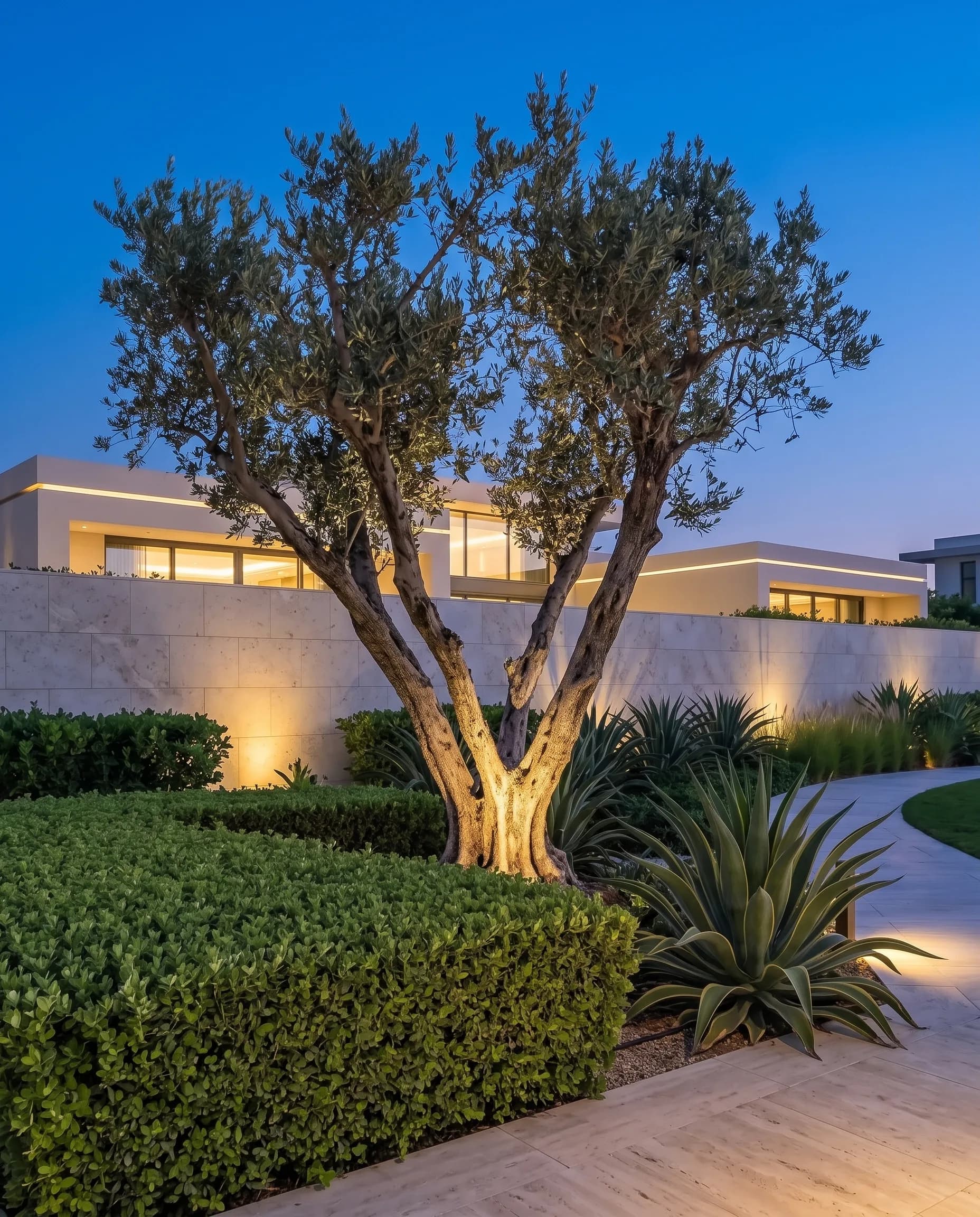

Foxtail Palm
Wodyetia bifurcata
Sun/part shadeSalt: 3 of 5
Bismarckia nobilis
نخيل بسمارك
A massive, silver-blue fan palm from Madagascar that makes a single-specimen statement in a large Dubai garden — highly drought tolerant once established, but it needs real space and is unforgiving to transplant badly.
See it planted
Season
How Bismarck Palm behaves through Dubai's seasons, month by month.
Best planting window
Steady growth through the warmer months given adequate water
Seasonal bloom on branched inflorescences
Olive-brown fruit on female palms
Palm-specific slow-release feed
Red palm weevil and palm weevil monitoring
Best planting window: Feb–Mar, Oct–Nov
Cool-season planting gives the slow-to-establish root system time before summer heat, and avoids handling stress in extreme temperatures.
Steady growth through the warmer months given adequate water: Apr–Jun
Seasonal bloom on branched inflorescences: Apr–May
Male and female flowers occur on separate trees.
Olive-brown fruit on female palms: Jul–Sep
Palm-specific slow-release feed: Mar, Sep
Prevents the potassium deficiency (yellow-orange frond spotting) this species is prone to.
Red palm weevil and palm weevil monitoring: Jan–Dec
Check trunk and crown year-round for tunnels, ooze, frass or a fermented smell.
Bismarck palm is evergreen and changes little season to season, so the calendar is really about maintenance timing. Plant in the cool months (October–November or February–March) so the slow-to-establish root system has time before summer arrives. Steady new growth follows through April–June given adequate water, with seasonal bloom on branched inflorescences in April–May — male and female flowers on separate trees — and olive-brown fruit on female palms from roughly July to September. Spring and autumn (March and September) are the two main feeding windows, timed to head off the potassium deficiency this species is prone to. Otherwise it simply holds its silver-blue crown through the heat with little visible change.
Meet the plant
Meet the Bismarck palm, a plant with a name and a presence that both announce themselves. It carries the name of Otto von Bismarck, the German chancellor — a slightly odd honour for a palm that has never grown anywhere near Germany, given to it by botanists in 1881 at the height of his fame — and it has the bearing to match: a single fan of silver-blue leaves a metre or more across, radiating out with a stiffness that reads as sculpture rather than foliage.
It is a plant that took its time finding an audience. Common in Madagascar for generations, it barely featured in gardens elsewhere until the last two decades, when its scale and that unmistakable silver colour made it one of the most sought-after specimen palms in hot-climate landscaping worldwide — Dubai's luxury villa gardens among them.
The mood it creates is one of quiet dominance. It doesn't need company, movement or flowers to hold a garden's attention; a single Bismarck palm planted with real room around it becomes the thing every other plant is arranged in relation to, the fixed point a desert-modern layout is built to frame.
Bismarckia nobilis is native to the open savanna and grassland of western Madagascar, which is exactly the kind of hot, sunny, seasonally dry habitat that explains why it performs so well in the Gulf despite being nowhere close to native here. Its huge, stiff, costapalmate leaves — up to a metre or more across, often a striking silver-grey — read as sculpture rather than planting, which is why it is used sparingly, as a single specimen or a widely spaced pair, rather than in groups.
It is a big plant for a big space: expect a spread of several metres of crown and a trunk that eventually reaches well above rooftop height, so it needs distance from structures, pools and other palms to be shown off properly. It is dioecious, with male and female flowers on separate trees, and female palms carry the fruit.
Two practical notes matter more here than for most palms. First, Bismarckia is genuinely difficult to transplant and can take a year or more to recover from being moved, so buy container-grown stock and plant it once, in its final position. Second, it is prone to potassium deficiency, which shows as yellow-orange spotting or necrotic frond tips — a regular palm-specific fertiliser programme heads this off. It sits well alongside Date Palm or Washingtonia Palm as the anchor of a desert-modern layout.
Design
Plant it where its eventual 4–6 m crown and trunk well above roofline height can be appreciated without crowding anything else — a wide lawn, a large courtyard, or flanking an entrance drive in a matched pair. Keep real distance from pools, walls and other palms from day one, since this is not a plant to prune or relocate once it has outgrown its spot. Full, unobstructed sun is essential; it loses its tight, sculptural form in shade. Because it is genuinely difficult to move later, the planting decision here should be treated as permanent.
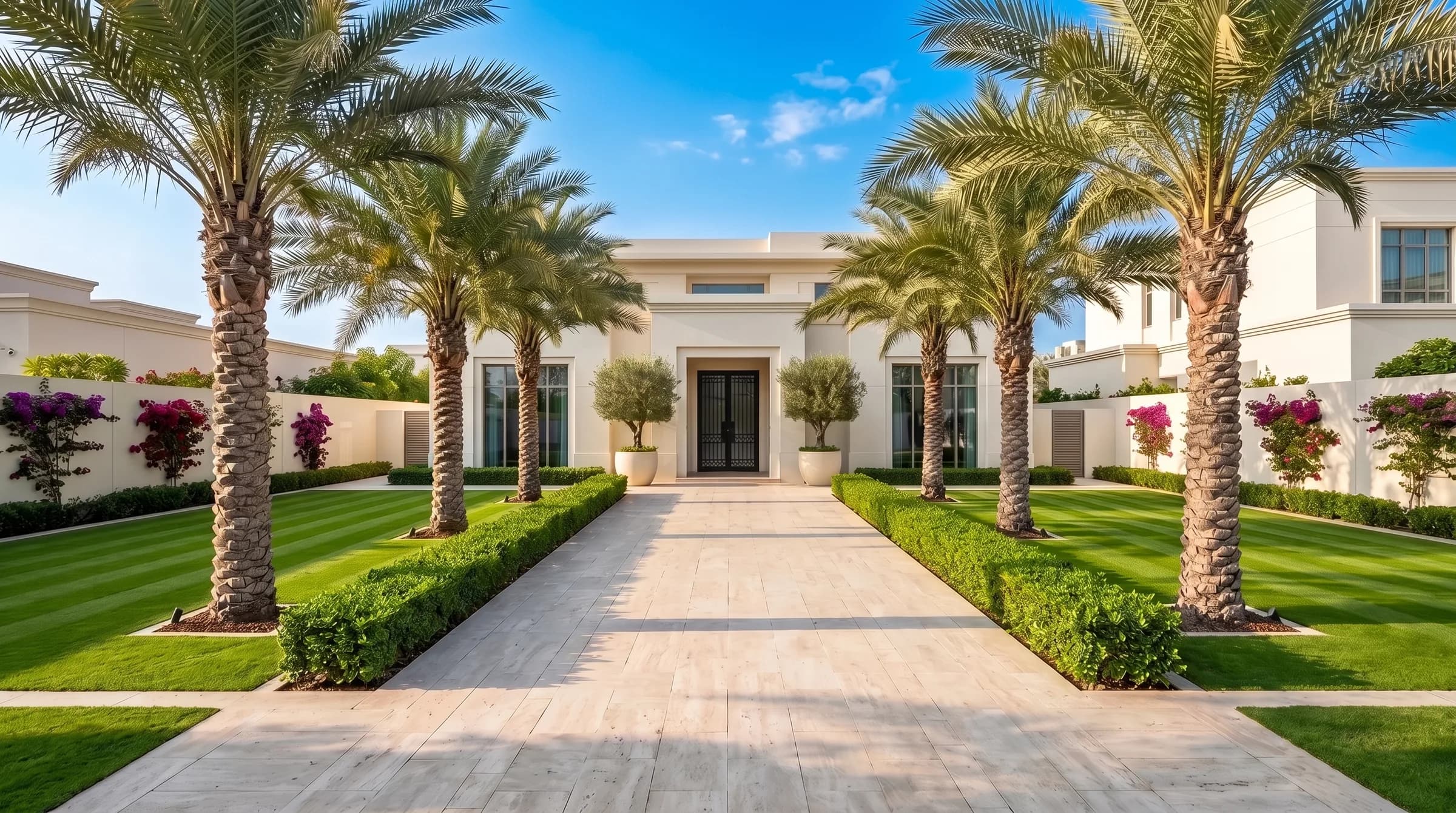
Date Palm
Both are large, sun-loving, drought-tolerant palms that anchor a desert-modern layout without competing for the same visual role, given their different silhouettes.

Washingtonia Palm
A taller, narrower palm that complements Bismarckia's wide silver crown with height and vertical contrast in the same planting.
Foxtail Palm
Foxtail's green, feathery fronds give textural contrast against Bismarckia's rigid, silver-grey fan leaves in a mixed palm grouping.
Care guide
Summer: Drought tolerant once established, but regular moisture through peak heat noticeably speeds growth and keeps fronds a better colour.
Winter: Can be watered sparingly; established palms tolerate dry winters well.
Establishment: Regular watering for the first year or two; this species is slow and difficult to re-establish after any root disturbance, so consistency matters more than volume.
Avoid these
Extra notes
Toxicity: Not known to be toxic.
FAQ
Not sure how it suits your garden?
Ask about Bismarck Palm on WhatsAppKeep exploring
Foxtail Palm
Wodyetia bifurcata
Washingtonia Palm
Washingtonia robusta
Date Palm
Phoenix dactylifera
Sources
Last reviewed 2026-09-30 by Ghaf Gardens horticulture desk.
Pool + garden care
From AED 500/month
Price depends on your garden's size, pool and complexity. Prices in AED, excluding 5% VAT.