
Fig
Ficus carica
Full sunSalt: 3 of 5
Adapted
Morus alba
توت
A heat-hardy deciduous tree with sweet berries in spring. Fast and tough, but it stains paving, drops fruit, grows large and male trees shed allergenic pollen.
Season
How Mulberry behaves through Dubai's seasons, month by month.
Best planting window
Leaves fall for a few weeks
Prune while dormant
Fresh leaves and shoots
Catkins open
Berries form and ripen
Picking season
Best planting window: Oct–Feb
Plant while dormant or in mild weather; protect young south- and west-facing trunks from sunscald.
Leaves fall for a few weeks: Dec–Jan
A mild winter dormancy in Dubai.
Prune while dormant: Dec–Feb
Build structure and cut back to keep fruit within reach; thin summer shoots later.
Fresh leaves and shoots: Feb–Apr
Catkins open: Feb–Mar
Pollen from male trees is extremely allergenic; female trees cause few or no allergies (UF/IFAS).
Berries form and ripen: Mar–Jun
Picking season: Apr–Jun
Berries ripen from spring into early summer; shake onto a sheet and pick before birds take them.
Mulberry runs a clear deciduous year. Planting goes in from October to February. The leaves fall in December and January, and that is the time for the main structural prune. Fresh leaves and shoots arrive in February to April, with catkins in February and March; male trees shed their pollen in spring. Berries form from March and ripen from April to June, and picking starts as soon as they turn dark and soft. By summer the tree is in full leaf, giving a wide, cool shade, and the summer shoots can be thinned to keep the next crop within reach.
Meet the plant
Meet the mulberry, an old orchard tree that has been feeding people in dry climates for centuries. It is not elegant in the way an olive is; it is broad, fast and generous, with soft heart-shaped leaves that cast a wide, cool shade in summer and then drop to let the winter sun through.
Its character is vigorous and a little messy. It grows quickly, tolerates heat, sand and dry spells, and then in spring produces a crop of berries so soft that they stain your hands, the paving and, if you are not careful, the car. It is a tree to plant with its mess in mind.
What it brings is the first soft fruit of the year, ahead of the heat, from a tree that asks very little. A black mulberry eaten warm from the branch is a fruit that is hard to find in the shops, because ripe berries are too fragile to travel well.
Mulberries are among the toughest fruit trees for hot, dry climates. UF/IFAS describes three main types: red (native to North America), white (Morus alba, from China) and black (Morus nigra, from western Asia and the Middle East). White mulberry grows fastest and largest, to about 18 m; black is smaller, slower to fruit and regarded as the best-flavoured. UF/IFAS says mulberries thrive in infertile, sandy soils, are drought-tolerant once established and rarely need irrigation, while a desert-gardening guide for hot, dry climates adds that they tolerate alkaline soils and handle heat well. The berries ripen from spring into early summer.
The practical issues are staining, pollen and size. Fallen fruit stains whatever it lands on, so keep the tree away from driveways, paving and the pool deck; UF/IFAS notes light-fruited cultivars such as 'Tehama' and 'King White Pakistan' reduce staining. UF/IFAS says pollen from male trees is extremely allergenic while female trees cause few or no allergies, so choose a female or named fruiting cultivar. Left alone, a tree can grow far taller than you can reach; prune in the dormant season to build structure, and thin summer shoots to keep fruit within reach.
Inconsistent watering can cause fruit to shrivel and drop early, so give young trees steady irrigation through their first summers. Birds take ripening fruit readily, so net the branches you actually want to harvest. Place it where its summer shade is useful, such as west of a seating area, and let it drop its leaves in winter to let the sun through.
Design
Choose the site for the mess it will make, not for the shade it will cast: well away from paving, pool decks, parked cars and anything pale. A lawn edge or a gravel orchard bed is ideal. Place it to the west of a seating area for summer shade and winter sun, and give it room to grow to 8–12 m unless you plan to prune it hard. Pick a female or named fruiting cultivar rather than a male seedling.
Fig
Another dry-climate deciduous fruit tree, with a similar winter dormancy and a later fruiting season, giving an old-style orchard of staggered harvests.

Pomegranate
A smaller, sun-loving companion at the sunny edge of the canopy, with scarlet flowers when the mulberry is bare and green.

Olive
An evergreen, silver-green contrast that holds the garden's structure while the mulberry drops its leaves in winter.
Care guide
Summer: Established trees are drought-tolerant, but steady deep irrigation every one to two weeks improves fruit quality; inconsistent watering shrivels and drops fruit.
Winter: Minimal while the tree is bare.
Establishment: Deep, consistent watering through the first one to two years, especially the first summer; shield the trunk from sun.
Avoid these
Extra notes
Toxicity: The ASPCA lists the mulberry tree as non-toxic to dogs, cats and horses. Pollen from male trees is highly allergenic for people.
FAQ
Not sure how it suits your garden?
Ask about Mulberry on WhatsAppKeep exploring
Fig
Ficus carica
Pomegranate
Punica granatum
Olive
Olea europaea
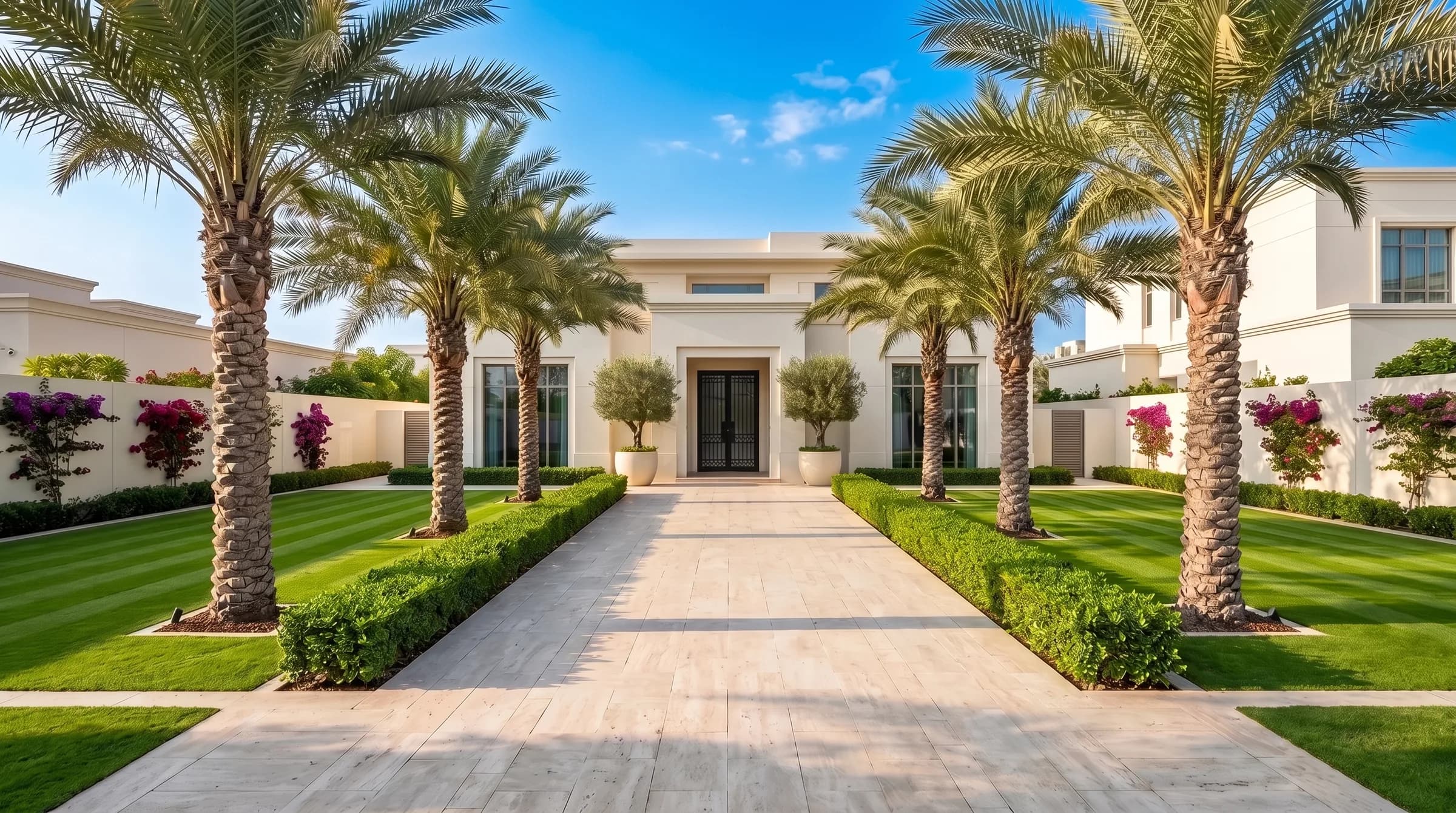
Date Palm
Phoenix dactylifera

Sidr
Ziziphus spina-christi
Sources
Last reviewed 2026-10-05 by Ghaf Gardens horticulture desk.
Pool + garden care
From AED 500/month
Price depends on your garden's size, pool and complexity. Prices in AED, excluding 5% VAT.