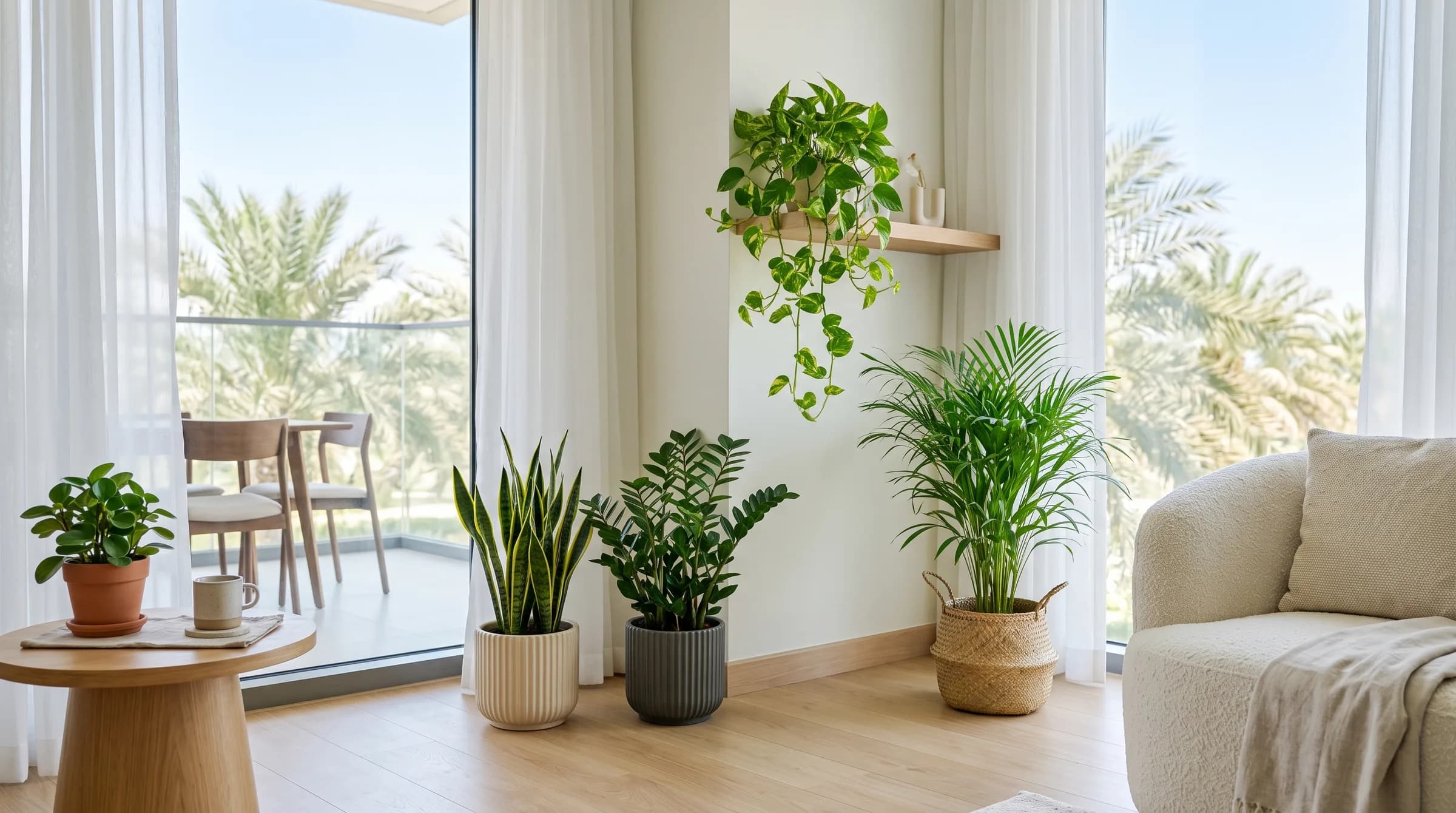
Indoor plants
Indoor plants for Dubai homes: what thrives with AC, low light and pets
Choose by room, not by trend: tough plants for dim flats, sun-lovers for bright villas, picks that cope with AC air, pet-safe options and survivors for summer travellers.
Updated 7 Oct 2026 · 7 min read
On this page
The short answer
Start with the light in your room. Then check three Dubai things: how dry your AC makes the air, whether a cat or dog will chew the plant, and whether you travel in summer. For most flats the easy starting set is ZZ plant, snake plant, pothos, parlour palm and cast iron plant. They put up with dim rooms and forgive a late watering.
Pets change the list. ASPCA lists pothos, ZZ plant and snake plant as toxic to cats and dogs, so in a home with a pet start from the pet-safe guide instead.
3–9 months
a year that Dubai households run their AC, typically May or June to October
Murtagh et al., Buildings & Cities, 2022
6+ hours
of direct sun a day: the full-sun rating NC State gives ponytail palm and olive, which rooms behind tinted glass often do not offer
NC State Plant Toolbox
Quick picks by situation
Pick by situation
| Your situation | Plants that suit | Watch out for |
|---|---|---|
| Dim apartment, tinted glass | Cast iron plant, ZZ plant, Aglaonema, Parlour palm, Pothos | Slow growth. Water less often than you expect. |
| Bright villa, big glazing | Ponytail palm, Spineless yucca, Rubber plant, Fiddle-leaf fig, Bird of paradise | Hot afternoon sun through glass can scorch leaves. |
| Dry, AC-cooled rooms | Snake plant, Ponytail palm, Lady palm, Peperomia | Ferns, prayer plant and alocasia want humid air. |
| Cat or dog at home | Areca palm, Kentia palm, Lady palm, Peperomia, Moth orchid | Pothos, monstera, philodendron and peace lily are toxic (ASPCA). |
| Away for weeks in summer | ZZ plant, Snake plant, Ponytail palm | Even tough plants need a thorough watering before you go. |
Pet status is ASPCA status only. Check the pet-safe guide before you buy.
A dim apartment: tinted glass, deep rooms, north windows
Tinted or low-E glass, a north-facing window or a living room that runs deep from the glass all mean less light than plant labels assume. A low-E coating alone takes only a further 5–10% of the visible light plants use (Melinda Myers). Tint takes more, and how much depends on the glass. Light also falls off quickly with distance from the window, so a corner 3 m back can be dim even in a bright flat.
Choose plants that tolerate low light, and know what that means: they survive and grow slowly. Cast iron plant prefers partial to full shade and is intolerant of direct sun. ZZ plant will grow in very low light, even under fluorescent tubes alone. Snake plant tolerates very low light. Pothos survives long periods in low light but loses its variegation. Parlour palm copes with dry air and dim light. Green and silver forms of aglaonema adapt to low light, while the colourful pink and red forms need brighter light to keep their colour.
The full version, with distances from the window, bathrooms and what fails in the dark, is in our low-light guide.
For a dim room

Cast iron plant
Aspidistra elatior

ZZ plant
Zamioculcas zamiifolia

Snake plant
Dracaena trifasciata

Pothos
Epipremnum aureum

Aglaonema
Aglaonema modestum

Parlour palm
Chamaedorea elegans
A bright villa: big glazing and garden views
Tall villa glazing gives you the light most plants want, so use it for the plants a dim flat cannot grow. Ponytail palm wants full sun and does well in dry indoor air. Spineless yucca takes full sun or partial shade and rots if overwatered. Rubber plant and fiddle-leaf fig prefer bright indirect light and protection from afternoon sun. Bird of paradise likes a well-lit, sunny spot.
Glass does not protect leaves from hot sun. NC State warns that fiddle-leaf fig scorches in too much direct sun and says to keep monstera out of direct sun. In midsummer the sun is almost overhead in Dubai, so west-facing glass and glass with no overhang take the harshest light. If leaves bleach or crisp after you move a plant, step it back from the glass.
Olive trees are sold as indoor trees for Japandi and majlis rooms. NC State rates the olive as a full-sun plant, six or more hours of direct sun a day. Keep an olive only on your sunniest glass or on a balcony.
For a bright room

Ponytail palm
Beaucarnea recurvata

Spineless yucca
Yucca gigantea

Rubber plant
Ficus elastica

Fiddle-leaf fig
Ficus lyrata

Monstera
Monstera deliciosa

Bird of paradise
Strelitzia reginae
Dry, air-conditioned rooms
Many Dubai households run AC day and night for months. A 2022 study of Dubai homes found AC running three to nine months a year, typically from May or June to October and mostly around the clock, with windows opened only briefly or in winter (Murtagh et al.). Air-conditioned rooms are drier than most tropical foliage plants like. Exact figures vary from flat to flat, and a cheap hygrometer will tell you yours.
Some plants cope. Ponytail palm does well even in dry indoor air, snake plant tolerates low humidity, lady palm has low humidity needs, parlour palm thrives where dry air and dim light defeat other plants, and peperomia prefers medium to low humidity. Others struggle. Boston fern, prayer plant and alocasia want high humidity, and NC State links dry air to scale and spider mites on Boston fern.
Keep plants out of the direct airflow from vents. NC State notes brown spots on fiddle-leaf fig when room temperature swings with heating or cooling vents. Misting does not help: University of Nebraska–Lincoln Extension says you would have to mist every few minutes to make any real difference. A humidifier does work. Grouping plants makes a slightly more humid pocket but will not fix a dry room. More in our guide to plants and air conditioning.
Homes with cats or dogs
ASPCA lists these as non-toxic to both cats and dogs: Areca palm, kentia palm, lady palm, parlour palm, cast iron plant, ponytail palm, peperomia and moth orchid. It lists pothos, monstera, philodendron, peace lily, ZZ plant and snake plant as toxic. Non-toxic still does not mean harmless: ASPCA says eating any plant material can cause vomiting and an upset stomach in dogs and cats.
Watch the 'money plant' label. In Dubai shops it usually means pothos, which is toxic to pets. The braided money tree, Pachira aquatica, is non-toxic, and jade is toxic. Both have plant pages: Money tree and jade plant. The pet-safe guide sorts out the names and has the full table.
Non-toxic to cats and dogs (ASPCA)

Areca palm
Dypsis lutescens

Kentia palm
Howea forsteriana

Lady palm
Rhapis excelsa

Peperomia
Peperomia obtusifolia

Moth orchid
Phalaenopsis hybrids

Money tree
Pachira aquatica
If you travel in summer
Plants that store water cope with a missed watering better than leafy ones. ZZ plant stores water in its rhizomes and fleshy leaves, snake plant needs its soil to dry out between waterings, and ponytail palm is drought tolerant. Water thoroughly just before you leave and move plants back from direct light to a cooler spot so they lose less water (University of Saskatchewan). For a longer trip use a wick, a capillary mat or self-watering pots, and test the set-up before you go.
Set the AC higher rather than switching it off: a shut-up flat with no cooling can get far hotter than plants tolerate. Our summer travel guide has the full checklist.
Plants to think twice about
- Boston fern, prayer plant and alocasia need high humidity. Fine with a humidifier, a struggle without one.
- Olive is a full-sun plant sold as an indoor tree. Sunniest glass or a balcony only.
- Any plant you carry home in summer. University of Arkansas Extension warns that a plant in a shut car can be destroyed in a short time. See our buying guide.
When to buy
Buy in the cooler months, October to November or February to April, so the plant is not carried home in summer heat. Airport average highs for June to August run 40–42°C, against 26–34°C in February to April (Wikipedia: Climate of Dubai).
Our where-to-buy guide lists nurseries, online shops and what plants cost. The October planting page has the month's indoor jobs.
Find your indoor plants
Choose by light, pets and room, see this month's indoor jobs and browse indoor styles for Dubai homes.
Explore indoor plantsFrequently asked
What is the easiest indoor plant for a Dubai flat?
Will indoor plants survive Dubai's air conditioning?
Can I keep an olive tree indoors in Dubai?
How often should I water indoor plants in summer?
Which indoor plants are safe for pets?
When should I buy and pot up indoor plants in Dubai?
Sources
- NC State Plant Toolbox: Zamioculcas zamiifolia (ZZ plant)
- NC State Plant Toolbox: Dracaena trifasciata (snake plant)
- NC State Plant Toolbox: Epipremnum aureum (pothos)
- NC State Plant Toolbox: Aspidistra elatior (cast iron plant)
- NC State Plant Toolbox: Chamaedorea elegans (parlour palm)
- NC State Plant Toolbox: Rhapis excelsa (lady palm)
- NC State Plant Toolbox: Beaucarnea recurvata (ponytail palm)
- NC State Plant Toolbox: Yucca gigantea (spineless yucca)
- NC State Plant Toolbox: Ficus elastica (rubber plant)
- NC State Plant Toolbox: Ficus lyrata (fiddle-leaf fig)
- NC State Plant Toolbox: Strelitzia reginae (bird of paradise)
- NC State Plant Toolbox: Monstera deliciosa
- NC State Plant Toolbox: Olea europaea (olive)
- NC State Plant Toolbox: Peperomia obtusifolia
- NC State Plant Toolbox: Nephrolepis exaltata (Boston fern)
- NC State Plant Toolbox: Maranta leuconeura (prayer plant)
- NC State Plant Toolbox: Alocasia (Alocasia x mortfontanensis)
- UF/IFAS Extension: Aglaonema
- Melinda Myers: Low-E glass impact on houseplants
- Murtagh et al.: Living with air-conditioning in Dubai, Chongqing and London (Buildings & Cities, 2022)
- University of Nebraska–Lincoln Extension: Houseplants and humidity
- Iowa State Extension: Diagnosing houseplant problems
- University of Maryland Extension: Watering indoor plants
- University of Saskatchewan: Watering houseplants while on vacation
- University of Arkansas Extension: Transporting house plants
- Wikipedia: Climate of Dubai (airport normals)
- ASPCA: Toxic and non-toxic plants
- ASPCA: These houseplants can cause trouble for your pets
Written by Plant Guide horticulture desk · last reviewed 7 Oct 2026
Related guides
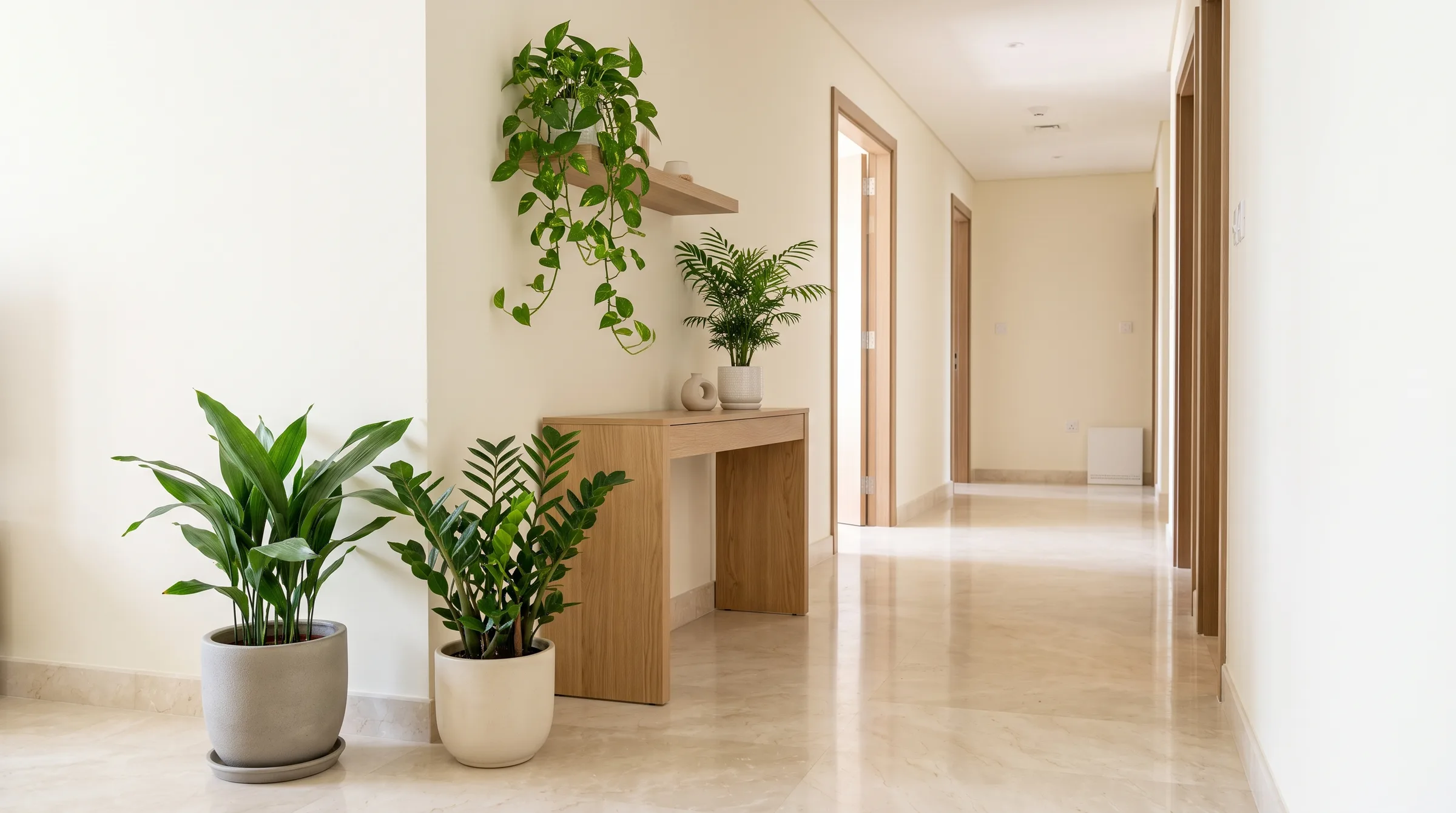
Indoor plants
Low-light plants for dim Dubai apartments, hallways and bathrooms
Low light means a plant survives and grows slowly, not that it lives in the dark. What it looks like behind tinted glass, how far from a window each plant can sit, and what fails.
7 Oct 2026 · 7 min read
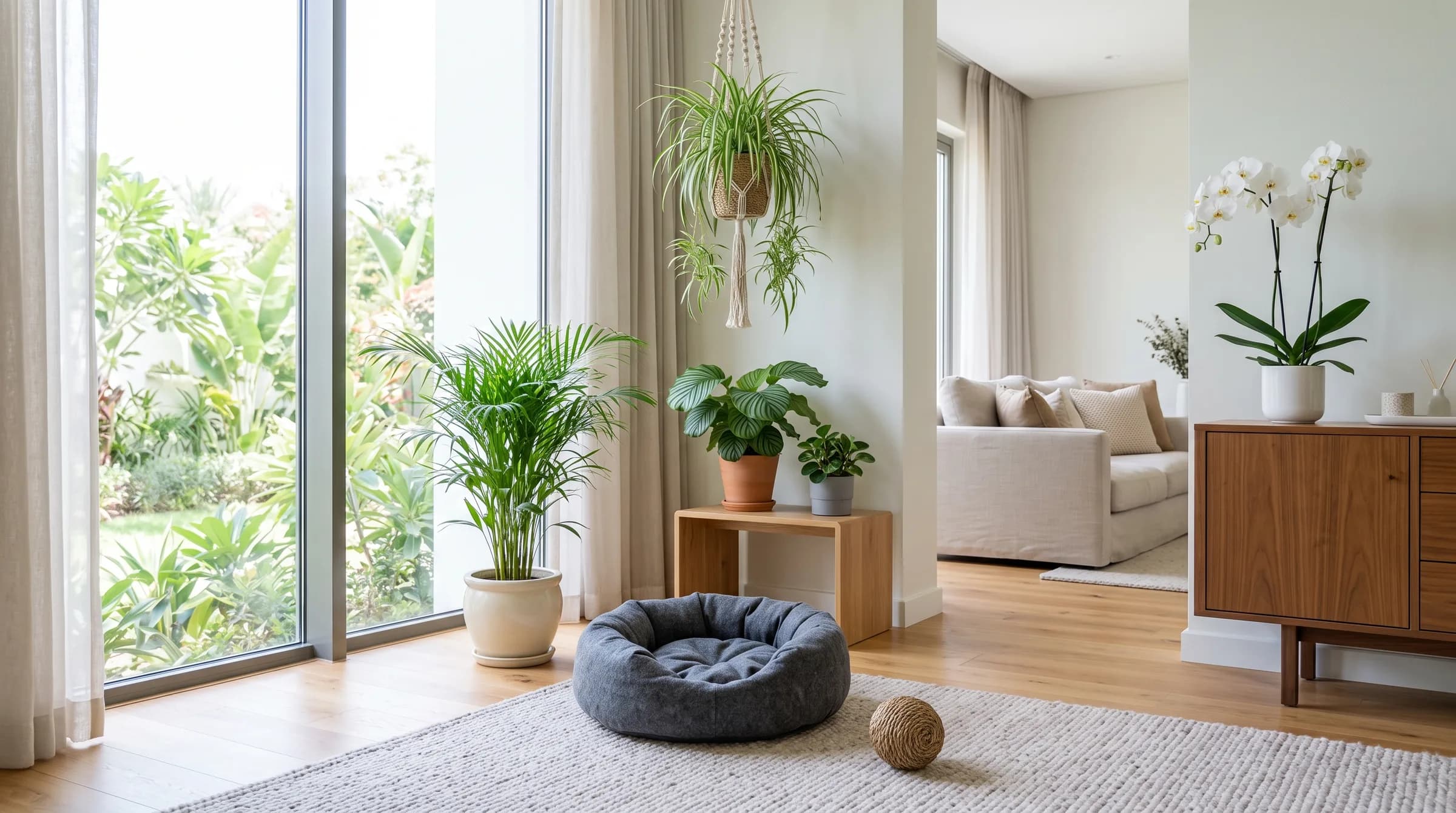
Indoor plants
Pet-safe indoor plants in the UAE (and the toxic ones to avoid)
ASPCA's non-toxic list for cats and dogs, the common UAE houseplants it marks toxic, the 'money plant' naming trap, and what to do if your pet chews a leaf.
7 Oct 2026 · 8 min read
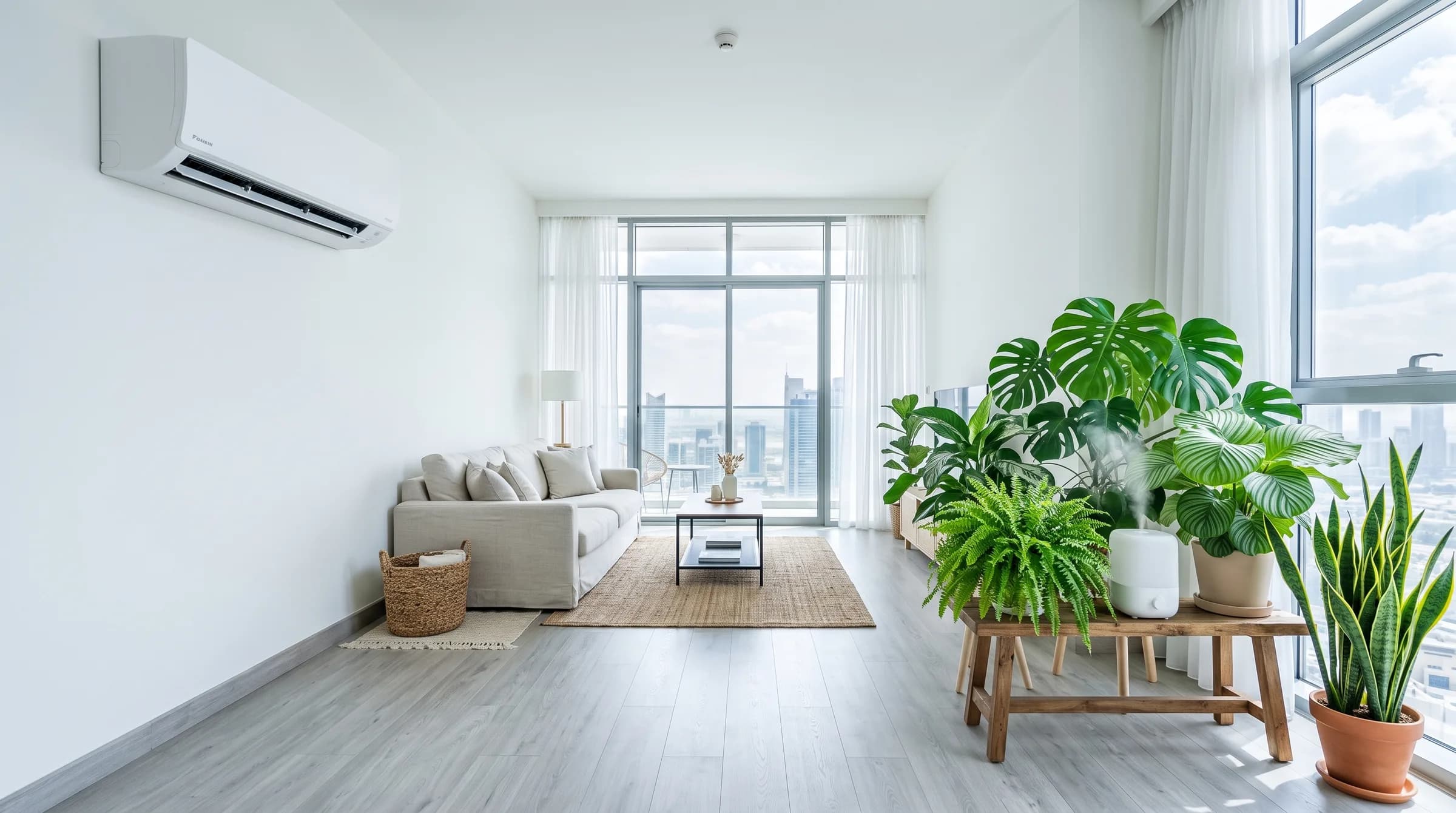
Indoor plants
Houseplants and air conditioning: keeping plants happy in a cool, dry Dubai home
Air-conditioned rooms are cooler and drier than most houseplants like. Keep plants out of the airflow, water by touch, and use a humidifier, not a spray bottle, for plants that need damp air.
7 Oct 2026 · 8 min read
Indoor plants
Where to buy indoor plants in Dubai, and what they cost
Nurseries, garden centres, online shops, IKEA and supermarkets, with AED price ranges by plant size, all checked on 7 October 2026. Prices and stock change, so check before you go.
7 Oct 2026 · 8 min read
Pool + garden care
From AED 500/month
Price depends on your garden's size, pool and complexity. Prices in AED, excluding 5% VAT.