
Sea Jasmine
Clerodendrum inerme
Full sunSalt: 5 of 5
Adapted
Ficus microcarpa 'Nitida'
تين الغار
The dense, glossy hedge of countless Dubai villas: it clips to a clean green wall, but its roots are the real cost, and ficus whitefly and thrips can mark or strip the foliage.
Ficus nitida is the classic dense Dubai hedge, but it is a fig with a prominent, invasive root system, and roots that go looking for moisture are the usual reason ficus hedges are blamed for lifted paving, cracked walls and blocked drains. Keep it well clear of walls, pool shells, paving and pipe runs, install a root barrier at planting, and keep the hedge clipped small. In warm months, also watch for ficus whitefly, which can strip a hedge of leaves within a few months.
Season
How Ficus Nitida behaves through Dubai's seasons, month by month.
Best planting window
Hedge trimming
Spring flush of pale new growth
Balanced slow-release feed
Check for ficus whitefly and thrips
Best planting window: Oct–Mar
Plant in the cool season so roots settle before summer; allow generous distance from structures.
Hedge trimming: Feb–Mar, Oct–Nov
Trim little and often; avoid hard cutting in peak summer heat.
Spring flush of pale new growth: Mar–May
Tender new leaves are the ones Cuban laurel thrips gall and curl.
Balanced slow-release feed: Mar, Sep
Avoid heavy nitrogen, which pushes soft growth that pests favour.
Check for ficus whitefly and thrips: Apr–Oct
Whitefly populations build from spring through autumn; early detection prevents costly defoliation.
Ficus nitida holds dark, glossy foliage through every month in Dubai, so its look changes with the shears rather than the season. Trimming in late winter and spring sets off a flush of paler, softer new growth, which is when the leaf tips are most likely to be curled by thrips. From April the hedge needs a regular close look for whitefly, whose numbers build from spring through autumn, with the underside of the leaves the first place to check. Winter slows growth, so a clipped line stays sharp for longest between cuts.
Meet the plant
Meet ficus nitida, the plant behind much of the privacy in Gulf villa suburbs. Nothing else delivers a flat, dark, glossy green wall as quickly: small leathery leaves packed tight on supple stems, a habit that takes shears gracefully, and a willingness to regrow from a hard cut. The effect is almost architectural. Clipped square it frames a garden like a room; clipped round it becomes a tidy standard; left alone it grows into a heavy-shaded tree.
But it is a fig, and figs are built from the roots up. Ficus microcarpa is documented as having a prominent, invasive root system, and even the improved 'Green Gem' selection is advised to sit at least ten feet (about 3 m) from a kerb or footpath because its surface roots lift paving. The honest way to use ficus nitida is as a hedge with room around it, kept small, and checked for whitefly through the warm months. It is a poor choice for a strip planted a hand's width from a boundary wall or a pipe run.
Ficus nitida is the nursery name for Ficus microcarpa 'Nitida', the Indian laurel fig or curtain fig, a tough tropical fig from Asia and the western Pacific. Its small, oval, lacquer-glossy leaves take shears so well that the plant can be cut as a flat hedge, a rounded standard or a full shade tree. Abu Dhabi Municipality's 2012 plant index lists Ficus nitida among drought-tolerant trees and Ficus microcarpa among salt-tolerant ones, which explains why it became the default tall hedge across the Gulf.
What it does underground is the catch. Ficus microcarpa has a prominent, invasive root system, and University of Florida guidance for the 'Green Gem' selection says to plant at least ten feet (about 3 m) from a kerb or footpath so surface roots do not cause damage. Dubai plots put a wall, a pool shell, an irrigation main and a drain within a few metres of each other, so a ficus hedge needs real distance from all of them and a root barrier at planting.
Two pests dominate. Cuban laurel thrips fold new leaves into discoloured galls, which is mostly cosmetic. The ficus whitefly (Singhiella simplex), now reported across the Middle East, is more serious: infestations of two to three months can cause heavy leaf drop from the bottom of the canopy upward, with sticky honeydew and sooty mould. Treated as a managed hedge, with room to grow, regular trimming and a watchful eye from April, it gives the cleanest dark green backdrop available. Drip irrigation, a rhythm of light, frequent trims and lower flowering shrubs planted in front keep the hedge looking deliberate rather than overgrown, and keep the maintenance honest.
Design
Give ficus nitida space before anything else: plant it at least 3 m from paving and considerably further from foundations, pool shells and underground services, and fit a root barrier at planting. It earns its place along a boundary or around a seating area where a dark, uniform green wall is wanted, kept trimmed to a size the roots can support. Avoid planting it in a narrow strip against a wall, and plan irrigation so the hedge is watered deeply and infrequently rather than little and often.

Plumbago
Plumbago's pale blue flowers read clearly against ficus's dark glossy green, though it should be planted at the front, away from the hedge's root zone.

Bougainvillea
Magenta or orange bougainvillea in front of a dark ficus wall is a classic, high-contrast combination that handles the same sun.

Ixora
Compact ixora in red or orange gives low colour in front of the hedge while the ficus supplies the deep green backdrop.
Care guide
Summer: Deep, less frequent soaks suit it better than short daily sprays; an established hedge tolerates some drying between irrigations, but tips scorch if it is left too dry.
Winter: Reduce frequency as growth slows, keeping the root zone from drying out completely.
Establishment: Water deeply and regularly for the first few months, ideally by drip, so roots are encouraged downward rather than across the surface.
Avoid these
Extra notes
Toxicity: Not known to be seriously toxic, but the milky sap is a skin allergen; the RHS advises gloves and protective equipment when handling Ficus microcarpa.
FAQ
Not sure how it suits your garden?
Ask about Ficus Nitida on WhatsAppKeep exploring
Sea Jasmine
Clerodendrum inerme

Hopbush
Dodonaea viscosa
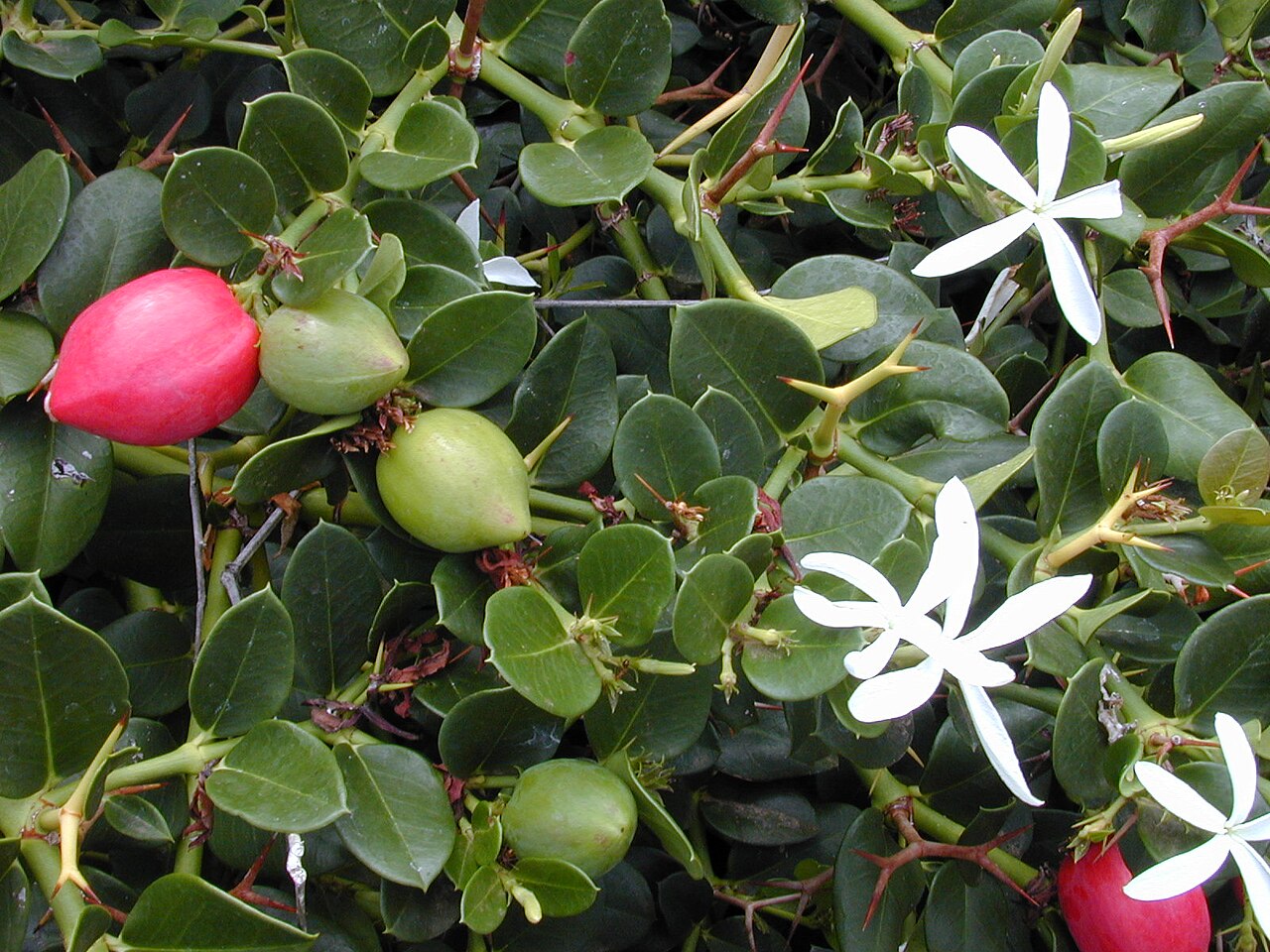
Natal Plum
Carissa macrocarpa

Duranta
Duranta erecta

Damas
Conocarpus lancifolius
Sources
Last reviewed 2026-10-05 by Ghaf Gardens horticulture desk.
Pool + garden care
From AED 500/month
Price depends on your garden's size, pool and complexity. Prices in AED, excluding 5% VAT.